
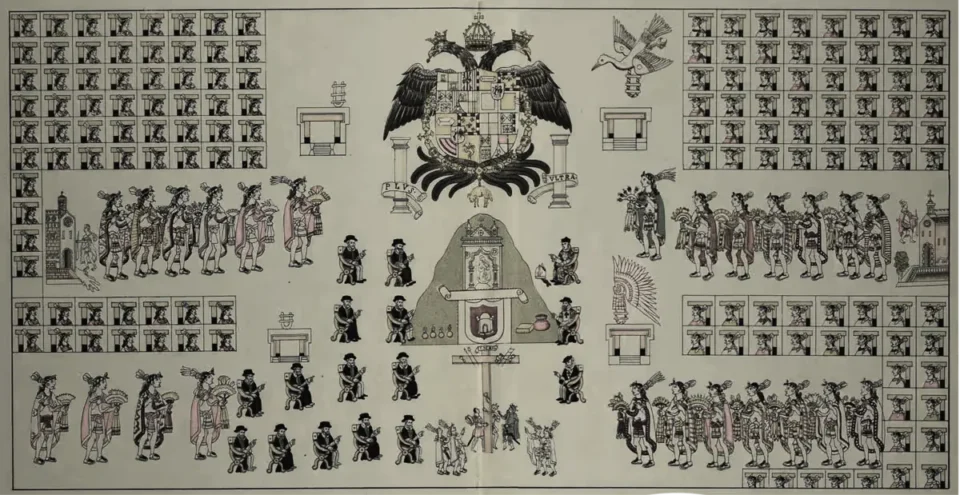
Huejotzingas

Huejotzingo People: Allies, Traditions, and Resistance in Mexican History

The Huejotzingo people were one of the most influential Indigenous groups of the Mesoamerican central highlands. Their lordship, located in what is now the state of Puebla, played a key role in the political, military, and cultural life of both the pre-Hispanic and viceregal eras.

Origins and territory

  • The Huejotzingo lordship consolidated during the Postclassic Period, near Cholula and Tlaxcala.

  • They were distinguished by their military strength and autonomous political organization.

  • Their strategic location allowed them to control important trade routes.

Conflicts and alliances in Mesoamerica

  • The Huejotzingas maintained constant rivalries with the Mexica, resisting the dominance of the Triple Alliance.

  • In 1519, they formed an alliance with Cortés and his Indigenous allies against the Mexica lordship, actively participating in the fall of Tenochtitlan.

  • After the war, they were granted recognition and privileges for their role in the coalition.

Huejotzingas in New Spain

  • They preserved a degree of autonomy in their lands and local administration.

  • Played an important role in the founding of towns in the northern frontier, along with Tlaxcalans and Cholultecas, during the expansion into Chichimeca territories.

  • Their agricultural and artisanal production was quickly integrated into viceregal trade networks.

Culture and traditions

The Huejotzingas left a cultural mark that remains alive today:

  • Carnival of Huejotzingo, one of the oldest and most representative festivals in Mexico, blending Indigenous traditions, viceregal heritage, and popular expressions.

  • Religious architecture, with 16th-century convents that are now part of cultural heritage.

  • Traditional crafts and dances, preserving symbols of their ancestral identity.

Conclusion

The Huejotzingas were a people of resistance and strategic alliances, maintaining their importance from pre-Hispanic times through the viceregal era. Their cultural, military, and festive legacy continues to be a strong symbol of identity in Puebla and in Mexico’s broader history.