
In the first decades of the viceroyalty of New Spain, the indigenous peoples not only had to adapt to the new political and tributary order, but also to face one of the harshest forms of exploitation: slavery. Although the Crown of Castile proclaimed their defense as free subjects, in practice many were captured, sold or forced to work under different pretexts. The process that led to its abolition in 1548 was long and contradictory, full of local resistance, economic interests and efforts to disguise servitude through contracts called “asientos”.
Indigenous slavery in the early viceroyalty years
After the military journey led by Hernán Cortés and his indigenous allies, the occupation of the territory brought with it the capture of thousands of people. The peninsulars justified these actions under the argument of the “just war”, which allowed the enslavement of those who resisted Castilian rule or were considered rebels.
In addition, the Spanish practiced “slave ransom”, buying from indigenous peoples people who were already captives according to their own customs. With this practice, slavery expanded beyond armed conflicts, generating a local market for people, especially in mining regions and frontier zones.
Although Castilian laws recognized the Indians as free vassals of the Crown, the distance from the metropolis and the greed of businessmen made it difficult to apply these principles. The work in mines, ranches and gold mines was largely sustained by thousands of enslaved hands.
The economic burden of forced labor
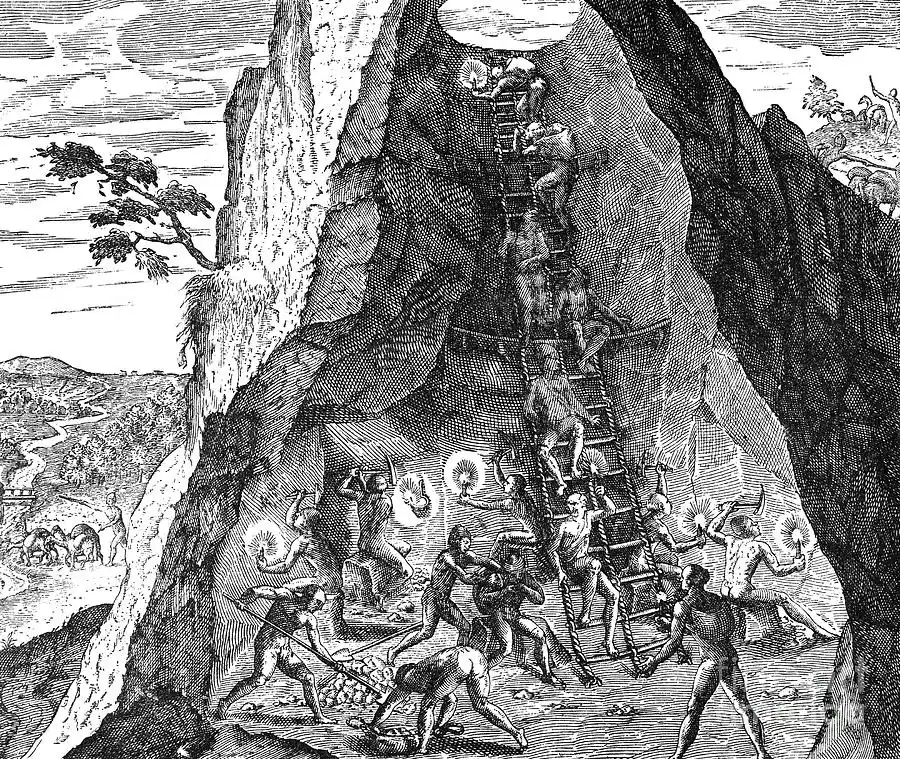
Indigenous labor was essential in the first extractive projects. Mines such as Taxco, Sultepec or Tlalpujahua depended on slave labor, many of them captured in military campaigns or bought from intermediaries.
Mine owners argued that without slaves production would stop, and so they vigorously defended their possession. Some even registered their “piezas” – as enslaved people were called – with local notaries to give the trade a legal appearance.
This system brought quick gains but also generated tensions: abuses provoked runaways, riots and denunciations, and the Church began to openly denounce that the Christian principles of freedom and justice were being violated.
The royal decree of 1548: freedom ordered from the Crown
The debate on the legitimacy of indigenous slavery reached the court. Inspired by the ideas of friars such as Bartolomé de las Casas and by the political need to show a just monarchy, Emperor Charles V issued a royal decree in 1548 ordering the liberation of all enslaved Indians in the domains of the Crown of Castile.
The measure was clear on paper: all indigenous people were to be considered free and no one could own them as slaves, under penalty of confiscation and judicial sanction. However, its application was difficult. Mining entrepreneurs, landowners and settlers alleged economic losses and sought ways to circumvent the law.
Thus arose the so-called “asientos”: contracts in which the Indians, theoretically free, committed themselves to work for a determined period of time in exchange for salary and maintenance. In practice, these agreements reproduced servitude, as many were signed under duress or without understanding their content.
The “seats”: simulated freedom, real coercion
Labor contracts became the most common instrument for disguising slavery after 1548. Through them, an indigenous person “accepted” to serve a master for a certain period of time, but the reality was different: the contracts were imposed by caciques or local authorities under pressure from encomenderos and businessmen.
The inspectors sent by Viceroy Luis de Velasco Sr. documented that in most cases the Indians continued to work in slave-like conditions, without real wages and with restrictions on their movement.
Officials also pointed out that many “asentados” were persecuted when they tried to abandon their service, as were slaves. For this reason, the Crown ended up prohibiting the asientos and ordering their annulment in all the territories of the viceroyalty.
Even so, in remote areas – such as the mines in the north or the haciendas in the west – the practice continued covertly, protected by the difficulty of surveillance and the complicity of the local authorities.
Resistances and persistencies
The legal abolition of indigenous slavery did not put an end to forced labor. Viceregal authorities tolerated new mechanisms of coercion, such as repartimiento or personal service, presented as temporary and legal forms of labor.
At the same time, the indigenous peoples resisted: they fled the mining centers, denounced abuses before the Royal Audiencia of Mexico, and in some cases reached agreements to fix salaries or service times.
These forms of daily resistance – silent but constant – set the pace for the labor reforms of the sixteenth century. The supposed abolition of slavery became a symbol of moral progress, although in practice it only transformed the way in which indigenous labor was exploited.
Conclusion
The royal decree of 1548 represented a legal milestone: the formal abolition of indigenous slavery in New Spain. But beyond the decree, the viceroyalty’s economic system continued to depend on forced labor.
The asientos, the repartimientos and the tribute in labor showed that freedom, in many cases, was only a word regulated from above.
The history of indigenous slavery and its suppression is also the history of the adaptation of exploitation to the new laws: the language changed, not the reality. However, it was in this tension between coercion and indigenous resistance that the first discussions on justice and rights were forged within the viceregal order.
Frequently asked questions: indigenous slavery and its abolition in New Spain
Did indigenous slavery exist in New Spain?
Yes, during the first decades of the viceroyalty, many indigenous people were captured or sold as slaves, under the justification of “just war” or “ransom” among peoples who already practiced forms of captivity.
Why was indigenous slavery allowed in the beginning?
Because the Castilian authorities considered that some indigenous people resisted the dominion of the Crown or were enemies of the Christian faith. This interpretation served as a legal excuse to exploit them in mines, haciendas and gold laundries.
What was the royal decree of 1548?
It was an order of Emperor Charles V that declared free all enslaved Indians in the American territories. This provision marked the formal beginning of the abolition of indigenous slavery in New Spain.
Why did it take so long to implement abolition?
Because many businessmen and encomenderos resisted losing their labor force. In mining and frontier regions, they continued to use covert forms of servitude, taking advantage of the distance and lack of surveillance.
What were the “seats”?
These were apparently voluntary labor contracts, where the indigenous people agreed to serve a master for salary and food. In practice, the seats disguised conditions of slavery, with coercion and punishments.
Why were seats considered a form of servitude?
Because indigenous workers could not leave the service, were persecuted if they fled, and rarely received wages. Viceregal officials denounced the seats as merely disguising prohibited slavery.
What role did viceroys Antonio de Mendoza and Luis de Velasco Sr. play?
Both promoted inspections and labor reforms to control abuses and enforce the cédula de libertad. Velasco ordered the freeing of slaves and the annulment of seats, although the results varied by region.
Where was slave labor most concentrated?
Mainly in the mines of central and southern New Spain, such as Taxco, Sultepec and Tlalpujahua, where much labor was required for the extraction of precious metals.
How did indigenous peoples react to slavery?
Many fled, complained to the Royal Court or negotiated better conditions. These forms of daily resistance were essential to weakening the system of servitude.
What was the difference between slavery and repartimiento?
Slavery implied total ownership of the person; repartimiento was a “temporary” forced labor service, authorized by the authorities. Both involved coercion, but only the latter was legally tolerated after 1548.
Why did abolition not mean immediate freedom?
Because the viceroyalty continued to depend on forced indigenous labor. The names changed -from slaves to distributed or settled-, but the structural inequality remained.
What does the abolition of 1548 symbolize in viceregal history?
It represents a legal and moral advance, although incomplete. It was the first attempt to recognize labor and personal rights for indigenous people, but within a system that was still based on economic exploitation.