The Day of the Dead is a single tradition with many voices. Although today it is celebrated throughout Mexico with altars, flowers and bread, in each region the relationship with the dead has a different face. From the Purepecha villages of Michoacán to the Mayan communities of Yucatán, the celebration retains traces of the pre-Hispanic past, the influence of viceregal Catholicism and the modern transformations that led it to be recognized as a national symbol.
Explorar las distintas formas en que se honra a los difuntos en México es asomarse a una diversidad cultural que ha sobrevivido a los siglos, adaptándose a los cambios sociales sin perder su sentido espiritual.
Patzcuaro and Janitzio: the night of the Purepechas
In the lake region of Patzcuaro, Michoacán, the cult of the dead has pre-Hispanic roots linked to the Purépecha people. According to 16th century chroniclers, the ancient inhabitants of the area made offerings of food, flowers and copal in honor of the dead during the month of November.
With the arrival of the Franciscans, these practices were adapted to the Catholic calendar and gave rise to a celebration that today is one of the most recognized in the country.
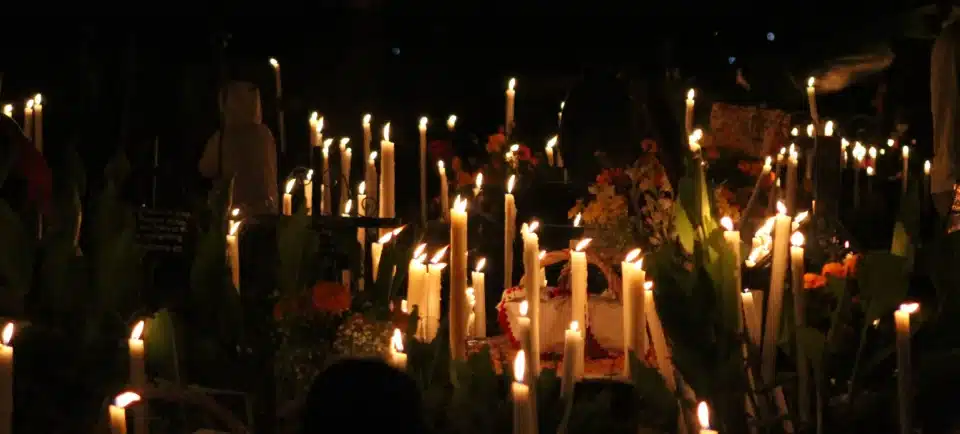
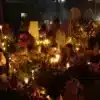
During the night of November 1, families go to the cemeteries of Janitzio, Jarácuaro and Tzintzuntzan to decorate the tombs with candles and marigold flowers. The candlelight illuminates the lake, creating an atmosphere that has been compared by INAH anthropologists to “an aquatic procession of souls”.
This tradition has been passed down from generation to generation, and although it has acquired tourist fame, for the Purepecha communities it continues to be an act of respect and communion with the ancestors.

Mixquic: the lighting of the deceased
In San Andrés Mixquic, southeast of Mexico City, the Day of the Dead combines the indigenous heritage of the Valley of Mexico with the Christian customs implanted in the viceroyalty. Here, celebrations begin on October 31 with the ringing of bells and continue until November 2, when the “alumbrada” is held, a night vigil in which family members light the tombs with candles.
The offerings are placed inside the houses and in the cemetery next to the portraits and personal objects of the deceased. According to INAH research, Mixquic preserves elements that recall ancient Mexica rituals dedicated to Mictecacíhuatl, “the lady of the dead”, such as the use of copal and cempasúchil to guide the souls.
The tzompantli -or wall of skulls- symbolically displayed in the cemetery is a visual echo of Mesoamerican temples, reinterpreted today within the Catholic faith.
Oaxaca: art, color and syncretism
In Oaxaca, the Day of the Dead is experienced as a great community celebration. The Mixtec and Zapotec peoples prepare altars in their homes, decorated with cempasúchil flowers, bread, fruit and totomoxtle (corn leaf) figures.
During the previous days, the cemeteries become spaces of conviviality: graves are cleaned, candles are lit and food is shared with visitors.
Unlike other regions, in Oaxaca the ofrendas usually have an artistic character: sand or sawdust mats with symbolic figures are made and parades and processions are organized. These expressions are an inheritance of both viceregal syncretism and Oaxacan popular art, which throughout the 20th century became part of the national imaginary of the festivity.
Puebla and Tlaxcala: the Altar of Steps
In the Nahua regions of Puebla and Tlaxcala, the domestic altar preserves a particular format: it is raised with seven levels, representing the steps of the soul towards eternal rest. Specific objects are placed on each step: water, bread, fruit, candles and portraits.
This structure, described by INAH ethnographers as a fusion between the indigenous cosmovision and the Catholic iconography of purgatory, summarizes the union between the two traditions. In many towns, the offering is complemented with dances, prayers and band music that accompany the deceased to the cemetery.
Yucatán and Hanal Pixán
In the Maya world, the commemoration of the dead is known as Hanal Pixán, which means “food of the souls”. It is celebrated between October 31 and November 2, with ritual foods such as mucbipollo (pib), buried underground and cooked in an oven.
The altars are decorated with flowers, palm crosses and embroidered tablecloths; water, bread, candies and portraits are placed. In many homes, the mirror is covered with a cloth so that the spirit is not reflected and frightened.
Hanal Pixán is one of the oldest celebrations that preserves traits of the pre-Hispanic world and colonial religiosity, recognized by INAH as one of the living expressions of Maya heritage.
Conclusion
Each region of Mexico experiences the Day of the Dead differently, but they all share the same root: the desire to reunite with those who have passed away.
From the islands of Patzcuaro to the altars of Mixquic, from the Oaxacan tapestries to the Yucatecan Hanal Pixan, the whole country celebrates the continuity of life through memory.
The Day of the Dead is, in reality, a constellation of traditions that, united, form the spiritual face of Mexico.
We invite you to explore these articles about the Day of the Dead and discover its history in detail.
-

The Mesoamerican origin of the cult of the dead: predecessor of the Day of the Dead
Long before the Day of the Dead was celebrated, Mesoamerican cultures paid tribute to their dead on different dates of the ritual calendar. This cult of…
-
From evangelization to syncretism: the Days of the Souls in New Spain (predecessor of the modern Day of the Dead)
The Days of the Dead in New Spain were the result of the encounter between indigenous beliefs about death and the Catholic festivities instituted by Popes…
-
Day of the Dead altars and ofrendas: symbols of the reunion between the living and the dead
The Day of the Dead altars were born during the viceregal era as an adaptation of the indigenous offerings to the Catholic calendar. In them, the…
-
Lázaro Cárdenas and the transformation of the Day of the Dead: from the Days of the Dead to the Mexican national symbol.
The Days of the Souls, inherited from the Viceroyalty, survived wars and prohibitions until it was transformed into the modern Day of the Dead. Under the…
-
The Meaning of the Day of the Dead: Identity, Memory and Continuity
The Day of the Dead not only honors those who have passed away; it also affirms who we are. Among flowers, altars and memories, this tradition…
-
The Day of the Dead in post-revolutionary art and education
Post-revolutionary Mexico used art and education to build its identity. From Rivera's murals to the school offerings promoted by Cárdenas, the Day of the Dead became…
-
Top 20 curiosities and historical details of the Day of the Dead that you may not have known.
From Mictecacíhuatl to La Catrina, learn 20 historical curiosities about the Day of the Dead and discover how this celebration became a symbol of Mexican identity.
-
Regional Day of the Dead Celebrations: from Patzcuaro to Mixquic, the diversity of the tradition
From Patzcuaro to Yucatan, Day of the Dead celebrations reveal Mexico's cultural diversity. Each region preserves unique rituals - the Mixquic alumbrada, the Mayan Hanal Pixán…

Frequently Asked Questions about regional Day of the Dead celebrations
Why is the Day of the Dead celebrated differently in each region?
Because each town integrated its own pre-Hispanic and religious traditions into the Catholic calendar. The result was a diversity of local customs that reflect the cultural identity of each region.
What makes the celebration in Patzcuaro and Janitzio special?
Its Purepecha origin and its relationship with the lake. Families illuminate the tombs with candles during the night of November 1st, creating one of the most representative scenes of the Day of the Dead.
What is the alumbrada de Mixquic?
It is a night vigil in the cemetery where relatives light candles and decorate the graves with flowers. It represents the spiritual coexistence between the living and the dead and keeps alive a Mexica tradition reinterpreted in Christianity.
¿Qué caracteriza a las ofrendas de Oaxaca?
Its artistic richness: altars with sawdust carpets, processions and parades that combine popular art with religiosity.
What is the meaning of the seven levels of the altar in Puebla and Tlaxcala?
They symbolize the steps of the soul to reach spiritual peace, a mixture between the indigenous idea of the journey to the afterlife and the Catholic doctrine of purgatory.
What is Hanal Pixán and what does it symbolize?
It is the Mayan version of the Day of the Dead. It means “food of the souls” and celebrates the union of the family with their deceased through traditional foods such as mucbipollo and altars decorated with flowers and palm crosses.
–