
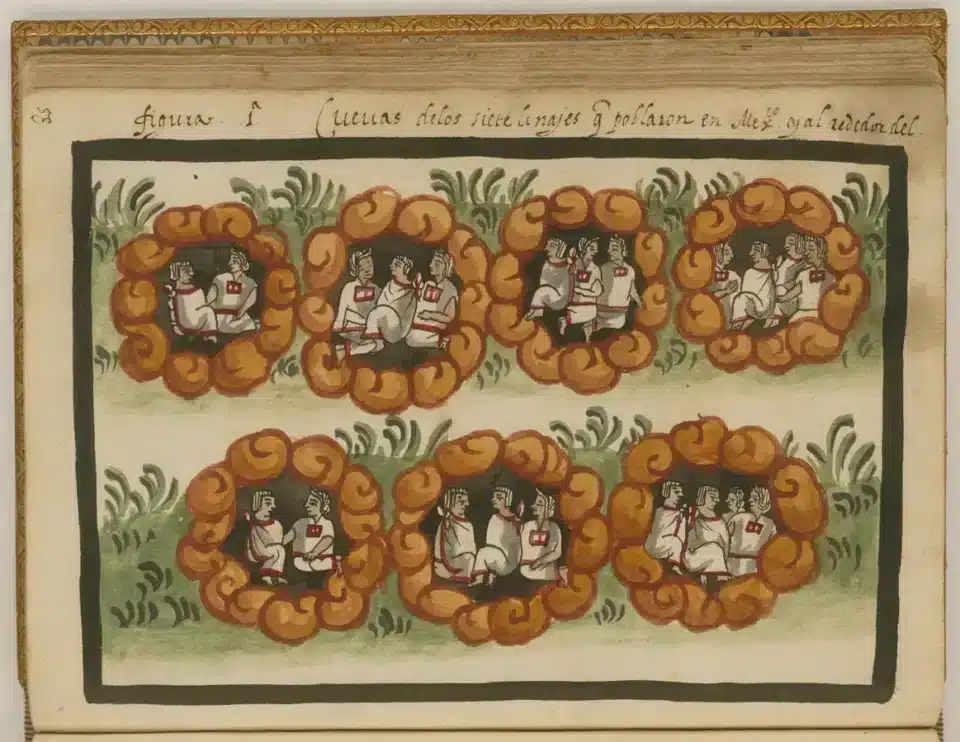
Before becoming one of the most influential lordships of the Mesoamerican postclassic period, the Mexica faced a difficult natural environment and an unfavorable geographical position. Surrounded by the brackish waters of the lake, with no direct access to building materials or fertile land, their economic development was the result of a series of ingenious strategies that transformed subsistence into political, commercial and territorial power. This article discusses how the Mexica built their production system through adaptation, trade, alliance and expansion.
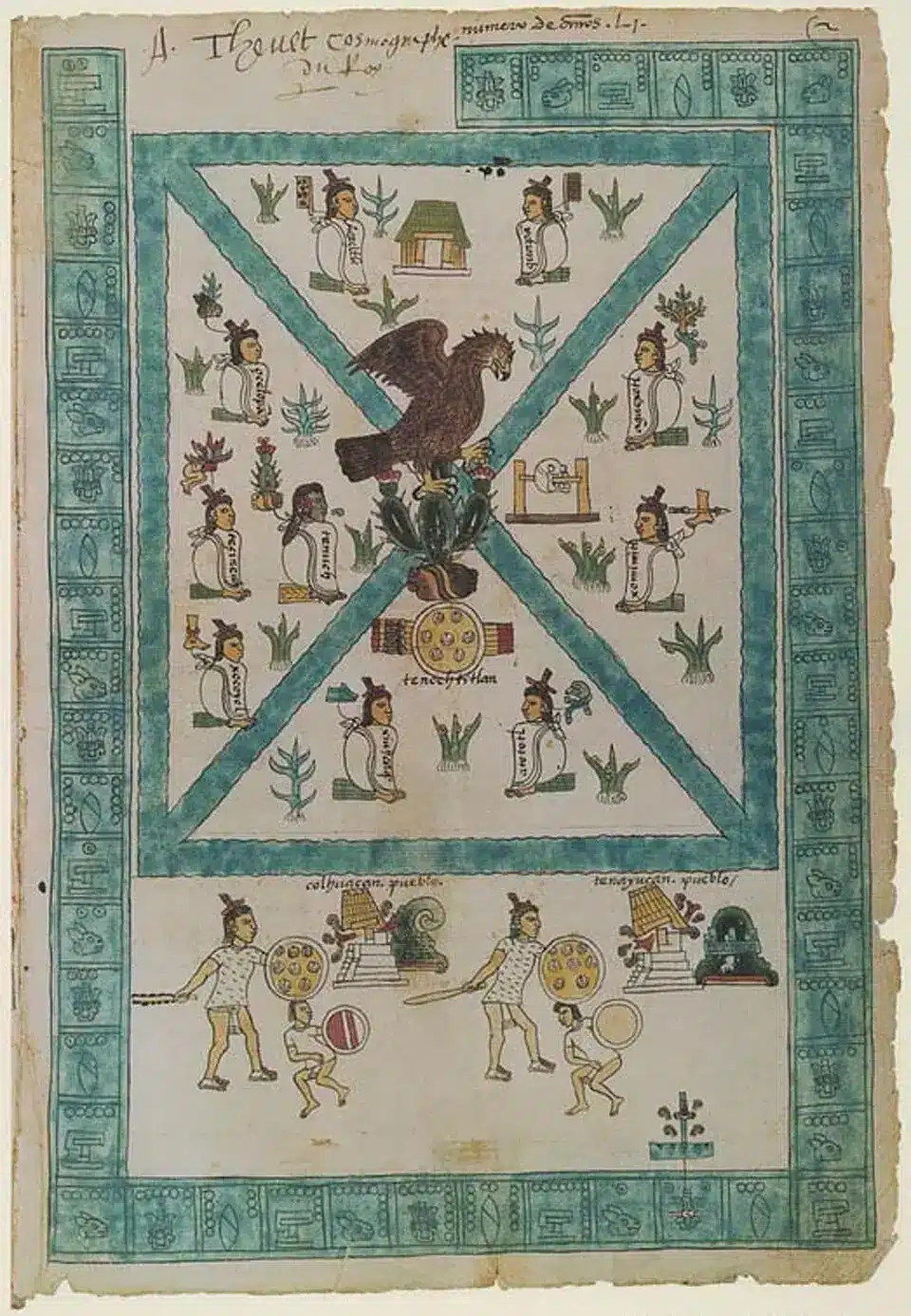
Economic organization in its origins
During his first years in Mexico-Tenochtitlan, the panorama was adverse. The island offered few resources: fish, salamanders, waterfowl, edible roots and vermin typical of the lake region. In this context, the Mexica economy was initially based on hunting, fishing and gathering, barely enough to cover their basic needs for food, clothing and housing.
The lack of resources such as stone and wood prompted the Mexica to establish trade links with mainland populations. This early contact with the Tepanecas on the western shore of the lake marked the beginning of their transition from a subsistence to an exchange economy.
Economic growth and strategic relationships
Towards the beginning of the 15th century, the increase in trade relations brought about a significant transformation. They began to build with adobe and stone, adapted the environment by sealing off parts of the lagoon to expand cultivable areas, laid out irrigation ditches and encouraged navigation, which gave them relative control over lake trade routes.
In addition to trading with neighboring groups, the Mexica established diplomatic and marital alliances that allowed them to expand their access to strategic goods. One of the most representative cases was the contact with Cuauhnáhuac (present-day Cuernavaca), which allowed them to incorporate cotton into their economy, a crucial commodity for the manufacture of clothing.
Consolidation after the fall of Azcapotzalco
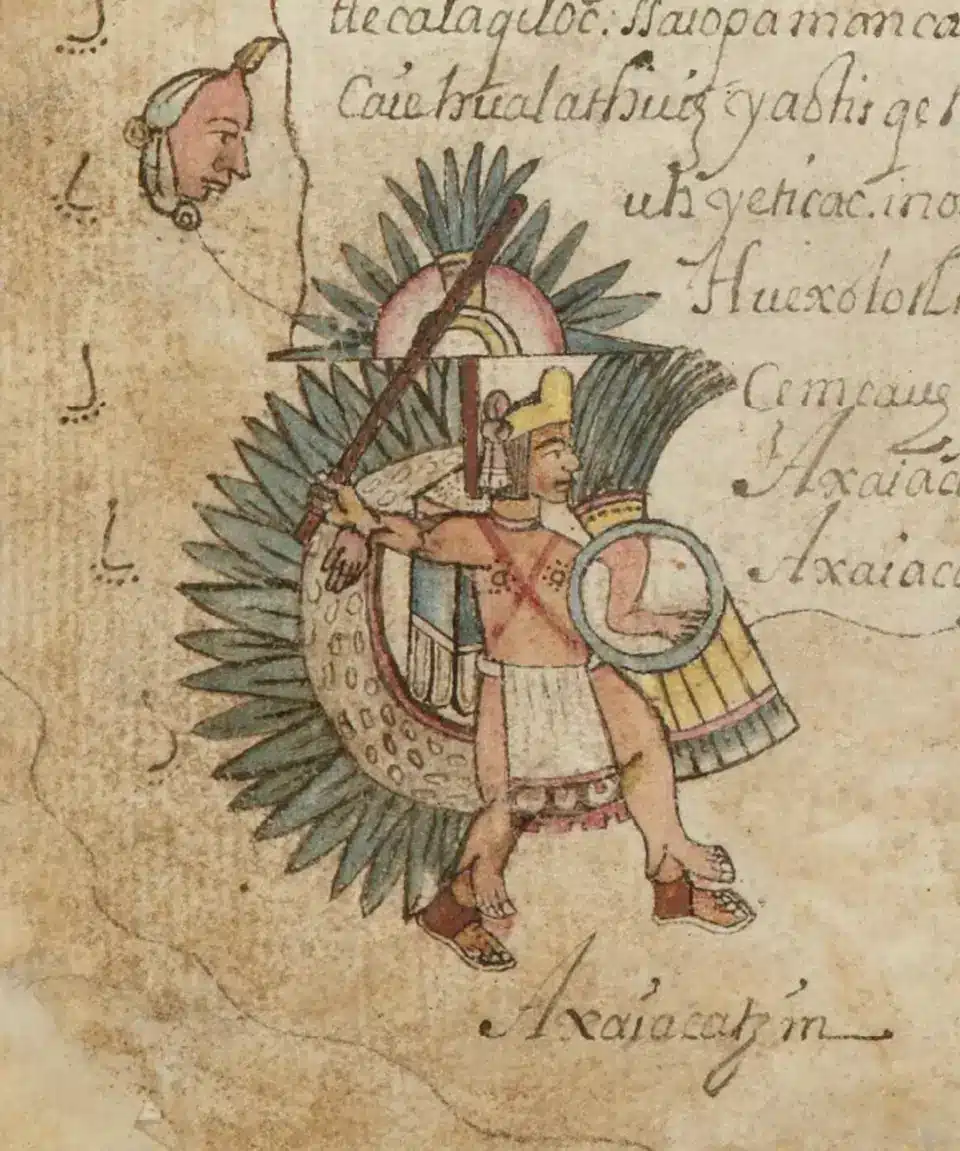
The fall of the Azcapotzalco lordship represented a turning point: the Mexica went from being tributaries to becoming central players in the Central Highlands. This marked the beginning of a period of economic expansion and internal structuring, between the third decade of the 15th century and the second decade of the 16th century.
This stage saw the consolidation of several factors that characterized the Mexica economic structure: the systematic taxation of subject peoples, the expansion of markets, the diversification of products and the strengthening of long-distance trade relations. Thus, the Mexica lordship laid the material foundations that would sustain its political and military development.
Conclusion
The economy of the Mexica lordship was not the product of chance, but the result of a strategic adaptation to its environment and a social organization that knew how to integrate work, trade and diplomacy. From fishing in the lagoon to agreements with regions such as Cuauhnáhuac, the Mexica built a network of productive relationships that strengthened their political and cultural hegemony in the Central Highlands. Studying these dynamics allows us to see beyond military power and recognize the material base that sustained one of the most influential lordships of the Mesoamerican postclassic period.
–