
Myths in the viceroyalty of New Spain

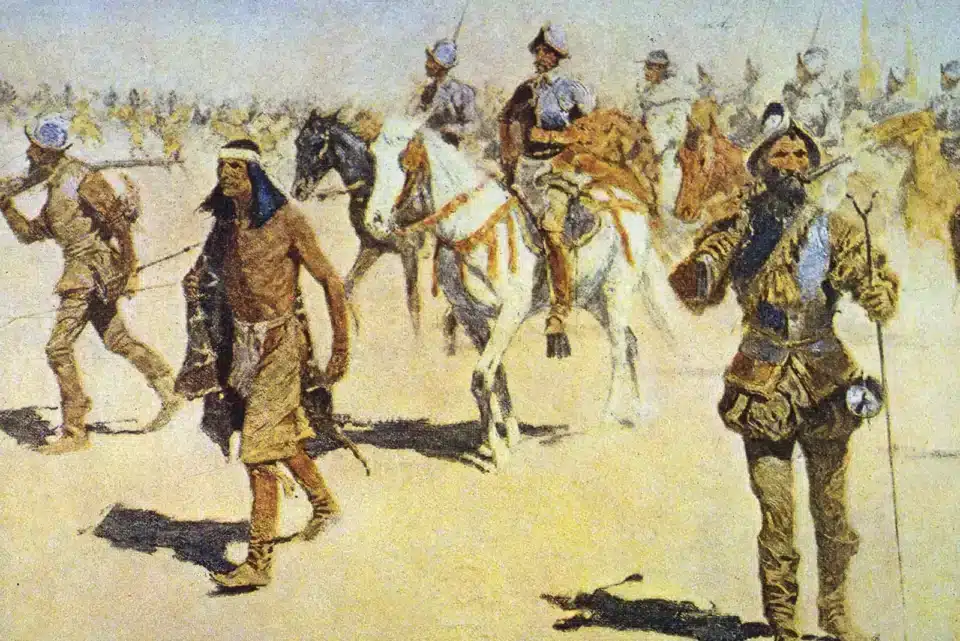
Franciso Vazque s de Coronado expedicion a Cibloa
August 16, 2025

Francisco Vázquez de Coronado and the expedition to Cíbola: from the golden myth to the arid territory.

Prompted by the stories of Friar Marcos de Niza, Francisco Vázquez de Coronado led an expedition in search of the legendary Seven Cities of Gold. What he found, however, was a vast arid territory, resistant tribes and a bitter lesson on the limits of myth versus reality. This expedition, although unsuccessful in its initial objective, left a profound impact on the cartography and geographical knowledge of the northern part of the viceroyalty of New Spain.

History of Mexico
Read More Francisco Vázquez de Coronado and the expedition to Cíbola: from the golden myth to the arid territory.
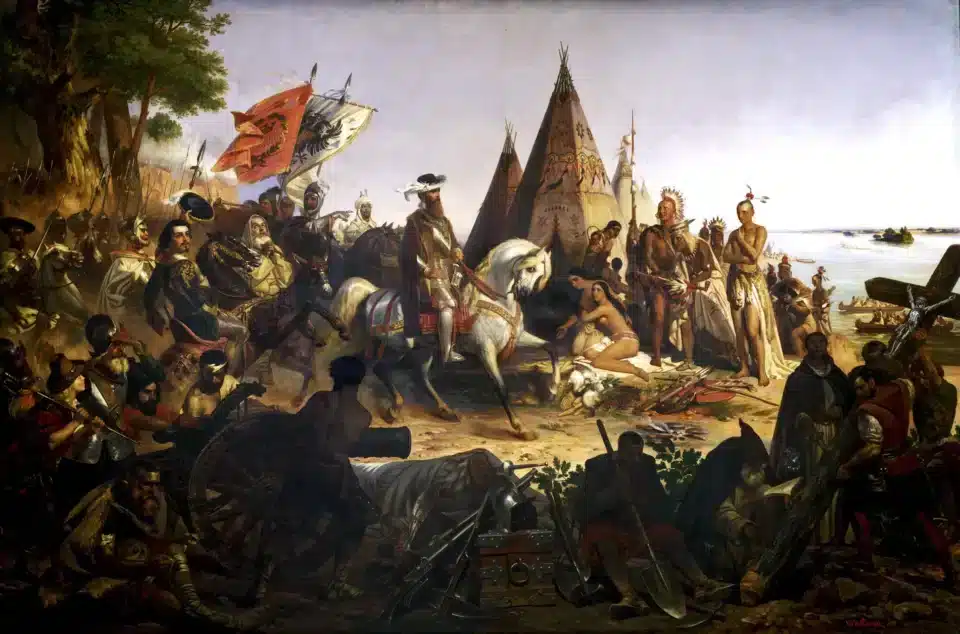
Descubrimiento del rio Mississipi
August 13, 2025

The taking of possession in New Spain: ritual, symbolism and justification of dominion.

In 1598, Juan de Oñate took possession of lands in the north of the viceroyalty of New Spain. This act not only implied a legal procedure, but also a symbolic strategy to legitimize the dominion over territories already inhabited by indigenous peoples. In this article we analyze the context, the ritual and its implications, highlighting the tensions between the Castilian imperial order and indigenous ways of life and organization.

History of Mexico
Read More The taking of possession in New Spain: ritual, symbolism and justification of dominion.

Myths in the Viceroyalty of New Spain: Beliefs, Stories, and Social Control

The myths of the Viceroyalty of New Spain were narratives that blended Indigenous traditions with European elements, giving rise to stories full of symbolism. These tales were not only sources of entertainment or explanations of the unknown but also served as tools for evangelization, cultural cohesion, and, at times, social control.

Indigenous heritage and reinterpretations

Many pre-Hispanic myths survived in the memory of Native communities, though reinterpreted through the process of evangelization. Mesoamerican deities and stories were fused with Catholic symbols:

  • Ancient gods were redefined as demons or Christian saints.

  • Indigenous origin stories were adapted to teach Christian values.

  • Religious festivals absorbed rituals connected to agriculture and natural cycles.

Myths spread during the viceregal era

Between the 16th and 18th centuries, several myths circulated widely in New Spain:

  • The Seven Cities of Gold (Cíbola and Quivira): a legend that spurred expeditions northward in search of fabulous riches.

  • The Silver Mountain: tales of mineral-rich hills that motivated exploration.

  • Religious apparitions and wonders, such as the devotion to Our Lady of Guadalupe, which became a symbol of faith and identity.

  • Urban legends, including “La Llorona,” which acquired colonial features and served as a moral and social warning.

Social and political functions

Myths were not merely fantastic tales; they fulfilled specific purposes in viceregal society:

  • Served as instruments of evangelization, adapting Christian messages to Indigenous imaginations.

  • Acted as justifications for territorial expansion, encouraging exploration and settlement.

  • Conveyed moral values and warnings, shaping behavior and norms.

  • Strengthened collective identity, uniting diverse groups through shared narratives.

Conclusion

The myths of New Spain were an essential part of viceregal life. From reinterpreted Indigenous legends to stories born in the colonial context, these myths reflect the cultural blending, religiosity, and social tensions of the era. Exploring them allows us to understand how imagination also helped build Mexico’s history.