To fully understand the Mesoamerican cultures of the Postclassic period, it is essential to unite two paths: archaeology and written testimonies. Both sources, when intertwined, allow us to reconstruct not only the material life of these peoples, but also their thought, social organization, religiosity and collective memory. This article explores this convergence and highlights the documentary wealth that, despite historical ruptures, has survived to the present day.
Material vestiges and spirituality
Archaeological findings not only reveal dates, structures and objects. They also show profound expressions of Mesoamerican spiritual culture. In the case of the Postclassic period, inscriptions, sculptures and murals loaded with religious symbolism allow us to learn about ritual aspects, cosmovisions and ways of life of those who inhabited cities such as Tula, Mayapán or Tenochca-Tenochtitlán.
Archaeology also makes visible what was not written in letters: urban design, funerary offerings, ceremonial iconography and construction sequences tell us of a living history expressed in stone, clay and pigment.

Codices: picture books and living memory
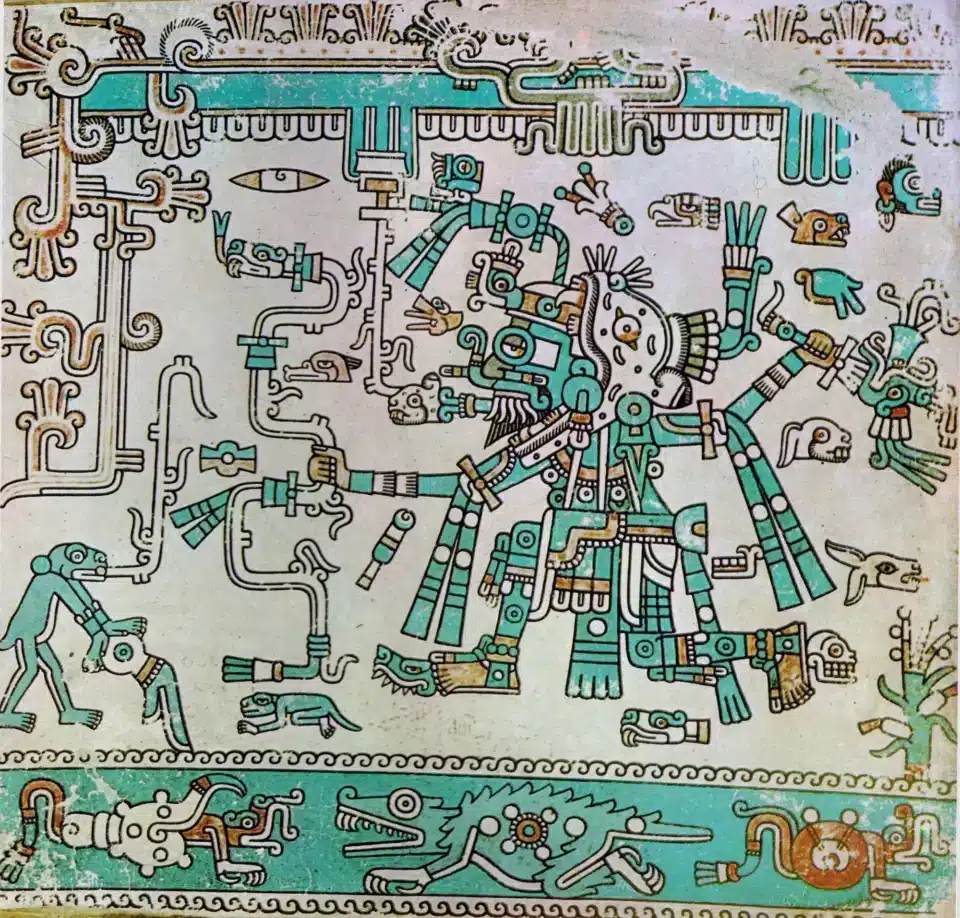
In spite of the systematic destruction that followed the military journey of Cortés and his indigenous allies, several pre-Hispanic codices have survived, as well as others elaborated in the early years of the viceroyalty by indigenous scholars who preserved the techniques of pictographic, ideographic and phonetic representation.
These manuscripts, made on amate paper, maguey fiber or deer skin, record genealogies, political events, religious rituals, wars, pilgrimages and cosmogonies. They are an invaluable source that complements the archaeological reading of the Mesoamerican landscape.
Oral tradition and pre-Hispanic education
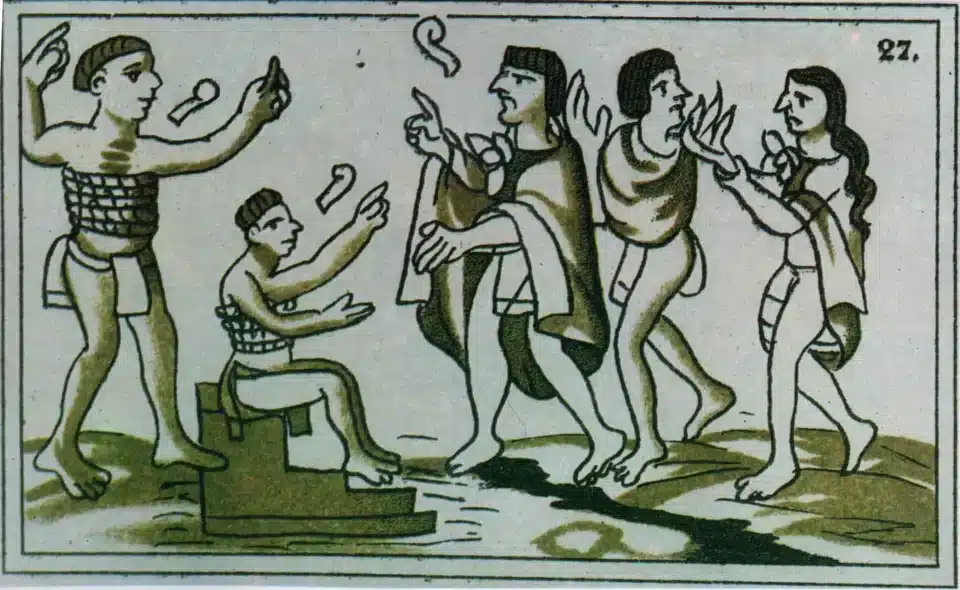
Codices were not isolated objects, but an active part of pre-Hispanic educational centers and temples. Priests and sages used them to teach history, values, and rituals through oral mémorıa. Many students memorized the stories that accompanied the images, creating a systematic tradition that lasted even after the fall of the great lordships.
Thanks to this tradition, several indigenous scholars who learned the Latin alphabet after the military journey wrote in their own languages what they had learned orally in their youth. An example of this is the manuscript known as the Annals of Tlatelolco, written in Nahuatl in 1528, just seven years after the fall of Tenochtitlán.
Legacy of wise men and missionaries
Some humanist missionaries, such as Fray Andrés de Olmos or Fray Bernardino de Sahagún, recognized the value of this knowledge and documented it. Sahagún, for example, collected poems, songs, stories and customs in the Nahuatl language, which today are preserved in the Florentine and Matritense codices. His indigenous disciples also continued this task, preserving songs and narratives, today preserved in libraries such as the National Library of Mexico and the University of Texas.
In the Maya area, other sages collected and wrote books such as the Chilam Balam, fundamental for understanding the history and cosmovision of that region during the Postclassic period.
Narratives of Cortés’ military journey
Texts written by peninsular actors in the service of the Crown of Castile, such as the Letters of Relation of Hernán Cortés, or the accounts of Bernal Díaz del Castillo and Francisco de Aguilar, provide information on the last years of independence of the Mesoamerican peoples. Although these documents sought to justify their actions before the Catholic monarchy, they also constitute a source that, read critically, allows us to reconstruct part of the political and social context of the time.
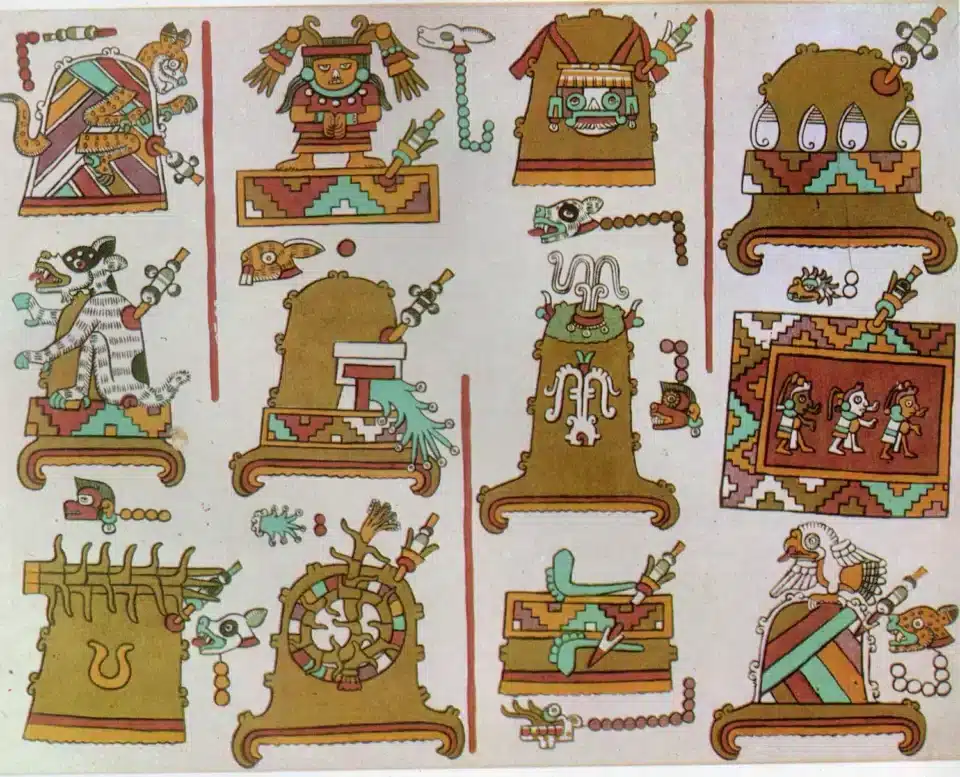
Taken together, these sources reveal that it is no fantasy to speak of a rich Mesoamerican literary tradition: myths, songs, poetry, chronicles, religious doctrines, philosophical thought and historical records coexisted in oral, pictorial and written forms.
Thanks to this diversity of documents -together with archaeological findings- today we can approach this complex and plural world with tools that allow us to hear voices that were silenced for centuries. The Mesoamerican territories became part of the Catholic monarchy, under the viceregal administration organized by the Crown of Castile. But their memory, on their own terms, lives on in their stories, their stones and their painting books.
–