
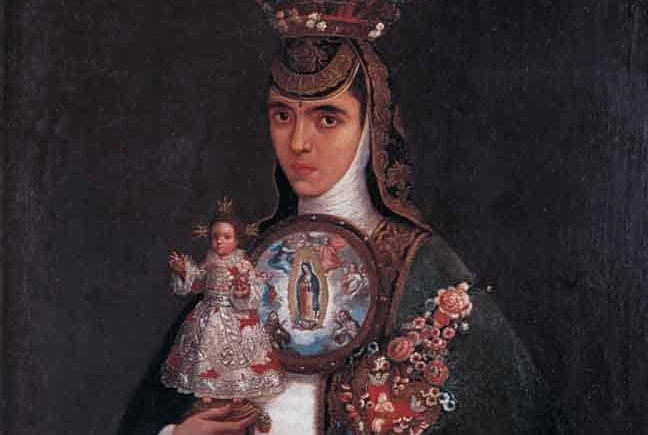
In novo-Hispanic life, the Church molded feminine spaces that combined devotion with social discipline. Convents offered religious recognition and prestige, but also imposed economic barriers such as dowries, enclosure and surveillance of conduct. Alongside them, beaterios and casas de recogidas reveal a landscape where piety coexisted with mechanisms of control and family honor.
Religious orders and episcopal subjection: exception for friars, control for nuns
Canon law, strengthened after the Council of Trent (1563), subordinated religious matters to the bishop of each diocese. Male orders retained exemptions due to the urgency of evangelization; female communities, on the other hand, remained subject to the mitre even when they were linked to male orders. This asymmetry reflects institutional priorities: sacraments and mission for friars; enclosure and obedience for nuns.
Women’s convents were authorized mainly in cities with elites capable of sustaining them, as they did not receive tithes or royal funds. Their “utility” was defined as an honorable refuge for unmarried women, protecting family honor in a society that offered few economic outlets for women. The teaching of kindergartens existed, but it was a minority; the central mission was not mass education, but convent life.
Real reluctance and “rubber law”: persistence bordering on the fait accompli
The Crown was reluctant to multiply nunneries. Novo-Hispanic society insisted on the so-called “rubber law”: to advance in practice while authorizations were negotiated in Rome and Madrid, often with high-ranking accomplices – kings and bishops – out of pity or prestige. The case of Santa Rosa de Puebla, active almost a century before the formal permit, illustrates a religiosity that forced the legal framework.
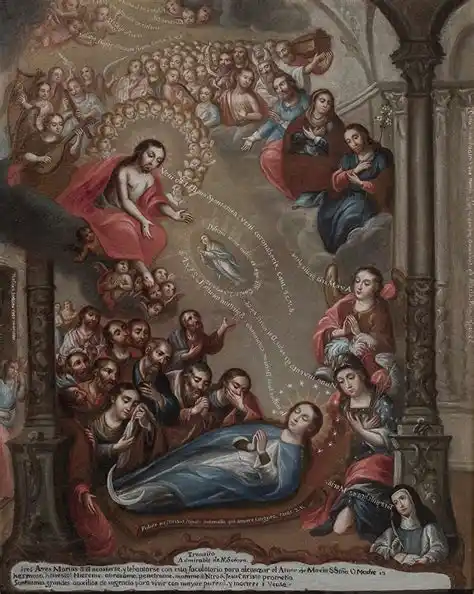
Conventual wealth: prestige, dowries and capitals
Far from impoverishing the cities, several women’s convents accumulated wealth. La Concepción, founded in 1547 by Archbishop Zumárraga, was an outstanding example. The key was in high endowments -so much so that foundations arose to cover them-, opulent patrons, purchase of urban estates and placement of capital in census. In fact, they acted as banks in an environment without modern banking. They benefited their communities, but the dowry excluded many women without resources.
Governance and internal life: discipline, factions and hierarchies
Under its own rules and with an elected prioress, the mitre supervised through an administrator who reviewed accounts, an archivist who inspected all the convents of the diocese and an ecclesiastical rector responsible for sacraments and morals. Discipline was not homogeneous: cells furnished according to possibilities, pride of lineage that surfaced in elections of superior and factions that came to found new convents, like Regina in Mexico City. In addition to the nuns, there were girls accepted from an early age -many grew old in the cloister without marrying- and maids whose number was tried to be limited without success. The ideal of community was tempered with internal stratifications.
The parlor was the window to the world: friendships, news, gifts, letters and “spiritual” courtships that, if they crossed limits, ended in scoldings and punishments. It was both a place of sociability and a guarded frontier between the cloister and the city.
Houses for women: moralization and trades considered “feminine” at the time.
Under episcopal jurisdiction, these houses housed women who sought – or were led to – abandon a life considered “angry”. They were taught trades considered appropriate for their sex in order to reintegrate them through marriage or an “honest” life. The results were variable, and entry was not always voluntary.
Beaterios: devotion without approved rule
Without authorization, patrons or local support, the convent project remained a beaterio: pious women gathered without solemn vows or an approved rule, with limited recognition. It was an intermediate solution that revealed legal and economic restrictions.
Closing: devotion, control and inequalities
Women’s convents were a spiritual pole and economic actor, but their access depended on family resources and power networks. They functioned as spaces of prestige and moral containment, with benefits and limits: protection and enclosure, piety and vigilance, patrimonial mobility and entry barriers. The story they show is complex: women inhabited these frameworks, but they also suffered from them.
Some important clarifications on the Church and women in New Spain
Why was the dowry a decisive filter?
Because without a dowry many young women could not profess. The dowry financed the convent and, being high, excluded women without capital.
In what sense did they “act like banks”?
They managed urban rents and placed capital at census (loan with yield) for commerce, haciendas or mines: financial functions without modern banking.
Were the collection houses always voluntary?
Not necessarily. There were non-voluntary admissions. They sought “moral reform” and trades, with varying results.
Was the call shop just devotion?
No. It was also social exchange (friendships, gifts, letters). When relationships crossed boundaries, sanctions arrived.
Were the beaterios “second-rate convents”?
They were devout groupings without approved rules or solemn vows. Less recognition and more legal fragility.
–