
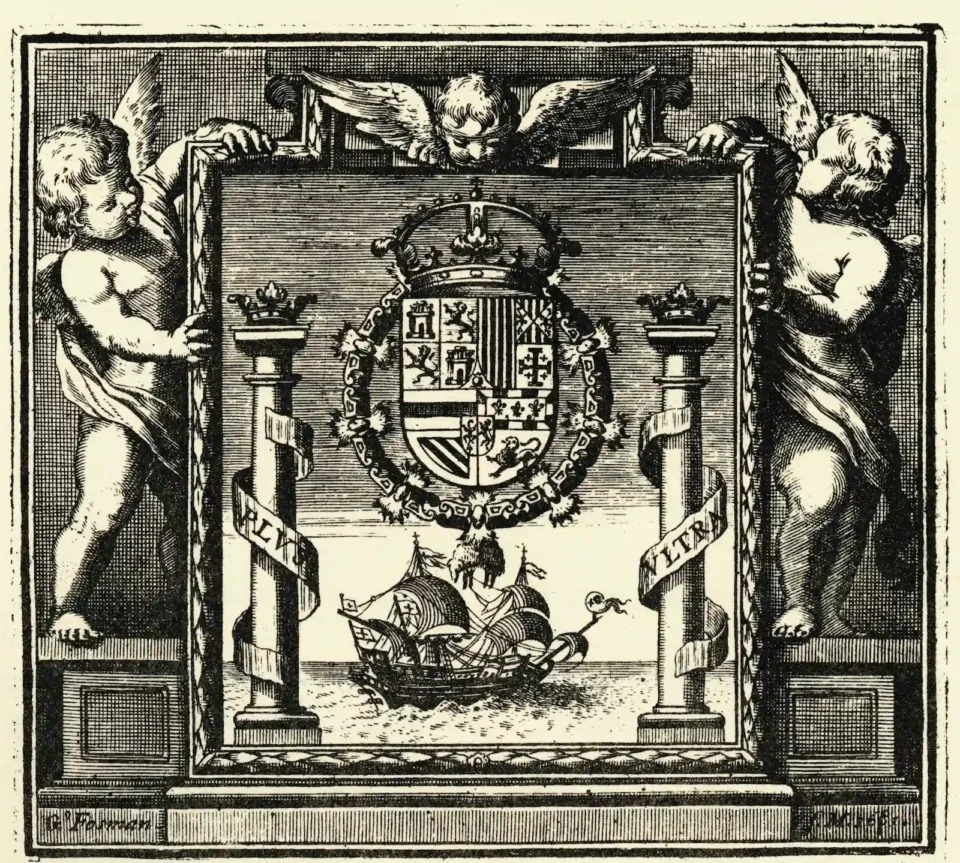
The Viceroyalty of New Spain was not only a complex political and economic structure, but also a carefully structured legal project. From the early years after the arrival of the peninsular authorities, the Catholic monarchy was concerned with establishing a regulatory framework that would govern all aspects of colonial life: from public administration to the daily lives of indigenous and peninsular peoples.
This effort resulted in a large body of legal documents, including royal decrees, compilations of regulations, and an important legal doctrine known as Política Indiana. In this article, we explore how these laws were organized, what purpose they served, and what impact they had on the administration of the viceroyalty.
The royal ledger: an instrument of government from afar
One of the first mechanisms used by the monarchy was the royal register, a chronological compilation of decrees, provisions, royal orders, and decrees sent from the peninsula to the authorities in America. These compilations were created to facilitate the understanding and application of current law, both in the courts and in the viceregal administration.
These documents contained everything from instructions for viceroys to regulations on trade, taxes, relations with indigenous peoples, and the functioning of institutions. Their cumulative nature reflected the Crown’s attempt to exercise direct control over its overseas territories, despite the distance.
The Compilation of Laws of the Indies: bringing order to legal chaos
From dispersion to systematization
Throughout the 16th century and much of the 17th century, the legislation sent to America was so abundant and diverse that it created a problem of application: many rules contradicted each other or became obsolete. To resolve this disorder, in 1680 the Recopilación de Leyes de los Reinos de las Indias (Compilation of Laws of the Kingdoms of the Indies) was enacted, a monumental effort to systematize and refine Indian law.
This work brought together nearly 6,400 laws organized into nine books and more than 200 titles, covering topics such as government organization, evangelization, relations with indigenous peoples, trade, mining, justice, and education. It was the main reference standard for local authorities, viceroys, and judges until the end of the viceregal period.
A law made from above
Despite its normative nature, the Compilation reflected a centralized view of power. Laws were conceived by the peninsular court and did not always fit local realities. Their application depended on the interpretation and will of officials, and in some cases they remained dead letters if they were not compatible with daily life in the viceroyalty.
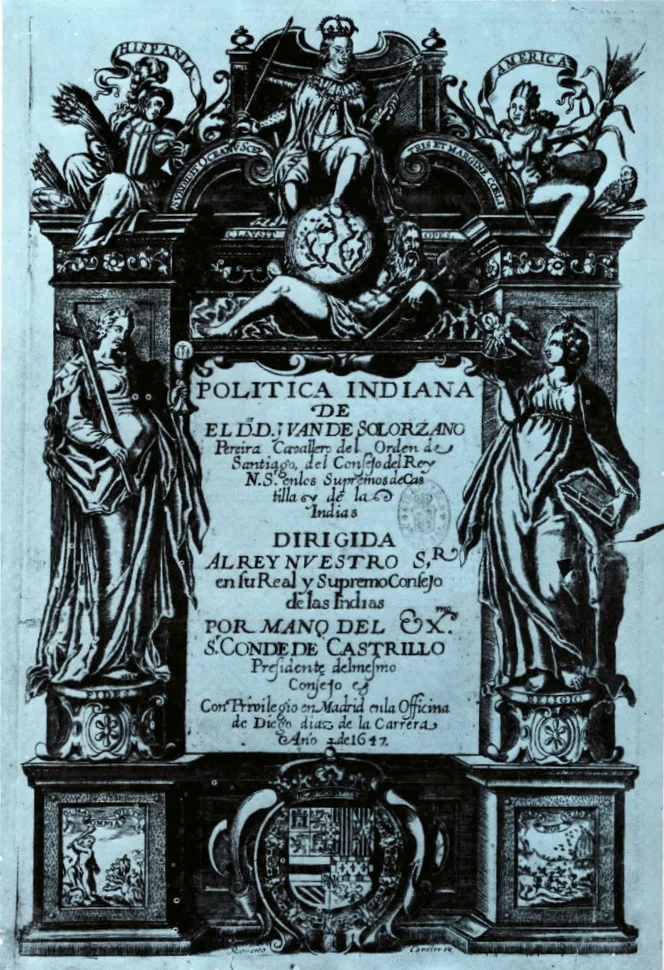
A theological and legal view of government in America
A theological and legal view of government in America
Alongside positive laws, an important legal doctrine was also developed that justified and guided the exercise of power in America. This doctrine, known as Política Indiana, was developed by jurists and theologians such as Juan de Solórzano Pereira, Bartolomé de las Casas, and Francisco de Vitoria.
These thinkers reflected on the rights of indigenous peoples, the legitimacy of Spanish rule, the role of the Church, and the limits of royal power. Their work was not binding like the Recopilación, but it served to educate generations of officials and establish principles of government and justice in New Spain.
Conclusion on the codes and legal doctrine of the Viceroyalty of New Spain
The legal apparatus of the Viceroyalty of New Spain was one of the most sophisticated of the modern era. Through cedularios (royal decrees), legal compilations, and legal doctrine, the Catholic monarchy sought to establish a regulatory order that would guarantee political control, social cohesion, and the legitimacy of its presence in America.
Although these rules were often poorly adapted to local conditions and their application was uneven, the legal legacy of the viceroyalty remains a valuable source for understanding the functioning of power and administration in Mexican history.
–