17th century

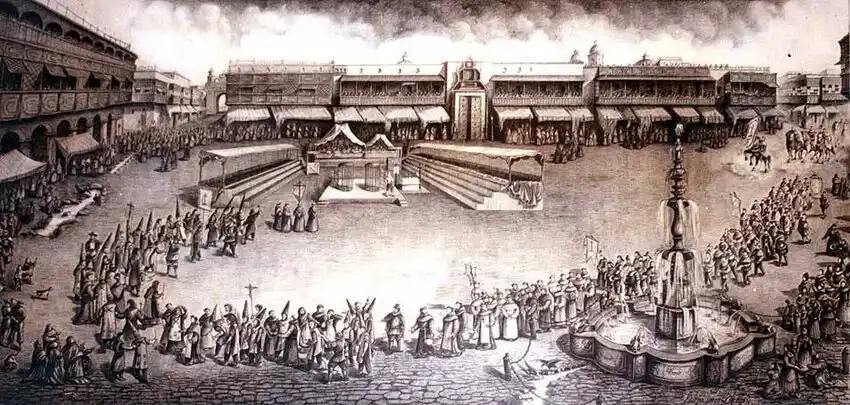
Engraving of an auto de fe in Lima (17th century). Symbolic representation to illustrate the public acts of the Tribunal of the Holy Office in Spanish America.
October 13, 2025

The visit to the Tribunal of the Holy Office in New Spain (1645-1662): denunciations, abuses and sentences.

Between autos de fe and internal conflicts, the Tribunal of the Holy Office in New Spain experienced one of its most complex crises: the inquisitorial visitation of 1645-1662, marked by denunciations, abuses and sentences against its own ministers.

History of MexicoNo category
Read More The visit to the Tribunal of the Holy Office in New Spain (1645-1662): denunciations, abuses and sentences.
Engraving attributed to Samuel Stradanus (Metropolitan Museum of Art), 17th century - visual context approximating the period in which the Inquisition faced its crisis and reactivation with the edict of 1643.
September 26, 2025

The crisis and reactivation of the Inquisition in New Spain: conflicts, town councils and the edict of 1643.

During the 1630s, the Inquisition in New Spain entered a period of decadence due to conflicts with the viceroy and the town councils. However, in 1643 it was reactivated with the solemn reading of the general edict of faith, which marked a revival in its activities.

History of MexicoNo category
Read More The crisis and reactivation of the Inquisition in New Spain: conflicts, town councils and the edict of 1643.
Nueva Francia
August 20, 2025

The French threat in the north of the viceroyalty: the fort of San Luis and the novo-Hispanic response.

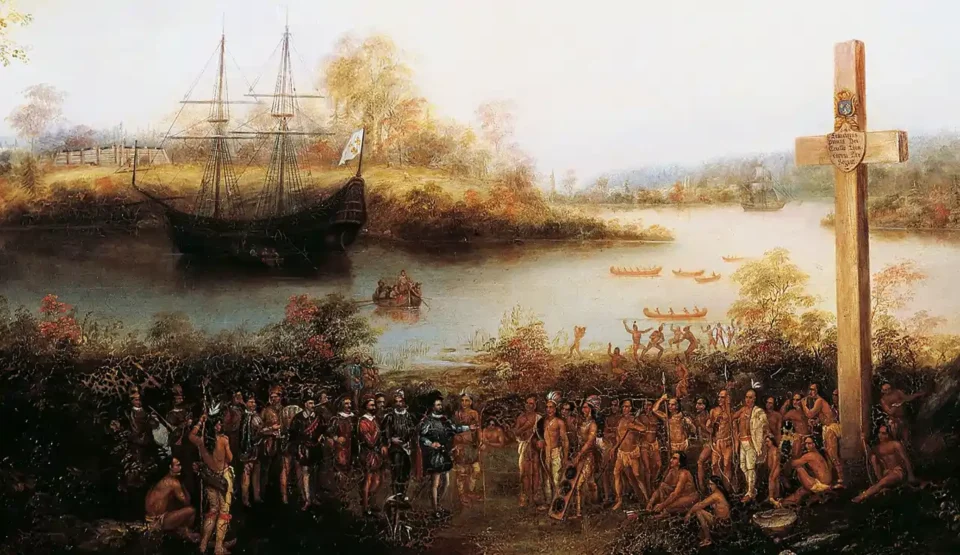
When La Salle founded the fort of San Luis on land that is now part of Texas, the Catholic monarchy reacted quickly to protect its northern border. This episode marked the beginning of a defensive expansion, Franciscan missions and constant vigilance against the foreign threat.

History of Mexico
Read More The French threat in the north of the viceroyalty: the fort of San Luis and the novo-Hispanic response.

The 17th century in the viceroyalty of New Spain: crisis, stability and transformations
The 17th century in the Viceroyalty of New Spain was a period marked by contrasts. Following the dynamism of the 16th century, this century brought economic crises, epidemics, and population declines, but also political consolidation, institutional stability, and a cultural flourishing that left its mark on New Spain’s identity.
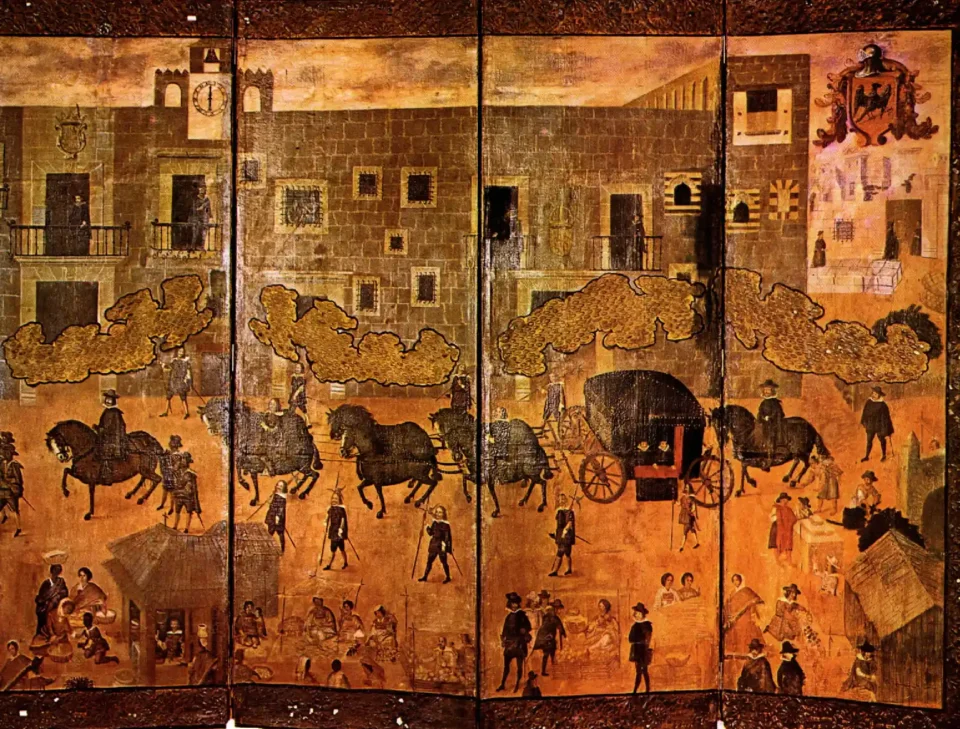
Mexico City established itself as the political, religious, and economic heart of the viceroyalty. From there, control was exercised over vast territories stretching from Central America to the north of what is now Mexico and the southwestern United States. The Royal Audience of Mexico, based in the capital, reinforced the viceroy’s authority, while local councils maintained order in cities and towns.
On the economic level, the silver mines continued to be the main driving force, although they suffered periods of crisis due to the decrease in indigenous labor and competition from European markets. Agriculture and cattle ranching expanded, promoting haciendas that profoundly modified the rural landscape and the lives of indigenous communities.
Novo-Hispanic society showed greater differentiation. Creoles, peninsulares, Indians, mestizos, mulattos and enslaved people of African origin formed a complex mosaic in which social tensions were frequent. Even so, daily life was marked by religiosity, the celebration of patron saint festivals and the influence of the Catholic Church, which consolidated its position as an actor of great power.
In the cultural sphere, the 17th century was a period of baroque splendor. Temples, convents and schools were built in an artistic style that mixed European and indigenous influences. Literature and philosophy also flourished, with figures such as Sor Juana Inés de la Cruz, who became a symbol of Novohispanic critical thinking and creativity.
El siglo XVII en Nueva España representó tanto desafíos como logros. It was a time of adaptation in the face of demographic and economic crises, but also of consolidation for a society that found new forms of expression in cultural diversity and miscegenation. Understanding this period is key to understanding how viceregal Mexico was shaped, which, over time, would give rise to independent Mexico.