
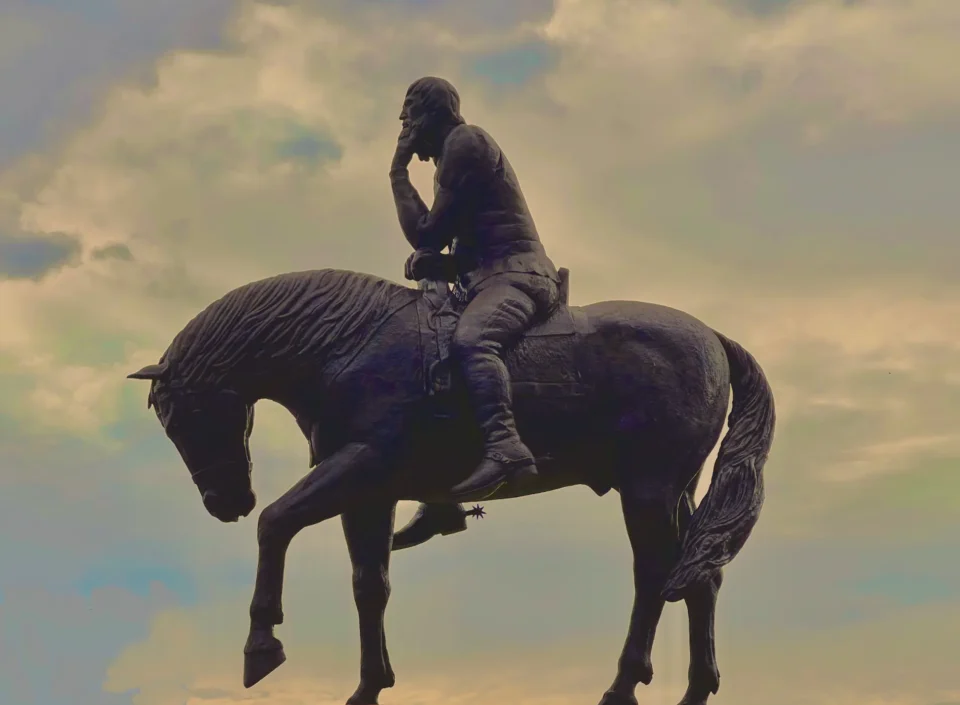
In the last quarter of the 16th century, the north of the viceroyalty of New Spain remained an unstable frontier. While the Catholic monarchy’s aspirations for territorial expansion continued to drive expeditions, the limits of effective control remained blurred. It was in this context that the figure of Luis de Carbajal y de la Cueva emerged, a character who embodied both the colonizing impulse and the internal tensions of the imperial system. His story is intertwined with political disputes, strategic alliances, religious persecutions and the exercise of power in a region that was trying to integrate -by force or by faith- into the viceregal order.
The viceroyalty context: frontier, encomiendas and internal disputes
During the rule of Viceroy Martín Enríquez de Almanza (and later, Lorenzo Suárez de Mendoza), the Catholic monarchy sought to reinforce its presence in the northern territories. However, these regions were not a “vacuum”, but spaces inhabited by numerous indigenous peoples with their own traditions, constant mobility and active resistance. The area that would become known as the Nuevo Reino de León was especially complex: inhabited by diverse nomadic groups such as the Guachichiles, Negritos, Rayados and others, it did not respond to the sedentary structures that facilitated political-ecclesiastical control in other parts of Mesoamerica.
In this scenario of territorial uncertainty and rivalries between different encomenderos and viceroyalty officials, in 1579 the Crown of Castile granted Luis de Carbajal y de la Cueva a capitulation to explore, populate and pacify a vast strip of the north, which included territories that today belong to the states of Nuevo León, Tamaulipas, Coahuila and part of San Luis Potosí.
Carbajal’s company: between foundations and conflicts
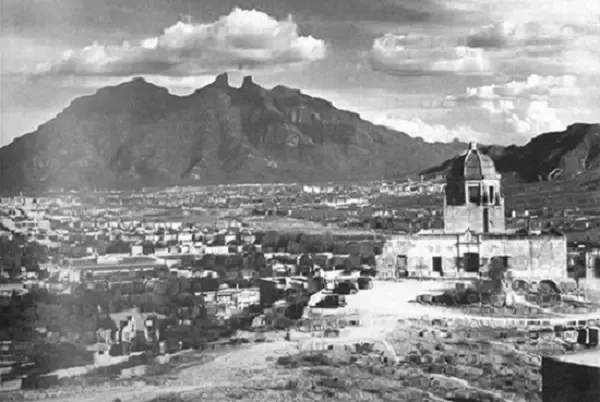
Luis de Carbajal established his base of operations in León (today the municipality of Cerralvo, Nuevo León) in 1582. His project involved founding villages, attracting settlers, organizing defense against indigenous peoples considered “bellicose” and promoting evangelization. However, from the beginning, the founding of the Nuevo Reino de León encountered serious difficulties: lack of resources, resistance from the native peoples, poor viceregal supervision and conflicts with other regional authorities.
Carbajal, as governor and captain general, acted with broad powers, but also with a margin of autonomy that began to make other actors in the viceroyalty uncomfortable. Among his most controversial actions was the capture and forced transfer of indigenous groups for their “reduction”, a practice that provoked numerous local conflicts. At the same time, his policy towards the colonists was not always well received: there were complaints of abuse, land appropriation and authoritarianism.
The other face of history: the Judaizers in northern New Spain
One of the most dramatic aspects of Carbajal’s life was his link to the crypto-Jews. Although he himself publicly declared himself an Old Christian, several members of his family, including his brother-in-law Francisco Rodríguez and his niece Mariana de Carvajal, were accused by the Inquisition of secretly practicing Judaism.
The north of the viceroyalty offered, to a certain extent, a space of relative freedom from the inquisitorial control of Mexico City. However, this changed radically when reports of heretical practices began to circulate within Carbajal’s close circle. In 1589, he was arrested and taken to the capital, where he faced charges of concealment. Although he denied direct knowledge of his relatives’ religious practices, he was sentenced to banishment and his reputation was forever tarnished.
Indigenous resistance and limits of power
Throughout his mandate, Carbajal faced multiple resistances. The indigenous peoples of the north responded by attacking the villas, fleeing to inaccessible areas and, in some cases, momentary negotiations that did not prosper. The founding model that Carbajal tried to impose – based on reductions, encomiendas and forced conversions – failed to consolidate a stable structure.
These peoples not only resisted viceregal power, but also defended ways of life deeply linked to their mobility, territory and worldview. The partial failure of Carbajal’s project shows the limitations of the imperial model in regions where neither the sovereignty nor the political complexity of the native peoples was recognized.
Conclusion on Luis de Carbajal and the founding of the Nuevo Reino de León
Luis de Carbajal and the founding of the Nuevo Reino de León are part of a frontier history marked by ambition, resistance and contradiction. While it represented the Catholic monarchy’s attempt to control a vast and rebellious region, it also revealed the gaps in viceregal power, the difficulty of subduing diverse indigenous realities and the drama of those who sought refuge – such as the Judaizers – on the margins of the empire. At that crossroads, northern New Spain was not only a frontier to be conquered, but a territory of unresolved tensions, where imperial promises crashed against the complexity of the terrain and the strength of those who inhabited it.
–