
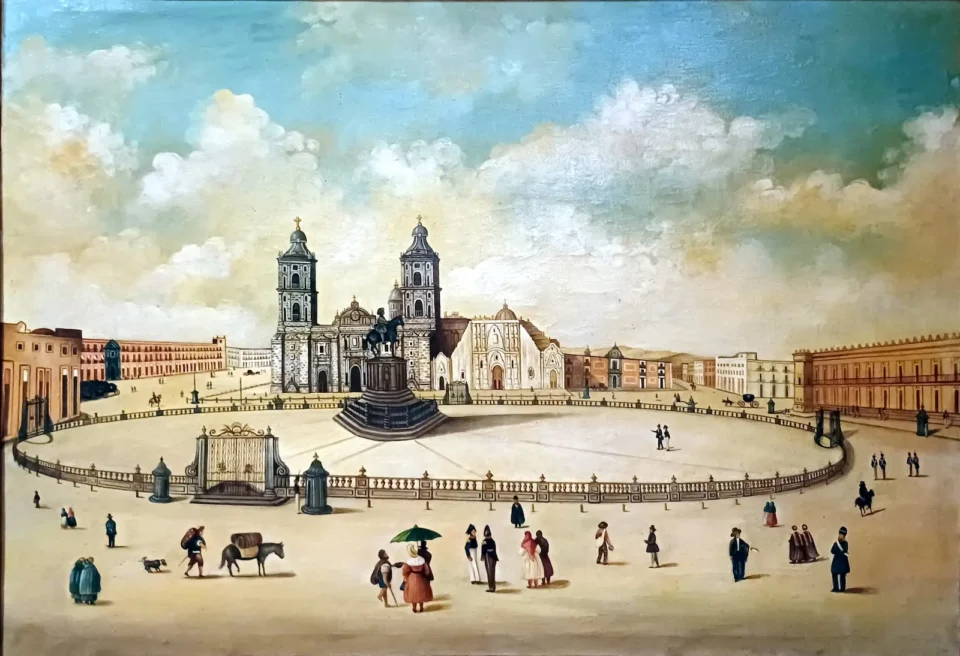
From the first years of the establishment of the viceregal regime, the Catholic Church played a fundamental role in the social, political and cultural configuration of New Spain. Its presence was not limited to the spiritual sphere: it became an institutional power that accompanied, reinforced -and at times even strained- the authority of the Spanish Catholic monarchy.
One of its central objectives was the evangelization of the indigenous peoples, a process that involved the introduction of Christianity, the transformation of community ways of life and the reconfiguration of the Mesoamerican cultural landscapes. Through religious orders, parishes, schools and temples, the Church expanded throughout New Spain, becoming one of the main landowners and generators of wealth.
But this prominence was not without conflict: tensions between different religious orders, disputes with civil authorities and internal questions about evangelization methods marked much of the period. This article analyzes how the Catholic Church consolidated itself as a powerful force in New Spain, its relations with the viceregal power and the social impact of its missionary and administrative work.
Evangelization and cultural reconfiguration
Since the 16th century, evangelization was considered a priority in the territories incorporated into the Catholic monarchy. The religious orders -mainly Franciscans, Dominicans and Augustinians- were initially charged with this task. These religious communities learned indigenous languages, developed bilingual catechisms and adapted cultural elements to facilitate conversion.
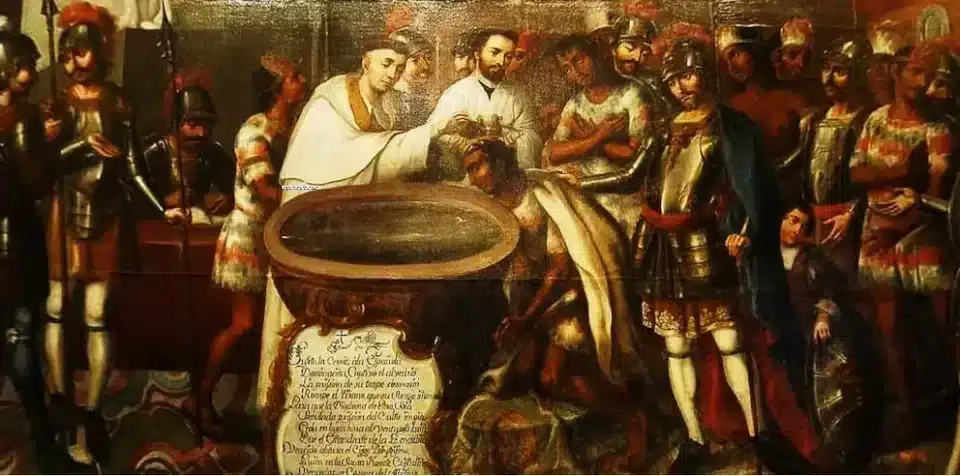
The work of evangelization consisted not only in teaching Christian doctrine, but also in modifying community structures: reorganizing towns, controlling festivities and replacing ancient Mesoamerican temples with Catholic churches. Religious education was imparted from an early age and practices such as confession and baptism were promoted.
Institutional power and accumulated wealth
Over time, the Catholic Church consolidated considerable economic and political power. Thanks to donations, alms, tithes and inheritances, it accumulated large tracts of land, especially through religious orders and ecclesiastical corporations. The confraternities and pious works were also instruments for managing properties and resources.
In addition to being a spiritual power, the Church was a judicial actor: it had its own ecclesiastical courts and participated in public life through the secular clergy. Many ecclesiastical positions were held by people closely linked to the peninsular and Creole elites, which reinforced ecclesiastical influence at all levels of the viceroyalty.
Tensions between the Church and viceregal power
Despite its close collaboration with the Catholic monarchy, the Church did not always act in harmony with the viceroyal government. There were jurisdictional disputes between bishops and viceroys, especially over issues such as the appointment of parish priests, the collection of tithes or the application of ecclesiastical justice.
There were also conflicts between religious orders over the control of doctrines or mission territories. In some cases, the friars themselves criticized the abuses of the civil authorities, defending the indigenous communities; in others, they themselves engaged in excessive control practices.
These tensions show that the Catholic Church was not a monolithic bloc, but a complex institution with interests, internal currents and variable relations with the viceregal power.
Conclusion on the Catholic Church in New Spain
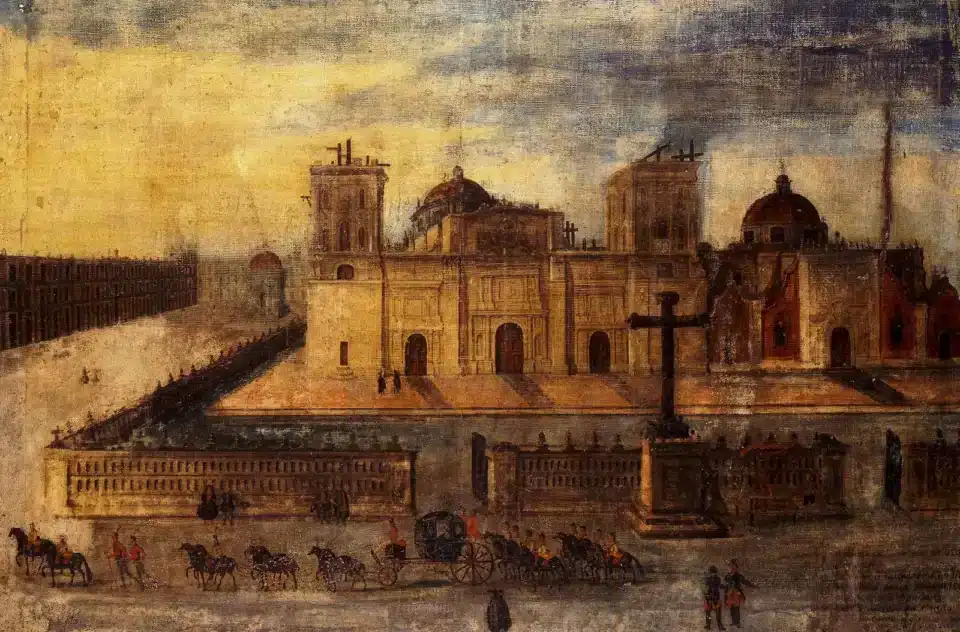
The Catholic Church in New Spain was not only a religious institution: it was a central actor in the reorganization of the territory, in the cultural transformation of the indigenous peoples and in the configuration of viceregal power. Through evangelization, new values, symbols and practices were introduced that redefined the Mesoamerican world. But it also led to the accumulation of goods, the establishment of rigid hierarchies and the generation of tensions with other powers.
Understanding its role requires going beyond the myth of a peaceful evangelization or a uniform Church. It was a diverse institution, with lights and shadows, which accompanied -and at times conditioned- the political, economic and social development of the viceroyalty.
–