Religious orders

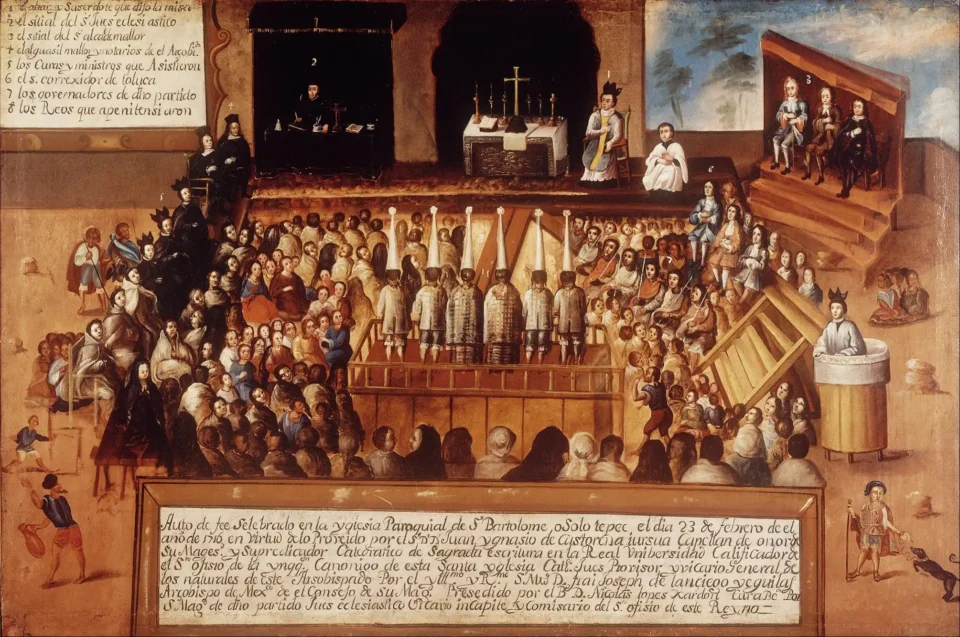
Auto de fe in the town of San Bartolomé Otzolotepec.
September 21, 2025

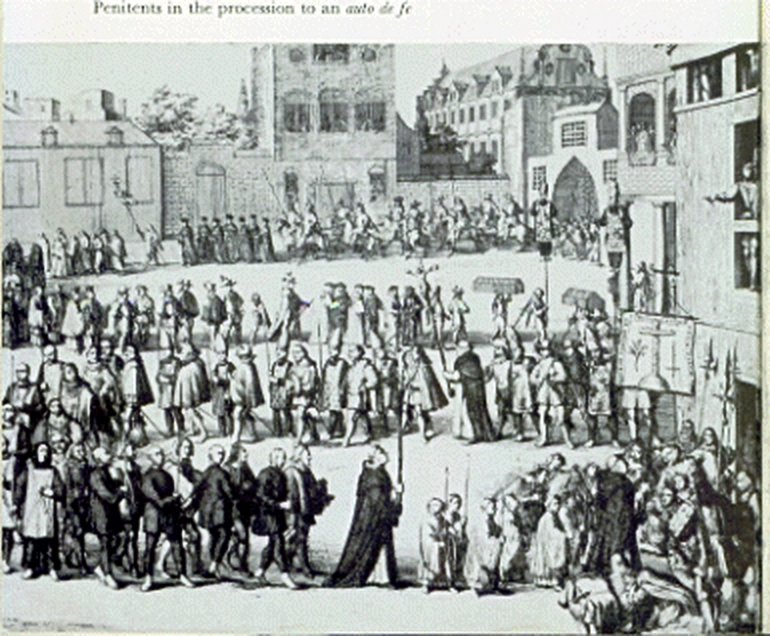
The Tribunal of the Holy Office in New Spain: origins, oaths and autos de fe (oaths and autos de fe)

The installation of the Tribunal of the Holy Office in New Spain in 1571 transformed the religious life of the viceroyalty. From oath ceremonies and edicts of grace to the most famous autos de fe, this article narrates how inquisitorial power was consolidated in New Spain’s society.

History of MexicoNo category
Read More The Tribunal of the Holy Office in New Spain: origins, oaths and autos de fe (oaths and autos de fe)
Santa teresa la nueva
September 13, 2023

Santa teresa la nueva

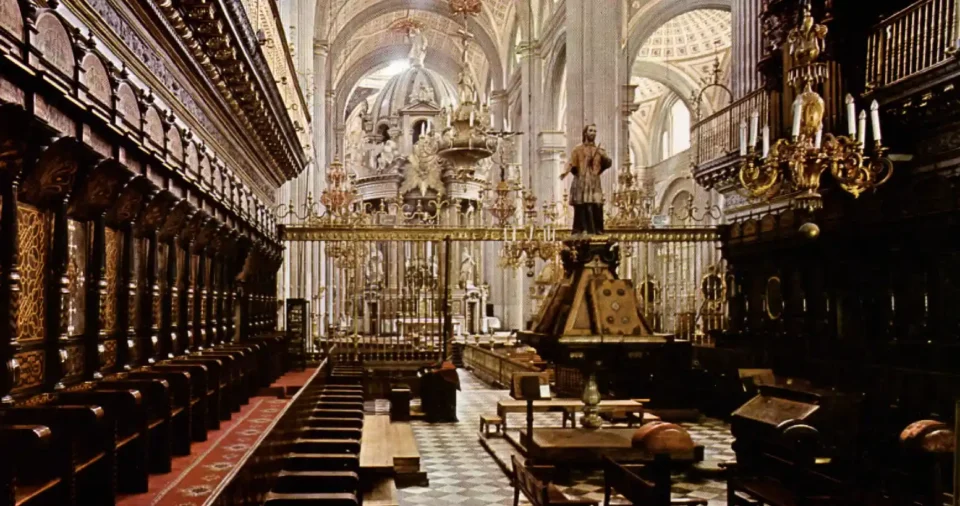
On the eastern side of the Historic Center, is located this impressive temple, which has its roots in the historic convent of the Order of Discalced Carmelites, whose construction dates back to the dawn of the eighteenth century. This site embodies the richness of our architectural heritage and is a living testimony of our cultural history.

History of Mexico
Read More Santa teresa la nueva

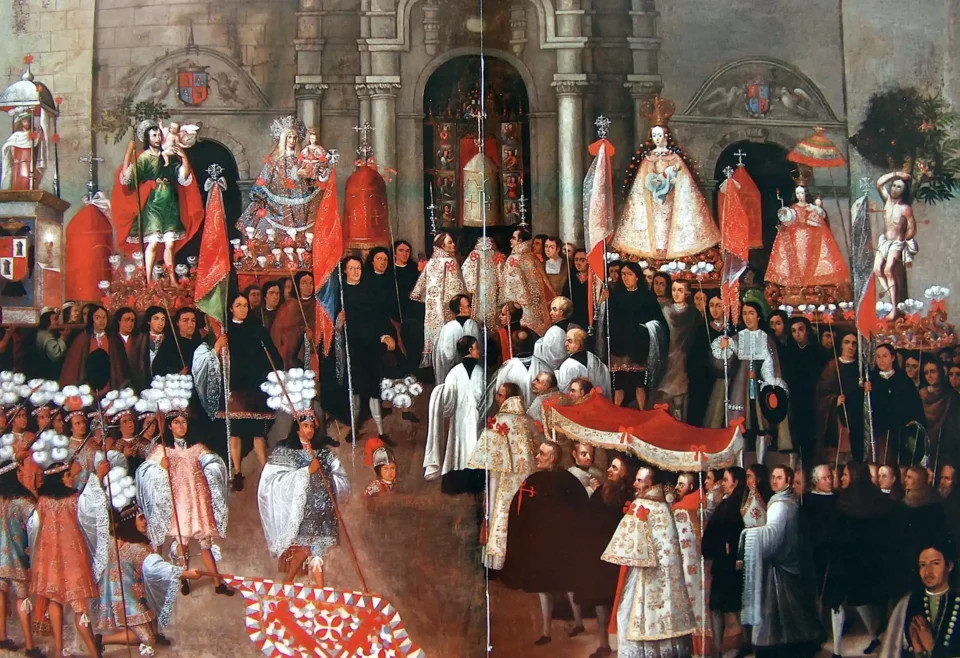
Religious orders in the viceroyalty of New Spain: evangelization, power and legacy
The religious orders in the viceroyalty of New Spain were fundamental actors in the construction of the New Spain world. Arriving in the 16th century, these communities of friars and priests not only had the mission of evangelizing the indigenous peoples, but also played a central role in education, social organization and the cultural life of the viceroyalty. Their influence reached political and economic spheres, making them pillars of the viceregal system of the Catholic monarchy.

First orders and evangelization
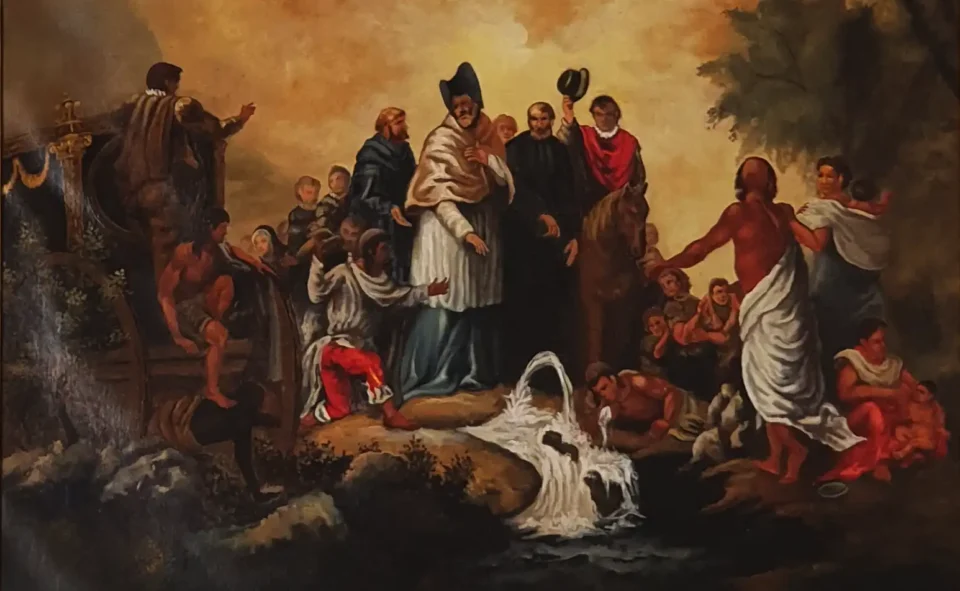
The Franciscans were the first to arrive in 1524, followed by the Dominicans and Augustinians. These groups were the protagonists of the so-called “first evangelization”, building convents, temples and schools that became centers of religious and cultural education. Their strategy was based on learning indigenous languages, translating catechisms and adapting symbols to spread the faith.
Later, in the 16th century, the Jesuits arrived, who excelled in higher education and the formation of schools, in addition to promoting missions in frontier areas.

Education and culture
Religious orders were responsible for founding schools, seminaries and universities. Their work allowed the teaching of Latin, philosophy, theology and the first sciences, while preserving and adapting indigenous knowledge. Many codices and traditions were recorded thanks to friars who wrote chronicles about the life of the native peoples.
The convents became cultural, artistic and architectural centers. The open chapels, murals and cloisters are testimony to a religiosity that combined the European with the indigenous.

Power and tensions
Although the religious orders worked under the authorization of the Crown of Castile and the royal patronage, their power came to generate tensions with bishops, civil authorities and even with the monarchy itself. Their presence in daily life, their control of missionary territories and their influence on the population gave them considerable political weight.
In frontier regions, such as northern New Spain, the friars were also mediators and, at times, protagonists in conflicts with indigenous peoples who resisted evangelization.

Conclusion
Religious orders in New Spain not only evangelized, but also shaped the cultural, educational and social life of the viceroyalty. Between tensions and contributions, they left a visible legacy in convents, educational institutions and religious practices that are still part of the Mexican identity. Understanding their role allows us to appreciate the complexity of the evangelizing process and the deep imprint they left on the history of the country.