
The urban heart of the Zócalo
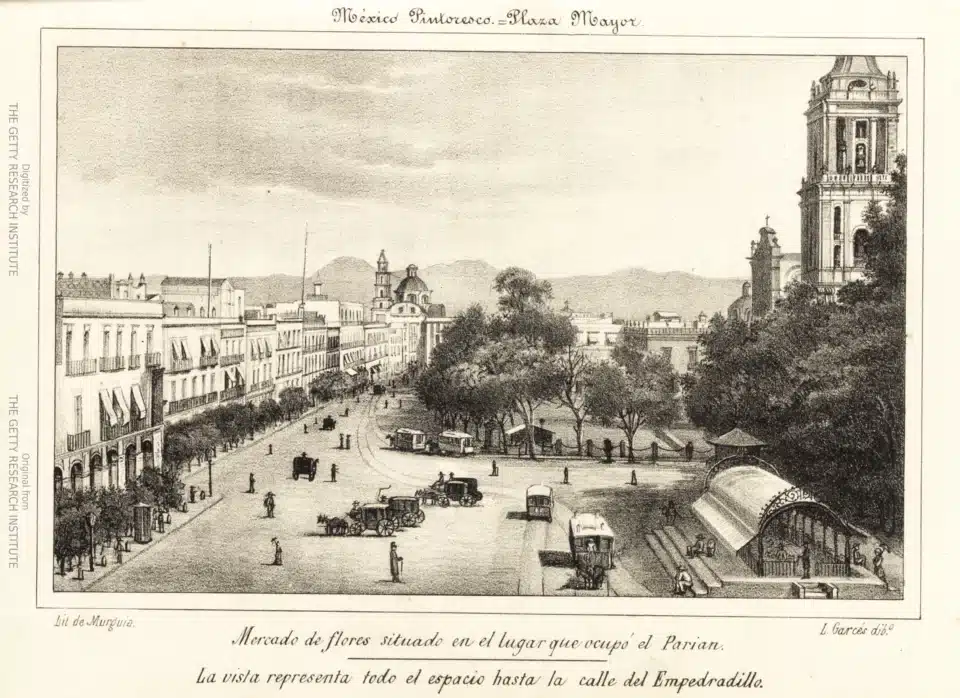
The Zócalo, officially known as Plaza de la Constitución, is the heart of Mexico City’s history and urban life. Traces of ancient civilizations and modern expressions converge in this space, which is a meeting point for cultural, commercial, political, and religious activities.
Over the centuries, it has served as a public hub, reflecting the historical and economic processes that shaped the city and the viceroyalty.
Foundations and viceregal layout
At the beginning of the 16th century, Emperor Charles V established guidelines for founding new cities in the territories incorporated into the Castilian imperial system. It was specified that cities should be organized around a rectangular main square, surrounded by the most important buildings: the town hall, the main church, and the most distinguished residences.
Before these regulations were introduced, Hernán Cortés had already laid out the first settlements in New Spain following a similar pattern, with the help of master builder Alonso García Bravo and indigenous craftsmen. This design would become the model for other cities on the continent under viceregal administration.
La Plaza Mayor: centro de jerarquía y poder
El Zócalo se definió con un largo doble que su ancho, extendiéndose de la actual calle República de Guatemala hasta la Diputación, y de Palacio al portal de los Mercaderes. La iglesia se ubicó casi al centro, con el ábside orientado hacia el oriente, estableciendo jerarquías simbólicas y funcionales que marcarían el desarrollo urbano de la capital novohispana.
La Plaza Mayor también se consolidó como centro de poder, en tensión con espacios adyacentes como la Plazuela del Marqués, donde se mantenían referencias prehispánicas y antiguas propiedades de Moctezuma.
Conflicts over space and property
Bishop Juan Suárez Carbajal’s attempts to obtain a plot of land in the square led to disputes with civil authorities. The resolution combined financial compensation and contributions from Hernán Cortés, seeking to ensure that the Zócalo remained a public space for all inhabitants, without future alienation.
Markets and daily life in the Zócalo
Commercial activity was a central feature of the plaza. Spanish merchants settled in portals such as Mercaderes and Las Flores, while the royal irrigation canal provided water for the sale of flowers, vegetables, and textiles. The viceregal markets continued the tradition of pre-Hispanic tianguis, creating a cultural syncretism that defined urban life.
The sale of slaves and livestock, regulated by the authorities, forced certain activities to move south, near what is now Plaza de Tlaxcoaque. This led to the consolidation of different trading systems: Indian stalls and flea markets for retail sales, and wholesale markets for wholesale trade.
Riots and social tensions: the bread riot of 1649
The bread riot of 1649 broke out during Corpus Christi due to a shortage of grain in the Alhóndiga. The population, made up of indigenous people, mestizos, mulattos, and gachupines, protested against the viceregal authorities.
The riot caused damage to commercial stores and official residences, and the viceregal palace required renovations. Control measures included restrictions on gatherings, increased bread production, and regulation of retail trade, demonstrating how the Zócalo functioned as the nerve center of social and political life.
Conclusion: the Zócalo as a reflection of the city
Over the centuries, Mexico City’s Zócalo has been a witness to and stage for urban life, markets, conflicts, and political transformations that marked the development of the viceroyalty. The monumentality of the Cathedral, the National Palace, and City Hall complements, but does not replace, the essence of a space defined by the constant interaction of people, activities, and social realities.
Frequently asked questions about the history of Mexico City’s Zócalo
What is the Zócalo of Mexico City?
The Zócalo, officially called Plaza de la Constitución, is the main square in Mexico City. It has been the center of urban life since pre-Hispanic times and was reorganized as the main square under the viceregal administration.
What is the origin of the Zócalo?
The Zócalo was built on the site of the ancient ceremonial center of Tenochtitlán and was adapted by Hernán Cortés following viceregal urban patterns, with the plaza as the nucleus surrounded by buildings of power and distinguished residences.
Which buildings stand out in the Zócalo?
The main buildings surrounding the square are the Metropolitan Cathedral, the National Palace, and Mexico City Hall, which reflect the monumentality of religious and civil power during the viceregal era.
Why was it called Plaza Mayor?
During the colonial period, cities were organized around a central square, known as the Plaza Mayor, which was the hub of political, social, religious, and commercial activities.
What kind of activities took place in the square?
The square hosted markets, religious festivals, public events, trials, and executions, as well as everyday activities such as the trade of food, textiles, flowers, and livestock.
What was the bread riot of 1649?
It was a social conflict that took place in the Zócalo due to grain shortages. The population, made up of indigenous people, mestizos, mulattos, and Spaniards, confronted the viceregal authorities, causing damage to businesses and official buildings.
How did the Plaza Mayor influence the organization of the city?
The square functioned as a hierarchical center: the closer one was to it, the higher the social, economic, and political status of the residents and businesses in that area.
What was the relationship between the plaza and the viceregal markets?
Markets were an integral part of life in the Zócalo. They were divided into wholesale trade, such as the spice market, and retail sales, such as the Indian stalls and the flea market, integrating the multi-ethnic population into the urban economy.
Why is it important to study the history of the Zócalo?
Because it reflects the social, economic, and political evolution of Mexico City, showing how the interaction of different human groups and authorities shaped the urban heart of the viceroyalty’s capital.