
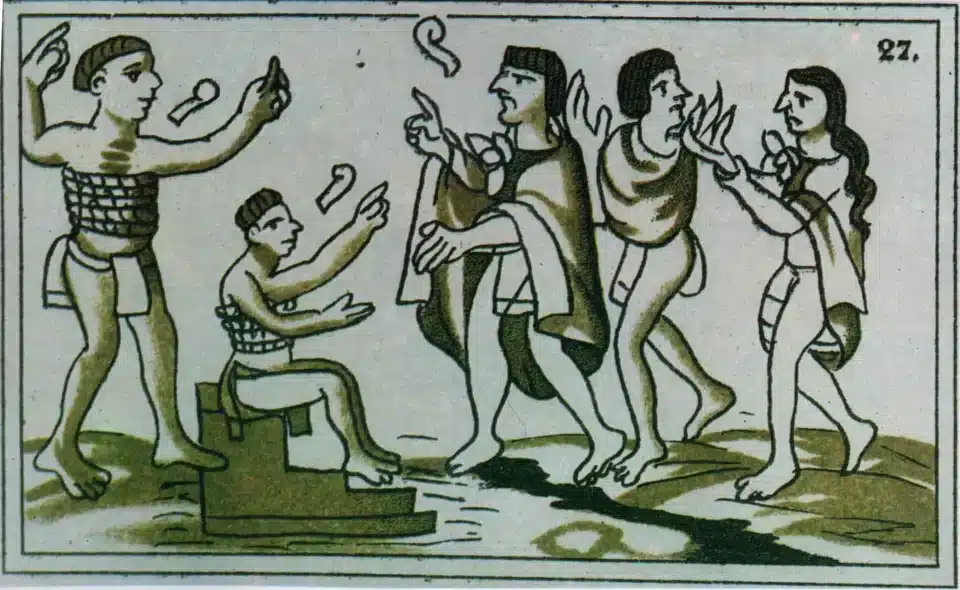
Within the Mexica lordship, land was neither a commercial good nor a property understood in modern terms. It was, above all, a collective resource deeply linked to the social, political and religious structure of the Mexica people. Far from an individualistic logic, the use and usufruct of the territory responded to strict normative systems that guaranteed the sustenance of communities, authorities and temples. This article explores how these forms of land possession and use were organized in Tenochtitlán and its territories, with emphasis on the multiple existing categories.
1. Communal lands: the heart of the calpulli
The broadest basis of the Mexica agrarian regime were the communal lands or calpullalli, linked to each calpulli, that is, to the social groups organized by lineage, residence and function. These lands were distributed among the members of the calpulli in usufruct for life, as long as the person cultivated them and remained within the group. If someone stopped working them for more than three years or migrated to another calpulli, he lost his rights.
When a calpulli had vacant plots -because of death or migration- he could lease them, but their fruits had to directly benefit the community. Thus, these lands were not alienable or inheritable outside the logic of the group.
Land administered by the State
The Mexica state controlled extensive lands that supported the power structures, the religious apparatus and the military organization. These were collectively known as altepetlalli (lands of the altepetl or city) and were divided into several categories:
- Teopantlalli: sacred lands destined to support the priests and cover ritual and temple expenses. They were large, fertile and of high symbolic value.
- Tlatocatlalli or tlatocamilli: plots of land that were leased to finance the operation of the palace. Their rents were used to feed guests, nobles and people in vulnerable situations. Even the huey tlatoani had to pay for their use if he wanted to dispose of them.
- Tecpantlalli: destined to support the palace workers, such as servants, cooks and other administrative positions.
- Tecuhtlatoque: land assigned to judges and high officials as payment for their services. They were also leased, not inherited as full property.
- Milchimalli and cacalomilli: specific plots to supply the army. They were used to produce foodstuffs such as dry tortillas and roasted grains, essential in military campaigns.
- Yaotlalli: lands conquered in war, considered booty. Their possession was redistributed by the State and adopted some of the previous modalities.
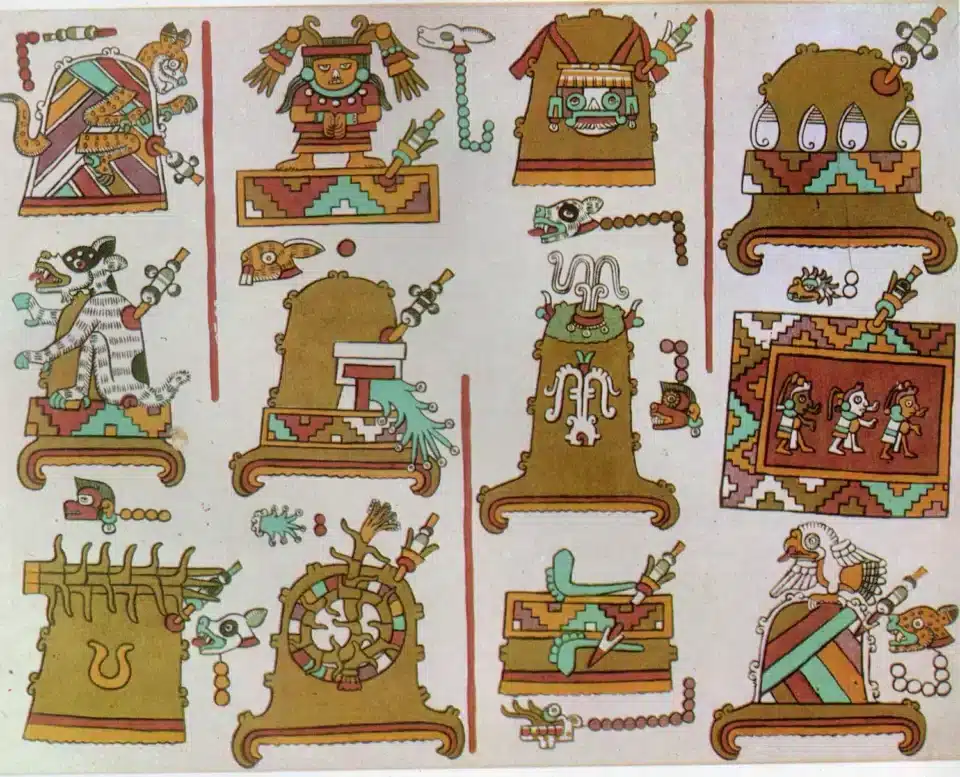
3. Did private property exist among the Mexica?
Aquí se encuentra uno de los debates más complejos. Existen evidencias de formas de tenencia individual —aunque no necesariamente equiparables a la propiedad privada actual— entre ciertos sectores sociales:
- Pillalli: lands granted to pipiltin (nobles) as a reward for military merits or by inheritance. Often these were nobles recently promoted for war exploits.
- Tecpillalli: plots of land reserved for ancient nobility, passed down through generations as part of an illustrious lineage.
In both cases, the titleholders could dispose of these lands, lease them and even pass them on to their descendants, with one major exception: they could not sell or transfer them to the macehualtin (common people). If they did so, the land returned to the control of the State, which redistributed it according to established rules.
Conclusion
Land possession in the Mexica lordship cannot be understood without considering its communal, symbolic and normative dimension. Although some forms of individual tenure existed, especially among the nobility, in most cases usufruct was linked to service, merit and collective belonging. Land was not just any good, but a central element of political, spiritual and social equilibrium. And although we will go deeper into the legal aspects and the possible evolution towards more privatized forms later on, what is certain is that the Mexica agrarian system was highly structured, functional and adapted to its context.
–