
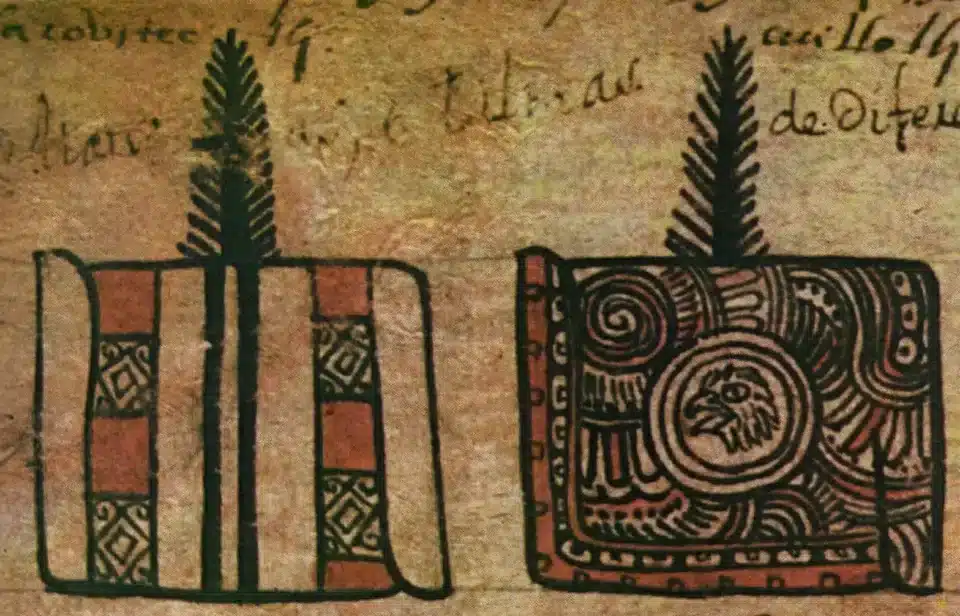
In the Mexica world, property was not limited to the accumulation of goods. It was a direct reflection of the place each person occupied in society. From adornment and attire to the architecture of a house, everything was regulated by strict rules that reinforced social order and rewarded military merit. Beyond land tenure, the property regime expressed cultural values, political hierarchy and symbols of collective identity.
The distribution and use of real and personal property responded to a deeply hierarchical system. It was not simply a matter of having or not having, but of who you were within the Mexica social fabric. The laws dictated by rulers such as Motecuhzoma Ilhuicamina prohibited people outside certain strata from wearing certain ornaments, attire or even hairstyles. Sandals, for example, were reserved for brave warriors and high dignitaries. Wearing cotton or long blankets without battle scars could mean death.
This symbolic control reinforced a model in which prestige was tangible. Each garment, each adornment and each construction conveyed a message: courage in war, loyalty to the tlatoani or belonging to a noble lineage.
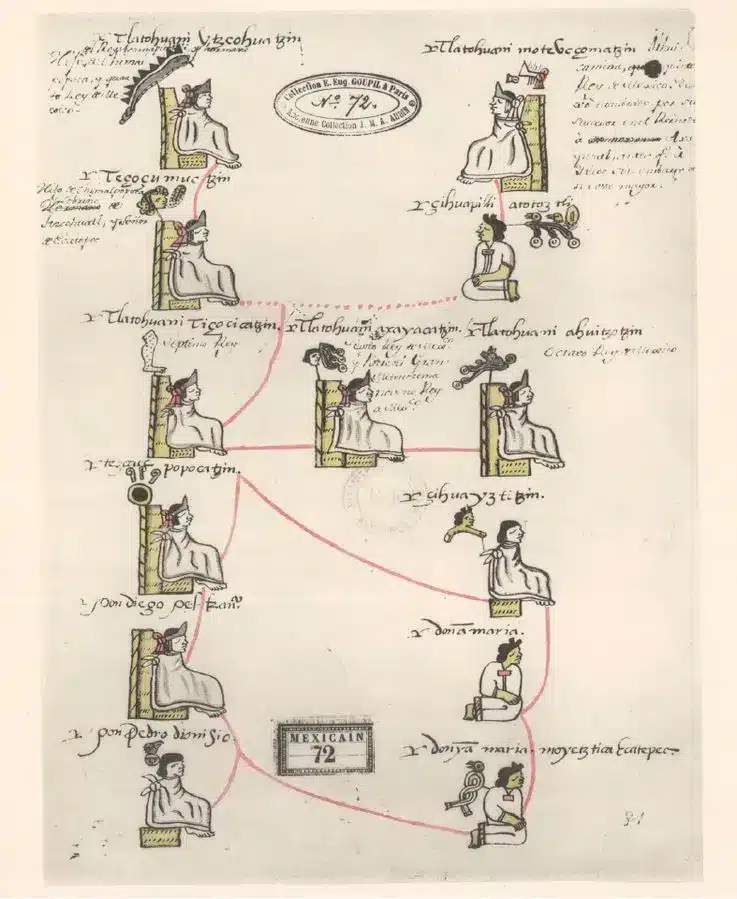
Architecture as a symbol
Housing was also a marker of status. High roofs, battlements or high verandas were not simply aesthetic choices, but privileges reserved for those who had demonstrated their bravery. Houses were an architectural reflection of social rank. In this sense, the city of Mexico-Tenochtitlan functioned as a carefully organized scenario where each construction spoke of the rank and history of those who inhabited it.
The calpulli as an organizing nucleus
Although we will reserve a more in-depth analysis of land for another article, it is not possible to talk about the property regime without mentioning the organizing role of the calpulli. This collective unit was key to the functioning of the Mexica lordship: it grouped families and lineages, organized production and distributed social, political, religious and military responsibilities.
The calpulli were not static structures. They evolved over time, from the founding of Tenochtitlan to the period after the fall of Azcapotzalco, adapting to social and political changes. They established internal rules of property, distribution of tribute, administration of common resources and celebration of community festivities.
Conclusion
The property regime among the Mexica was a clear manifestation of their social, military and cultural order. Every object owned, every garment worn and every structure inhabited said something about the personal and collective history of its bearer. Property was not a universal right, but an earned, regulated and meaningful privilege.
Beyond land, this system made it clear that in the Mexica lordship, access to property was a language of power and prestige, a way of maintaining social cohesion and rewarding loyalty and valor on the battlefield.
–