
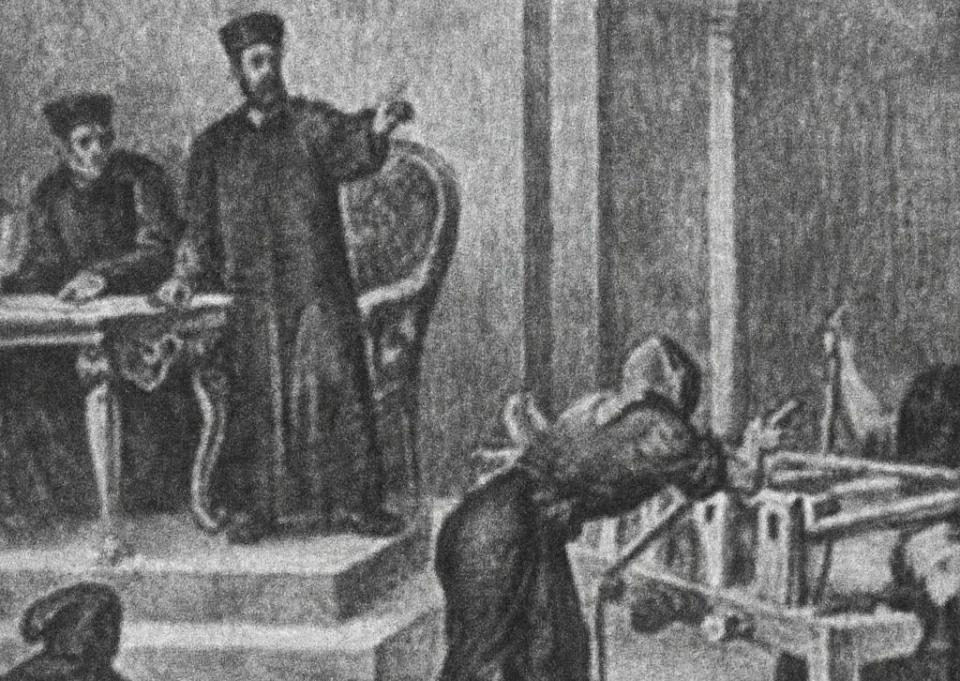
The Inquisition in New Spain applied physical torments as a means of obtaining confessions, under the argument of defending the Catholic faith. One of the most shocking testimonies that have come down to us is that of Francisca Núñez de Carvajal, a woman of Judeo-Converted origin, who faced the harshness of the Holy Office in the flesh. The record of her torment, collected by José Toribio Medina in his work Historia del Tribunal del Santo Oficio de la Inquisición en México (1952), shows in detail the practices applied and the resistance of this woman in the face of violence.
Historical note: Although Medina’s title speaks of “Mexico”, in the 16th century the official name of the territory was the Viceroyalty of New Spain. At that time, “Mexico” referred mainly to Mexico City and not to the country that would be born after independence.
Contents: In this article you will find Show
The beginning of the torment
The minutes relate that Francisca was taken to the torment chamber at half past eight in the morning. The inquisitors admonished her to tell the truth “out of reverence for God” if she did not want to expose herself to suffering. She replied that she had already told the truth: she believed in the law of Moses and that the rest was false testimony. She begged not to be stripped naked and not to be affronted because she was a woman, and in tears she asked: “Kill or club me, but do not strip me naked, even if they kill me a thousand times”.
The executioner entered the room, and with her shirt pulled down and with her thongs down, she was left in the flesh from the waist up. Kneeling and crying, she reiterated that she had already told the truth, imploring not to be humiliated.
Twists and turns of string
The inquisitors ordered to bind her arms loosely, insisting that she confess. Francisca replied: “I have told the whole truth, see that they take the mother away from the children and that I never understood such a thing to be used with a woman. I commend my soul to God”.
Then he was given the first twist of the rope. Her screams shook the room: “So much cruelty, so much, alas, I’m dying! They squeezed her tighter and she repeated the same between sobs.
The second round brought new shrieks: “I’m dying, I’m dying! Give me death together, because you’re taking my life away from me and you’re ending my life. I cannot suffer it; if I knew better I would say so”.
The third round led her to reaffirm her faith: “I have already said that I believed and kept the law of Moses and not that of Jesus Christ”. She begged for mercy and cried out that she could bear no more.
With the fourth turn, Francisca screamed that she was dying and that her children were left without a mother. Finally, with the fifth turn, she repeated the same thing over and over again, showing unbearable pain.
The foal and final desperation
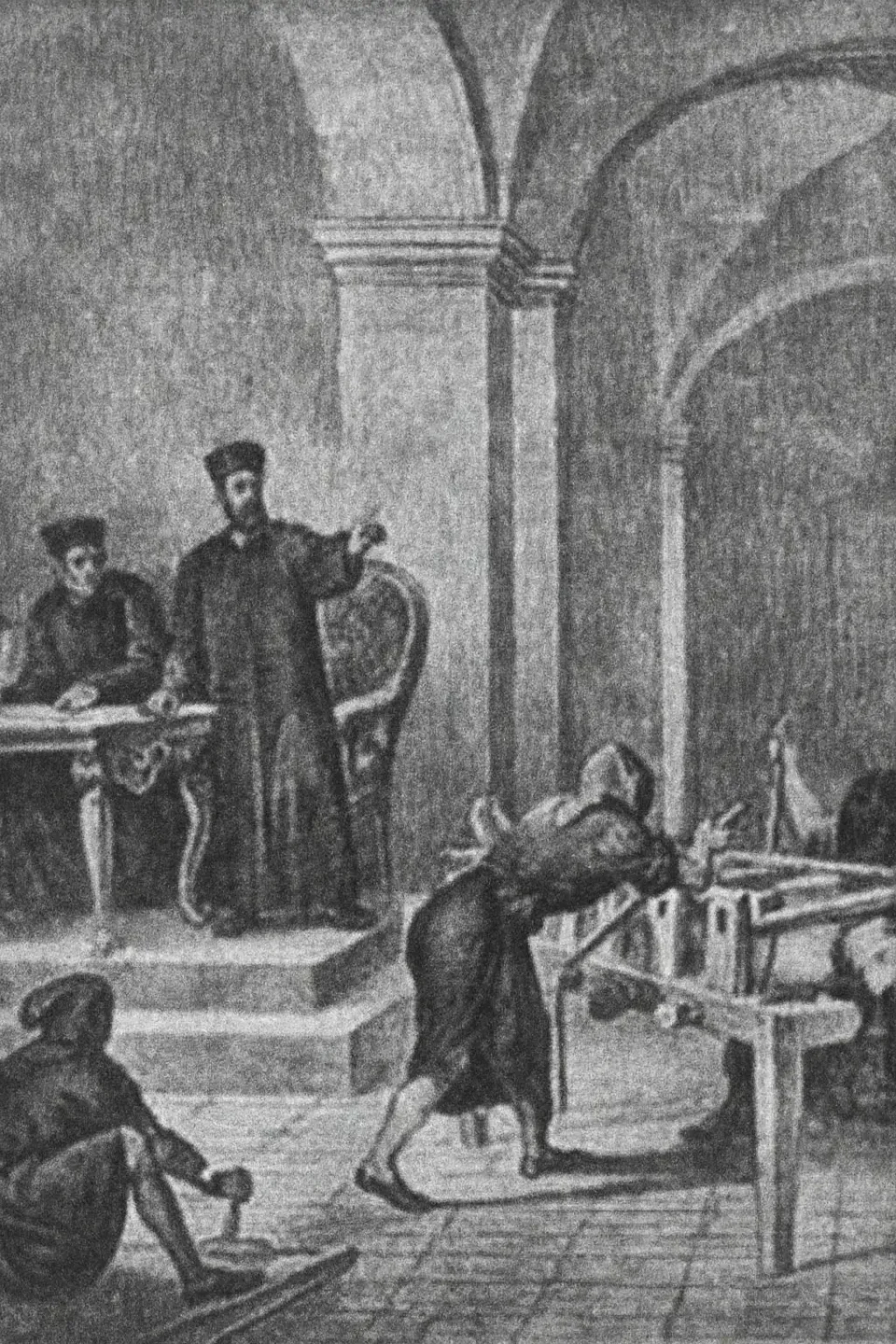
Not satisfied, the inquisitors ordered her to lie on the rack. Again they admonished her to tell the truth. Francisca, standing up and with her body broken, exclaimed: “I have nothing to say but testimonies, and God forbid that I should say it, nor do I have to say it, nor do I know it. Blessed be He, who treats me in this way with such cruelty, never before heard from a woman”.
As they fastened her to the rack, she rose up on her knees and cried out, “Sad was my birth from my mother’s womb, wretched was my lot and my sad old age.”
In the midst of agony, she remembered that her husband had also taught her the law of Moses, thus closing her statement in a scenario of physical and spiritual pain.
Conclusion
The record of the torment of Francisca Núñez de Carvajal reveals in all its crudeness the inquisitorial practices in New Spain. Between cries and pleas, she reaffirmed her faith and denounced the injustice of being a mother deprived of her children and a woman publicly humiliated. Her resistance, documented word for word, testifies to human fortitude in the face of a system that used pain as a tool of religious control.
Frequently asked questions about the torment of Francisca Núñez de Carvajal
Who was Francisca Núñez de Carvajal?
She was a Judeo-converted woman who lived in New Spain during the 16th century. She was part of a family singled out for secretly practicing the Law of Moses. Her trial before the Inquisition became one of the best known due to the detail with which the torment she suffered was recorded.
Why did the Inquisition subject Francisca Núñez de Carvajal to torment?
She was accused of being a Judaizer, that is, of secretly practicing rites of the Mosaic tradition. Torment was used as a method to force confessions or confirm suspicions of heresy, although often the only result was pain and suffering without new evidence.
What methods of torment were applied in your case?
The act describes the use of twists of rope on the arms – a method that dislocated and caused intense pain – as well as their restraint on the rack. Both procedures were part of the usual practices of the Inquisition.
What words did Francisca say during the torment?
She insisted that she believed in the law of Moses and not in the law of Jesus Christ. She begged not to be stripped naked because she was a woman, cried out for her children and commended her soul to God. Between cries and pleas, she denounced the cruelty of the procedure, stating that she never thought such a thing could be applied to a woman.
What is the significance of this testimony for history?
Francisca’s case is relevant because the record is preserved in its entirety, showing step by step the application of the torment and the responses of the accused. It is a direct testimony of human suffering during the Inquisition and of how religious repression especially affected women and families of converted origin.
–