Inquisition in New Spain

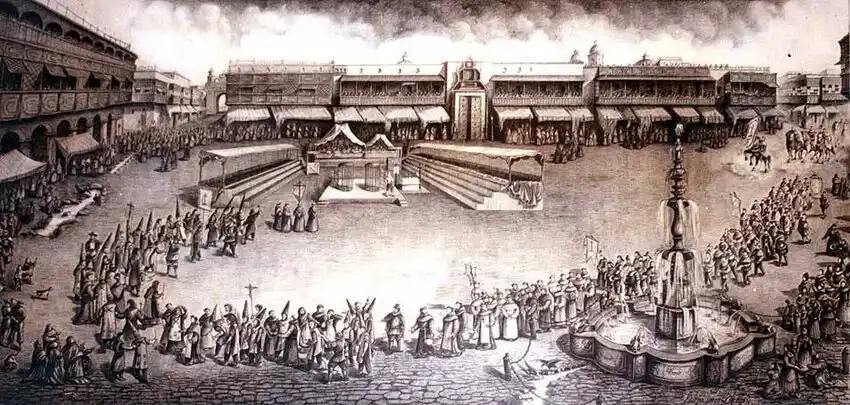
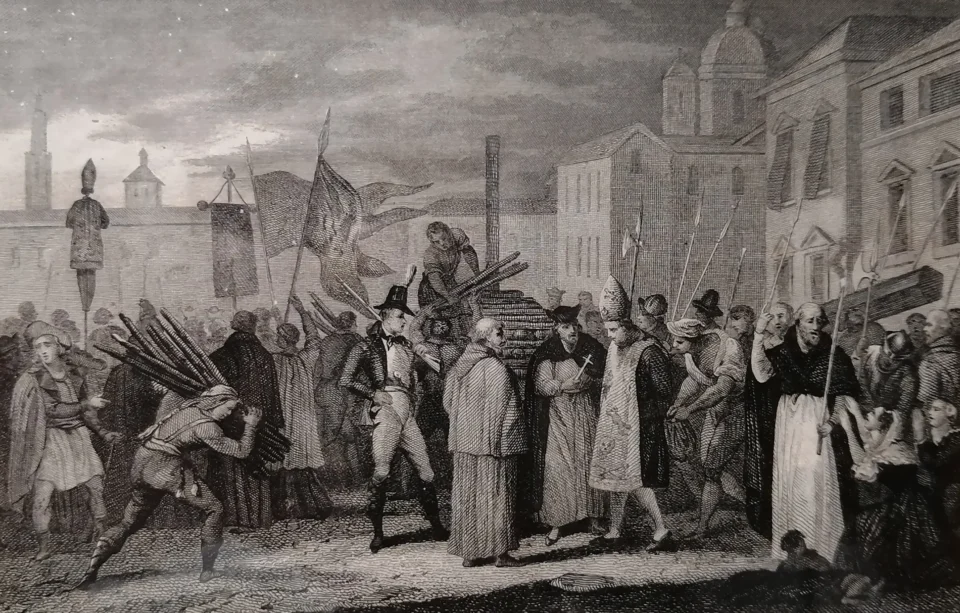
Engraving of an auto de fe in Lima (17th century). Symbolic representation to illustrate the public acts of the Tribunal of the Holy Office in Spanish America.
October 13, 2025

The visit to the Tribunal of the Holy Office in New Spain (1645-1662): denunciations, abuses and sentences.

Between autos de fe and internal conflicts, the Tribunal of the Holy Office in New Spain experienced one of its most complex crises: the inquisitorial visitation of 1645-1662, marked by denunciations, abuses and sentences against its own ministers.

History of MexicoNo category
Read More The visit to the Tribunal of the Holy Office in New Spain (1645-1662): denunciations, abuses and sentences.
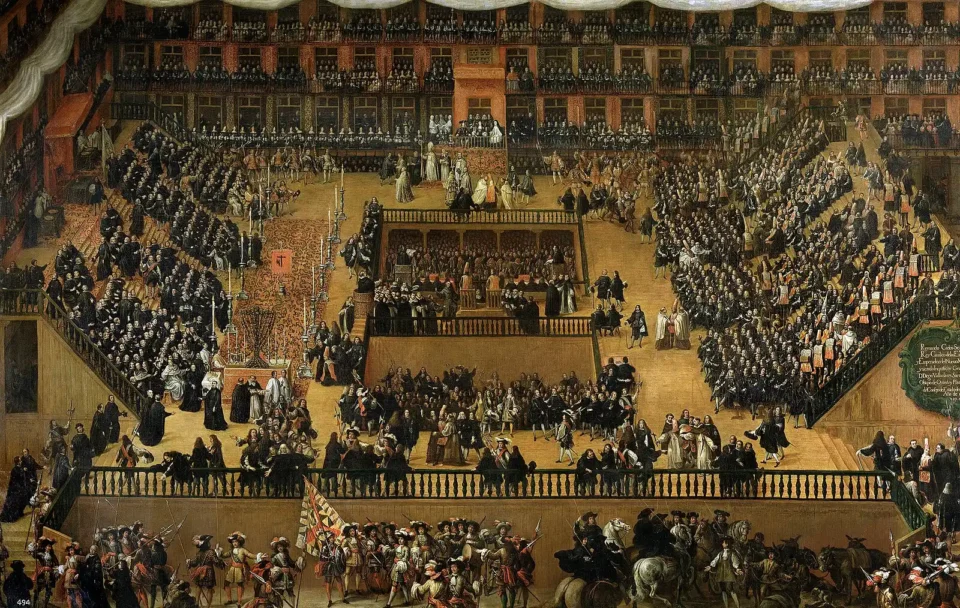
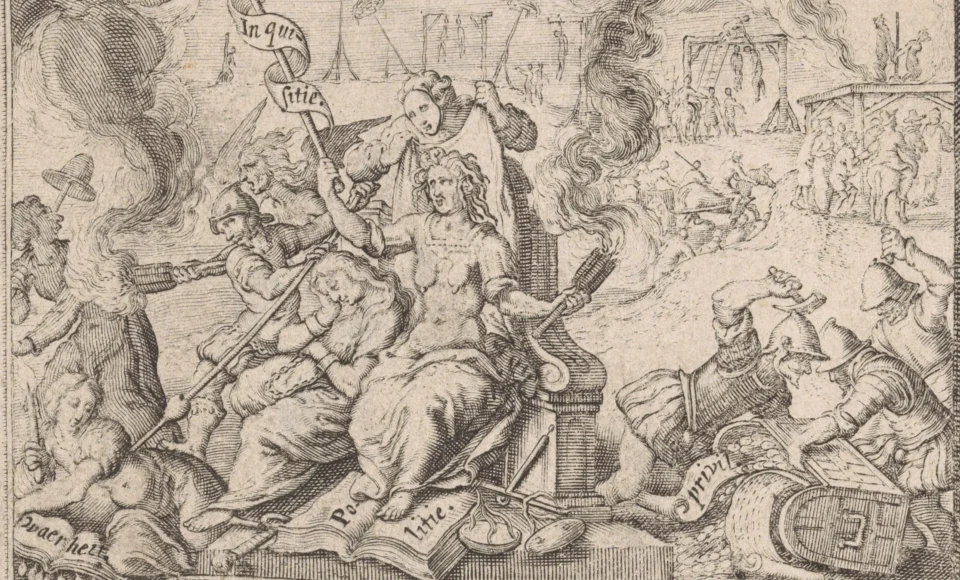
Engraving attributed to Samuel Stradanus (Metropolitan Museum of Art), 17th century - visual context approximating the period in which the Inquisition faced its crisis and reactivation with the edict of 1643.
September 26, 2025

The crisis and reactivation of the Inquisition in New Spain: conflicts, town councils and the edict of 1643.

During the 1630s, the Inquisition in New Spain entered a period of decadence due to conflicts with the viceroy and the town councils. However, in 1643 it was reactivated with the solemn reading of the general edict of faith, which marked a revival in its activities.

History of MexicoNo category
Read More The crisis and reactivation of the Inquisition in New Spain: conflicts, town councils and the edict of 1643.
Allegory of the torment of Francisca de Carvajal during the Inquisition.
September 23, 2025

The inquisitorial process against Francisca Núñez de Carvajal: torment, faith and suffering.

The record of the torment of Francisca Núñez de Carvajal shows, step by step, the violence exercised by the Inquisition in New Spain. Her resistance reflects the strength of a woman who, even in extreme pain, did not renounce her faith or her dignity.

History of MexicoNo category
Read More The inquisitorial process against Francisca Núñez de Carvajal: torment, faith and suffering.
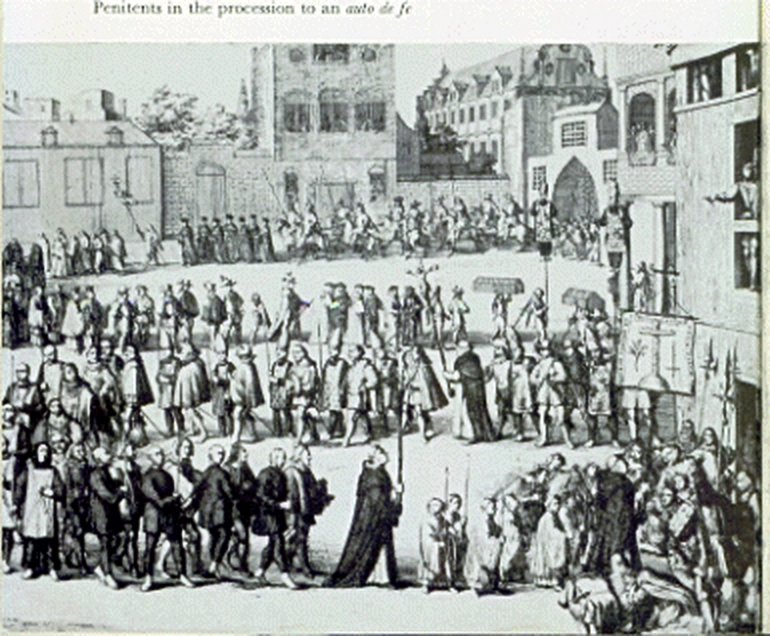
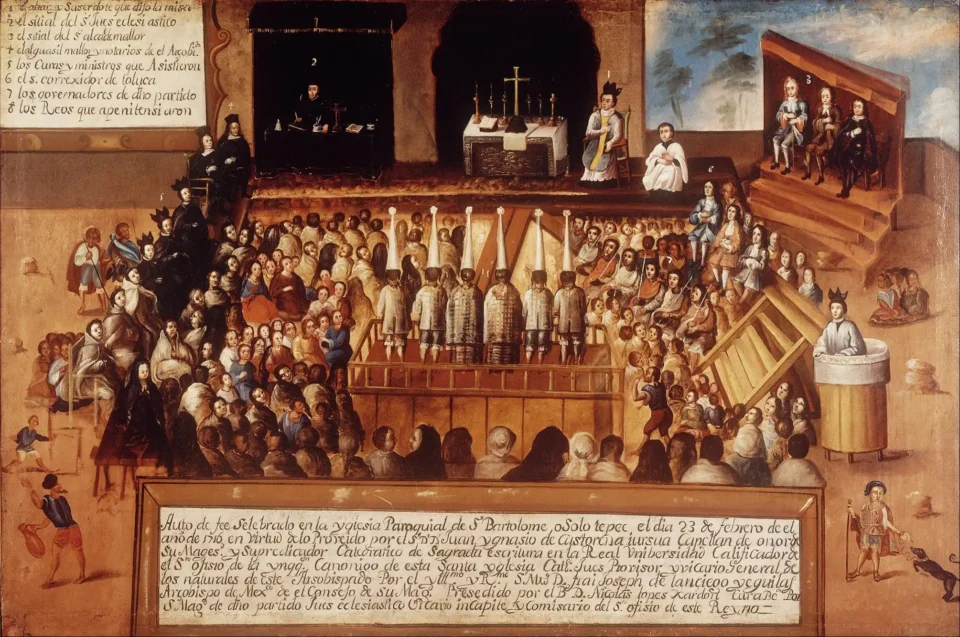
Auto de fe in the town of San Bartolomé Otzolotepec.
September 21, 2025

The Tribunal of the Holy Office in New Spain: origins, oaths and autos de fe (oaths and autos de fe)

The installation of the Tribunal of the Holy Office in New Spain in 1571 transformed the religious life of the viceroyalty. From oath ceremonies and edicts of grace to the most famous autos de fe, this article narrates how inquisitorial power was consolidated in New Spain’s society.

History of MexicoNo category
Read More The Tribunal of the Holy Office in New Spain: origins, oaths and autos de fe (oaths and autos de fe)
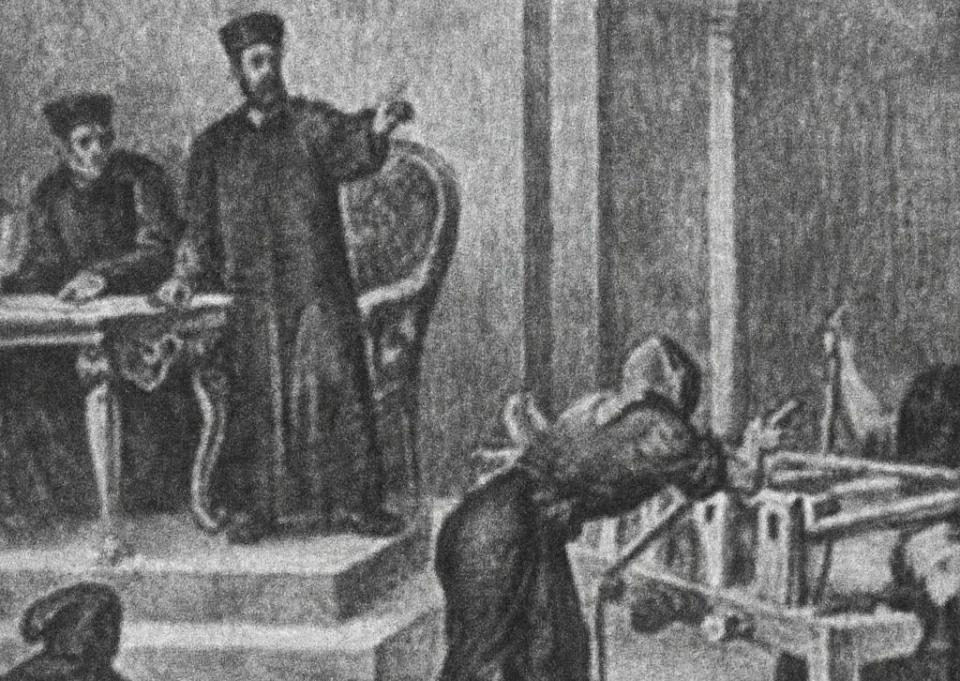
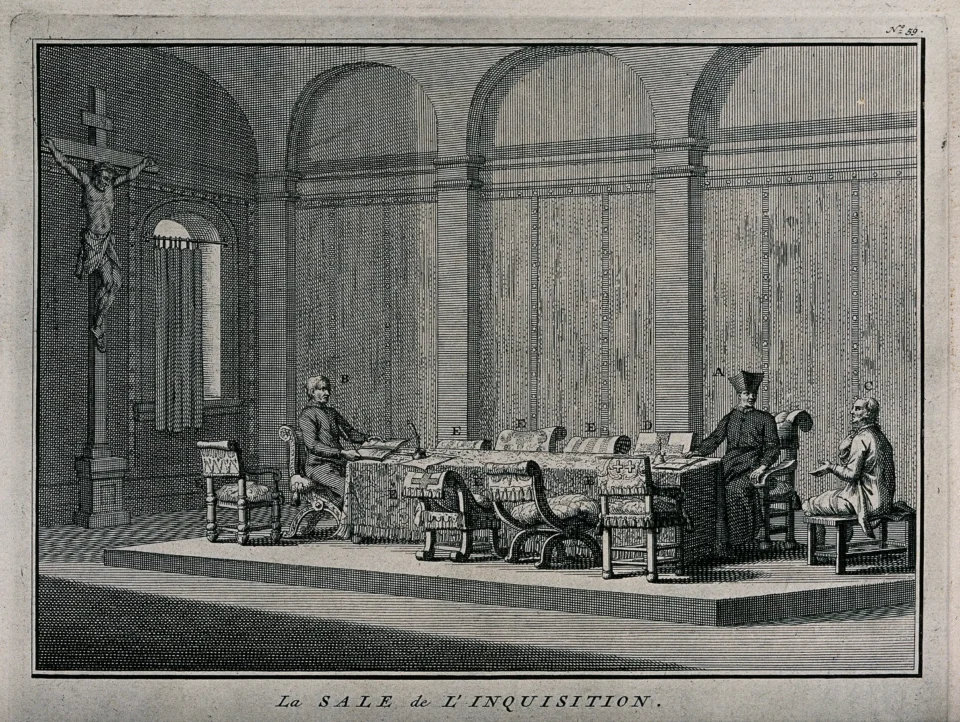
Interrogation room of the Spanish Inquisition.
September 14, 2025

Origins of the Inquisition in New Spain: from the religious control to the first autos de fe (acts of faith)

The Inquisition in New Spain was officially established in 1571 under Pedro Moya de Contreras, but its antecedents date back to the religious controls exercised since the early years of the viceroyalty. This article reviews its foundation, the crimes it prosecuted and the first auto de fe in Mexico.

History of MexicoNo category
Read More Origins of the Inquisition in New Spain: from the religious control to the first autos de fe (acts of faith)

Inquisition in New Spain: Faith, Control and Punishment
The Inquisition in New Spain was an institution established by the Catholic monarchy to oversee religious orthodoxy and guarantee the spiritual dominion of the Church in the viceroyalty. Although it initially acted through the Episcopal Inquisition, in 1571 the Tribunal of the Holy Office was formally created in Mexico City, which extended its influence over the entire New Spain territory.

Origin and functions

Its main objective was to maintain the purity of the Catholic faith.

It monitored and prosecuted those accused of heresy, blasphemy, Judaizing practices, Protestant practices, superstitions or witchcraft.

It also had a political role, reinforcing social control and viceregal authority.

Persecuted groups

Jews and converts, accused of Judaizing.

Protestants, especially foreigners arriving via the transatlantic trade.

Women accused of witchcraft or sorcery, often persecuted for traditional medicine practices.

Intellectuals and Creoles, when their ideas were considered dangerous to orthodoxy.

Inquisitorial proceedings

The court received complaints and conducted secret investigations.

Defendants could be imprisoned and subjected to interrogation and torture.

Trials sometimes ended with severe penalties: confiscation of property, imprisonment, banishment or even the death penalty in extreme cases.

The autos de fe were public ceremonies where sentences and punishments were exposed.

Impact on the novo-Hispanic society

It limited the dissemination of ideas considered heretical or contrary to Catholicism.

It reinforced the union between political and religious power.

It generated an environment of constant vigilance that shaped cultural and religious practices.

At the same time, he left an important documentary legacy, as the inquisitorial records offer today a unique insight into the daily life, beliefs and conflicts of the time.

Conclusion
The Inquisition in New Spain was an instrument of religious and social control that sought to maintain the hegemony of the Catholic Church in the viceroyalty. Beyond repression, it reflects the complexity of a society where faith, power and culture were deeply intertwined.