

The image of a stable and pacified viceroyalty after the military journey of Cortés and his indigenous allies is misleading. From the first years, New Spain was marked by tensions and outbreaks that questioned the solidity of viceregal authority. Indigenous rebellions, Creole conspiracies, lawsuits between authorities and popular riots showed that the Castilian administration had to invest as much effort in preserving its dominion as in acquiring it.
Each of these episodes reflected the fractures of a diverse society: native peoples who resisted exploitation, Creoles who aspired to greater power, peninsulars divided among themselves and urban crowds who did not hesitate to protest in the face of shortages or abuses.
First outbreaks of nonconformity
As soon as the control over Tenochtitlan was consummated, the first uprisings arose. In 1521, Indians in Tuxtepec killed the Castilians who had remained in the garrison and those who explored nearby mines. Even among the peninsular actors themselves there was discontent: many considered the booty insufficient after the war against the Mexica lordship, which resulted in threats of rebellion against Cortés.
These events marked the beginning of a pattern that would be repeated throughout the viceroyalty: the Castilian authority had to monitor both indigenous resistance and conflicts within its own ranks..
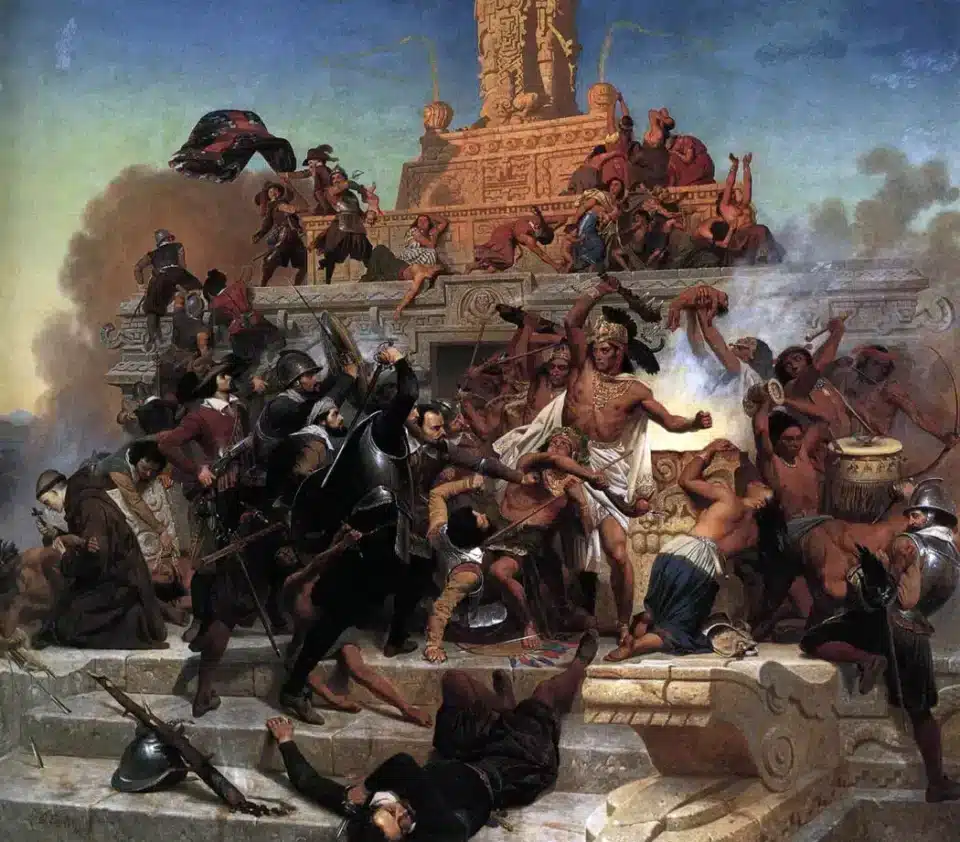
Indigenous people in resistance
Most of the uprisings came from the native peoples, who opposed tax or labor exploitation. In 1564, indigenous people in Mexico City stoned their mayors to protest the increase in taxes. Later, the Tepehuanes staged one of the largest rebellions between 1616 and 1617, spurred by local religious leaders who encouraged armed resistance.
Although many of these rebellions were put down violently, they made it clear that forced integration into the viceroyalty generated constant tensions.
Creole conspiracies and internal disputes
It was not only the indigenous peoples who questioned the viceregal government. Creoles and descendants of Europeans born in America also organized conspiracies seeking greater autonomy. The best known was the conspiracy of the Marquis del Valle in 1566, which aimed to break definitively with the Crown of Castile.
A century later, in 1643, Guillén de Lampart planned to make the viceroyalty independent with Creole support, although his attempt was discovered and quashed before it was consolidated. These movements, although unsuccessful, reveal the early discomfort of the Creoles with the limitations imposed by the Catholic monarchy.
Urban riots and power struggles
In the capital of the viceroyalty, conflicts also broke out due to political disputes between authorities. The riot of 1624 confronted the viceroy Marquis of Gelves with Archbishop Juan Perez de la Serna. Tensions between civil and ecclesiastical power led to riots that shook Mexico City, showing that the peninsular elites did not always act in a united manner.
These urban riots showed that the inhabitants of the capital did not remain passive: merchants, artisans and indigenous people actively participated in the disturbances, demanding better living conditions or taking sides in power struggles.
A viceroyalty in constant tension
The diversity of the uprisings – from local indigenous protests to Creole conspiracies and urban riots – shows that New Spain was a space of permanent resistance. The Catholic monarchy managed to maintain control, but at the cost of constant vigilance, exemplary punishments and negotiations that reveal the fragility of the system.
More than a pacified territory, the viceroyalty was a scenario of multiple resistances, where different sectors of society challenged, each in their own way, the established order.