
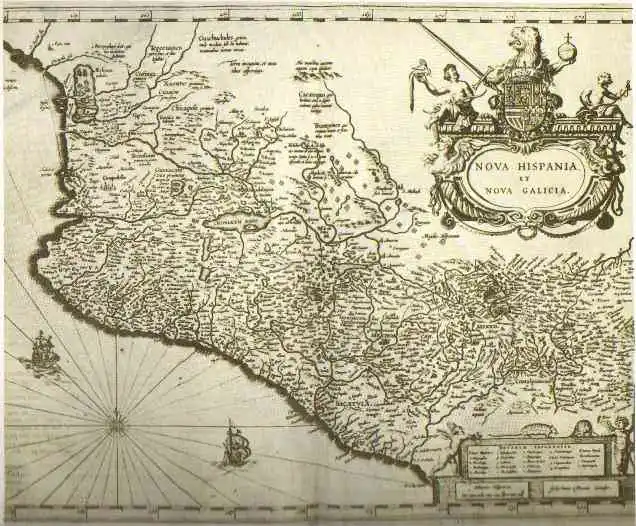
During the 16th century, northern New Spain became a space of expansion, disputes and territorial reconfiguration. The logic of viceregal foundations was not limited to the creation of formal villas: it was also a process marked by mining, cattle raising, trade routes and tensions with the Chichimeca peoples. This advance into “unknown” lands was neither linear nor peaceful; it involved forced encounters, occasional alliances and strategies to control a frontier that, from the viceregal perspective, always seemed unstable. In this article we explore how these populations emerged, what interests motivated them and how the indigenous peoples were part -active or resisted- of this process.
Mining as an engine for expansion
Since the discovery of silver veins in Zacatecas, the mining impulse became one of the main engines for the foundation of new settlements in the north. Small groups set out on expeditions in the hope of finding precious metals in territories still outside the direct control of the viceroyal administration. These searches not only responded to individual economic interests, but also to an imperial logic that sought to extend its dominion through strategic enclaves.
Towns such as Nombre de Dios or Sombrerete were born in this context, often founded by men who already had mining experience in regions such as Zacatecas. In turn, these settlements served as a base for future foundations, gradually extending the viceroyalty’s presence.
Routes, trade and the need for security
The growth of the mining regions generated an urgent need to secure trade routes. The road to Zacatecas, for example, became vital for transporting merchandise, mining supplies and food. To protect it, the creation of presidios and villas along the route was promoted, particularly in the Bajío.
San Miguel el Grande (today San Miguel de Allende) is an example of how an initial presidio was transformed into a thriving village thanks to trade linked to mining. However, the advance was not easy: the Chichimec towns began to raid the caravans, which led to new viceregal strategies to maintain control.

The Chichimeca Frontier: Conflict and Diplomacy
The confrontations with the Chichimec peoples, who knew the terrain and were experts in guerrilla tactics, showed the limits of the viceroyal military power. Campaigns led by figures such as Francisco de Herrera or Hernán Pérez de Bocanegra failed in their attempt to subdue the indigenous groups that inhabited wild and inaccessible regions.
Faced with these failures, a diplomatic approach was attempted. Miguel Caldera, a mestizo with knowledge of both cultures, managed to establish agreements with several Chichimeca groups. In the time of Viceroy Luis de Velasco II, an agreement was made to found towns in indigenous territories in exchange for food, mainly meat. San Luis de la Paz, San Miguel Mezquitic and Colotlán were the result of these negotiations. Peace was, in this case, as strategic as arms.
Livestock as a form of territorial occupation
In addition to mining and trade, cattle ranching was another determining factor in the viceregal expansion northward. In the most densely populated areas of the novo-Hispanic center, cattle began to interfere with agriculture, forcing the search for new, less inhabited lands. Thus, regions such as San Juan del Río, Apaseo and Querétaro began to receive cattle ranches.
Before the mining boom in Guanajuato, the region was already being used for cattle ranching, as the case of Pedro Muñoz shows. As the population increased, cattle were pushed further north, opening the way to large haciendas such as that of Francisco de Urdiñola in Coahuila, at the beginning of the 17th century.
Conclusion on the viceregal foundations in northern New Spain.
The viceregal foundations in northern New Spain were neither isolated nor exclusively military events. It was a complex process in which mining, trade, diplomacy and cattle ranching acted as interconnected forces. Relations with the Chichimec peoples show that, far from being mere obstacles, these groups responded with resistance, negotiation and adaptation to the changes brought about by the viceregal advance.
The map of northern New Spain was drawn not only by the metal and cattle routes, but also by the margins of the Chichimeca frontier: a space where control was always fragile and where the dynamics between indigenous peoples and viceregal actors shaped the historical development of the region.
–