

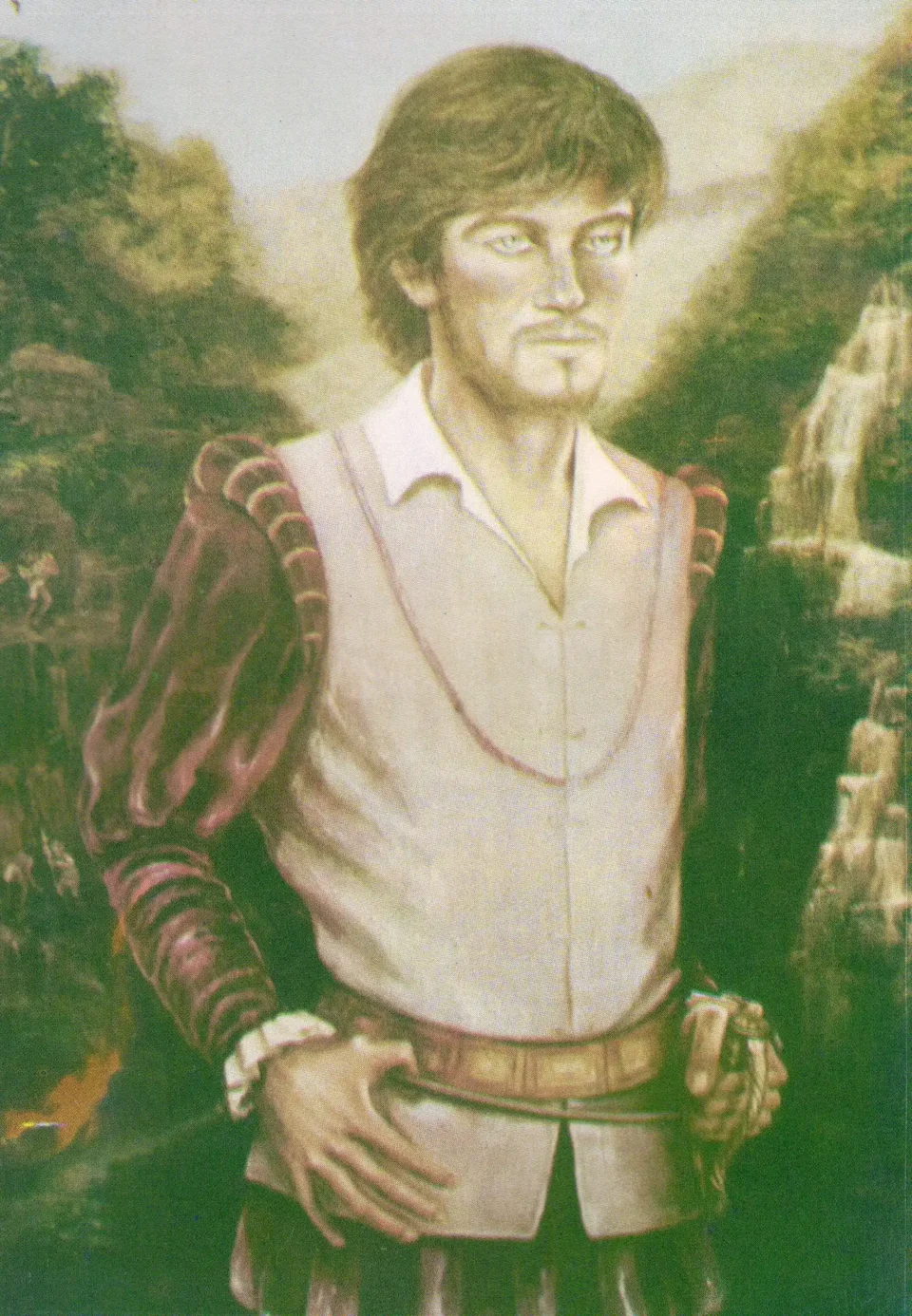
In the mid-sixteenth century, the north of the viceroyalty of New Spain became a territory of exploration, mining ambition and administrative expansion. One of the key characters in this stage was Francisco de Ibarra, nephew of an influential New Spain miner and merchant, whose participation in the consolidation of Nueva Vizcaya made him the protagonist of a complex process of founding towns, discovering minerals and jurisdictional disputes.
Unlike other expeditionaries in search of immediate riches, Ibarra was a central player in the territorial organization of the north, through political, military and administrative strategies that extended the viceregal presence over regions barely known to the authorities of Mexico City.
From the Zacatecas mines to the northern adventure
Francisco de Ibarra was the nephew of Diego de Ibarra, a powerful businessman linked to the first mining operations in Zacatecas. Thanks to his family position and ties with Viceroy Luis de Velasco, Francisco was commissioned to explore the territories to the north of the already occupied regions.
His first expedition took him through areas where he found the mines of San Martín and El Aviño, and he advanced through a valley he named Guadiana, in memory of the peninsular landscapes. This territory had been previously explored by Ginés Vázquez del Mercado, whose adventure ended in tragedy. However, Ibarra not only survived his voyage, but also gained enough recognition to receive, in 1562, the appointment of governor of Nueva Vizcaya, a new administrative entity that encompassed a large part of the northern part of northern New Spain.
Foundation of villas and expansion towards the Pacific
As governor, Francisco de Ibarra undertook a second incursion to consolidate viceregal rule. He founded the city of Durango in the Guadiana Valley, which would become the political center of Nueva Vizcaya. He also discovered mines in Topia and marched westward, reaching territories in the current state of Sinaloa, where he founded a military fort.
This area was inhabited by the so-called Sinaloa Indians, who maintained an active resistance to viceregal expansion. To protect the settlers and facilitate communication with Guadalajara, capital of the kingdom of Nueva Galicia, Ibarra founded the town of San Sebastián, today Concordia. This decision generated a dispute with the authorities of Nueva Galicia, who claimed jurisdiction over that region.
Although at the time of Ibarra’s foundation the area was uninhabited by Spaniards, the administrative conflict revealed the internal territorial tensions within the viceroyalty, caused by overlapping interests between different governorships.
The yearning for a second Mexico-Tenochtitlan
Expectations of finding prosperous new lands to the north were not just a matter of economics. For many chroniclers and expeditionaries, the Novo-Hispanic north harbored a deep longing: to find a civilization comparable to that of Mexico-Tenochtitlan. This desire was fueled by indigenous stories, by interpretations of Mesoamerican tradition -such as the myth of Aztlán, the ancestral land of the Mexica- and by the memory of the riches that the peninsulars had witnessed in the central highlands.
Although there was not yet a province officially called “New Mexico”, some sixteenth-century documents mentioned this expression more symbolically than geographically. It was not a political designation, but an imagined idea, an echo of the glorious past that was projected into the future. There was talk of finding “another Tenochtitlan” in the northern regions: organized lordships, cities of temples and gold, societies that would justify new evangelization campaigns, mining extraction and viceregal establishment.
This imaginary was a driving force for expeditionaries such as Francisco de Ibarra, who sought -beyond the desert and the rivers- a second great civilization that would consolidate the territorial expansion of the Catholic monarchy.
Conclusion on Francisco de Ibarra
Francisco de Ibarra was more than just an explorer: he was a builder of administrative structures, a founder of cities and an articulator of routes between the highlands and the mining north. His passage through the history of New Spain is marked not only by foundations and expeditions, but also by jurisdictional disputes that reflect the complexities of governing a region as vast as it was diverse.
His figure represents the transition between the era of adventurous raids and the stage of institutional consolidation of the viceroyalty, marked by the establishment of permanent villas, tribute systems and legal disputes for the control of the territory.
–