

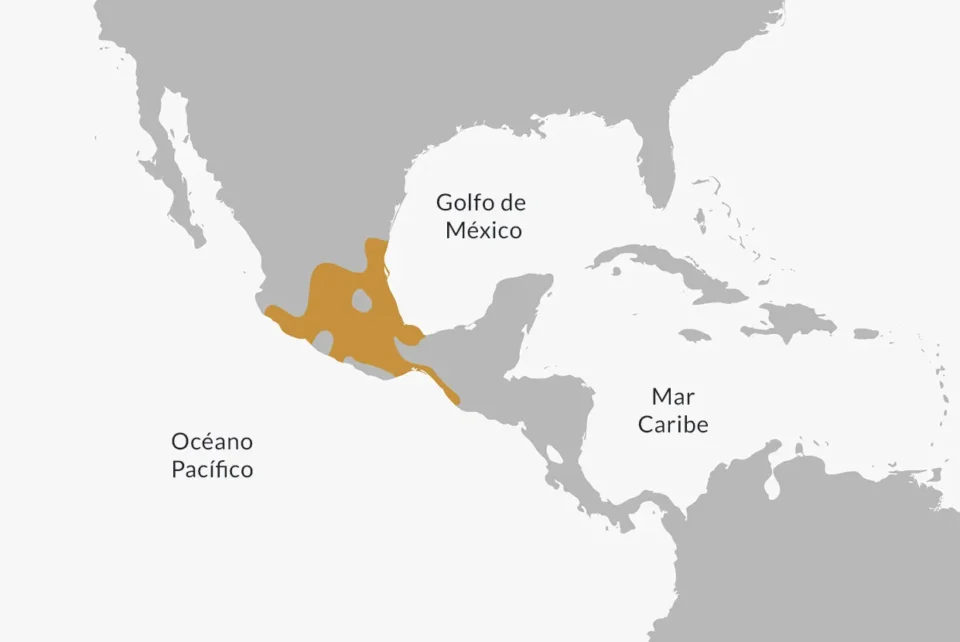
The history of the Mexica lordship cannot be understood without observing the close relationship between its lake environment and its capacity for adaptation. From their settlement on the island of Mexico-Tenochtitlan, the Mexica transformed a hostile landscape into an economic, political and cultural center of great importance. In this article we explore how the Mexica took advantage of the available natural resources and developed a complex system of production and trade that allowed them to sustain one of the largest cities in the pre-modern world.
A challenging environment
When the Mexica settled in Mexico-Tenochtitlan, the panorama was not very encouraging: the island was small, with semi-soft waters and vegetation dominated by reeds. The first resources available to them included roots, fish, frogs, salamanders, small crustaceans such as acociles, vermin and lake birds. In this first stage, the economy was based mainly on hunting, fishing and gathering.
In addition to securing food, the Mexica also faced shortages of building materials such as stone and wood. This led them to establish trade relations with people from the mainland. Thus they began a process that would lead them to integrate into barter networks, especially in the Tepanec markets on the western shore of the lake.
Production expansion and foreign relations
At the beginning of the 15th century, the increase in foreign trade allowed the Mexica to build with stone and adobe, expand the cultivable area by partially closing the lagoon and develop a system of irrigation ditches and canals. This facilitated efficient navigation that further boosted trade and allowed the establishment of diplomatic and marital alliances. An example of these relationships is Cuauhnáhuac (present-day Cuernavaca), from where they obtained cotton to make their clothing.
The fall of the Azcapotzalco lordship marked the beginning of a new stage of development for the Mexica. Between 1430 and 1521, an economic structure based on productive specialization, trade, tribute and regional control of resources was consolidated.
Land types and agricultural knowledge
The codices and chronicles in the Nahuatl language reveal a sophisticated classification of farmland. In the Florentine Codex, different types of soil are described:
- Atoctli: alluvial soil, yellow and reddish, humid and soft, considered fertile and a model of good soil.
- Cuauhtlalli: mulch soil from leaf litter and decomposing wood, dark or reddish in color, highly productive.
- Tlalzolli: fallow land, considered old, unproductive and worn out.
This agricultural knowledge reflects a deep observation of the environment and a complex organization around food production.
The maguey and its multifunctionality
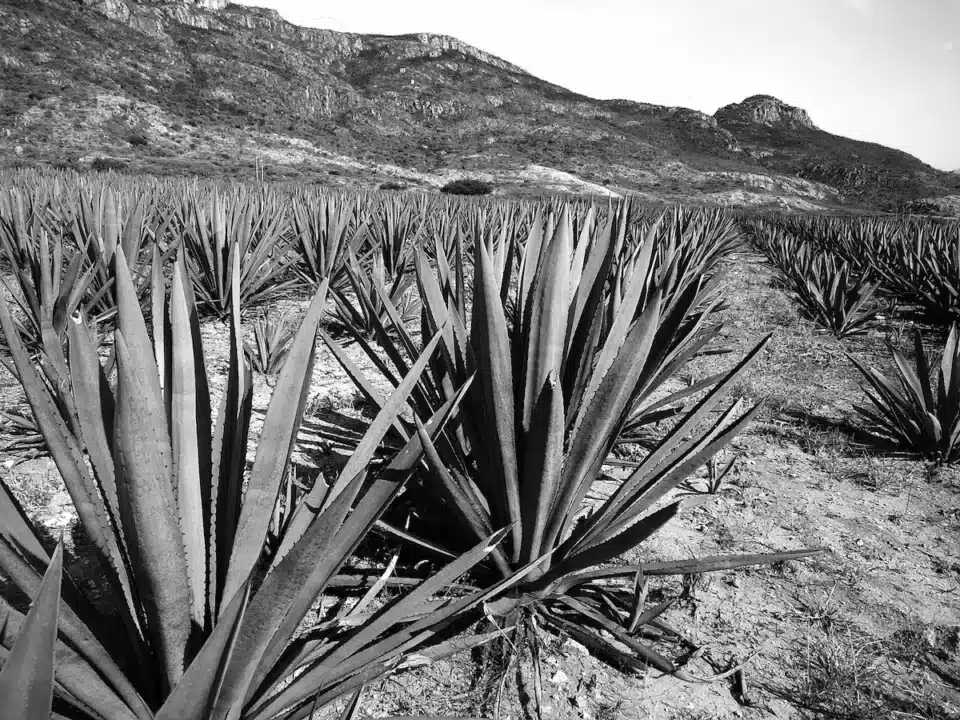
The maguey(metl) was one of the most valuable vegetable resources. Its use included:
- Production of honey, fermented beverages such as pulque, vinegar and honey water.
- Food from cooked stalks and roots.
- Medicine: the juice of the leaves was used to heal wounds.
- Fibers (nequén) for making blankets, ropes and utensils.
- Architectural use: the stalks were used as roof tiles, gutters and firewood.
- It breeds edible insects in its roots, such as maguey worms.
Fauna and its ritual, dietary and medicinal use
Unlike other regions of the world, animal power was not domesticated in pre-Hispanic Mexico. The exceptions were the turkey and certain dogs such as the itzcuintli. In important cities there were areas where wild animals and birds were raised for rituals and to obtain skins or feathers.
In addition to game, fish and insects, some species had a medical or symbolic use. For example:
- Hummingbird (huitzitzilin): it was believed to prevent venereal diseases, although it was also said to cause sterility.
- Turtledove (cocotli): considered antidepressant, useful to alleviate sadness and jealousy.
Harmful animals and the challenge of nature
Nature also offered challenges. A notable example is the tzicatana ant, described in the Florentine Codex as “warrior” and “conqueror”, capable of devouring everything in its path. These observations show how the Mexica recognized not only the benefits, but also the threats of the natural environment.
Conclusion
The relationship of the Mexica with their natural environment was much more than a simple dependence on resources: it was a manifestation of ingenuity, adaptation and collective organization. From the lake soils transformed with chinampas, to the integral use of the maguey, the inhabitants of Mexico-Tenochtitlan demonstrated a profound knowledge of the environment and an amazing capacity to convert limitations into opportunities.
Their economic system not only responded to basic needs, but also cemented a network of exchange, diplomacy and specialization that connected distant regions of Mesoamerica. Far from being an isolated people, the Mexica lordship articulated a complex structure of production and redistribution that sustained both daily life and the ritual, political and military demands of an expanding metropolis.
By understanding this dynamic, we recognize that the splendor of Mexico-Tenochtitlan was not the result of chance or solely of its military power, but the result of a social and economic network based on the profound knowledge of the land, water and inherited knowledge.
–