
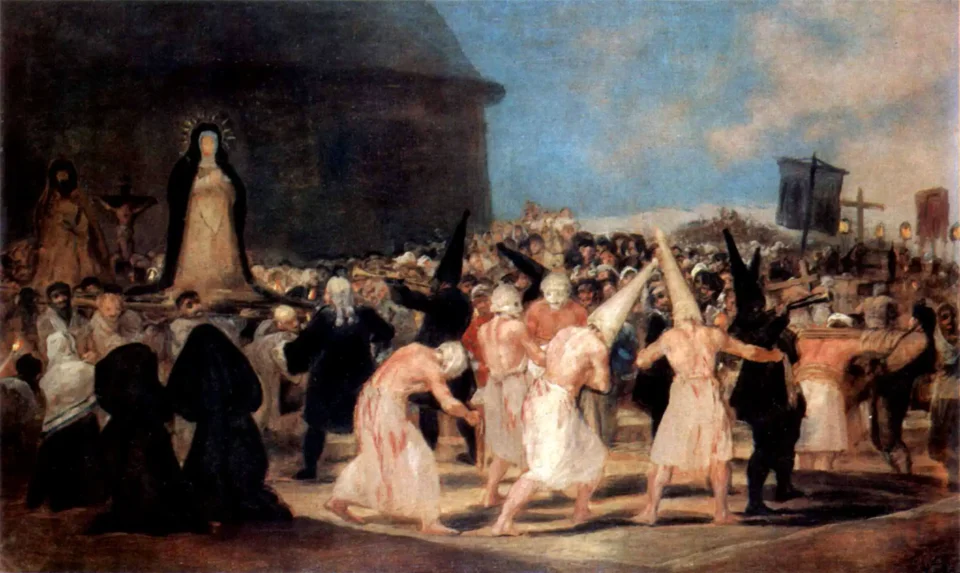
The history of the Church in New Spain was neither serene nor free of disputes. From the first years of the viceroyalty, the secular clergy (bishops and priests under episcopal jurisdiction) and the religious orders (Franciscans, Dominicans, Jesuits, among others) were the protagonists of constant tensions. These conflicts, far from being simple differences of opinion, became real internal battles that mixed spiritual, political and economic interests.
Throughout the sixteenth and seventeenth centuries, rivalries within the Church also clashed with the civil authority and the Crown, giving rise to lawsuits that left their mark on the religious and social life of New Spain.
First tensions: trust in friars and distrust in clerics
The origin of these conflicts can be traced back to Hernán Cortés, who requested the sending of friars for missionary work, distrusting the secular clerics. The first Franciscans quickly gained the trust of both Cortés and the encomenderos. This proximity allowed them to obtain exemptions and prerogatives, at the same time that they acquired great ascendancy over the indigenous population.
The first bishop, Fray Juan de Zumárraga, accepted this situation due to his convent origin and character, defending the friars against the civil authority, as well as standing out as a founder of institutions and protector of the indigenous peoples. However, his successors did not tolerate the power of the religious orders in the same way, as they saw it as a threat to the episcopal hierarchy and the authority of the Crown.
Bishops vs. religious orders
One of the most tense moments was with the second archbishop of Mexico, Dominican friar Alonso de Montúfar. In letters to the king, he complained about the independence of the friars from his authority and criticized their way of evangelizing and building convents. This is the origin of his famous phrase: “I am not the archbishop of Mexico, but Fray Pedro de Gante, a layman of San Francisco“, which reflects more resentment than praise.
The rivalry was not just words. In 1559, a Franciscan procession to the church of Santa María la Redonda was impeded by secular clerics and townspeople. The friars, supported by their indigenous faithful, engaged in a brawl with sticks and stones that ended with injuries and imprisonment, showing how such disputes could become violent and public.
Towards the end of the 16th century, with the decrease of the indigenous population and the decline of the encomienda, the episcopal policy was reinforced. Archbishop Pedro Moya de Contreras, a strong royalist, convened the third Mexican council to clearly establish the hierarchical structure of the Church, limiting the power of the religious orders.
During the 17th century, the substitution of regular clergy for secular clergy in parishes was consolidated. In regions such as Puebla and Tlaxcala, this change can still be seen in the landscape: semi-abandoned 16th century convents next to later, wealthier and more dominant parishes.
The Great Conflict: Palafox and the Jesuits
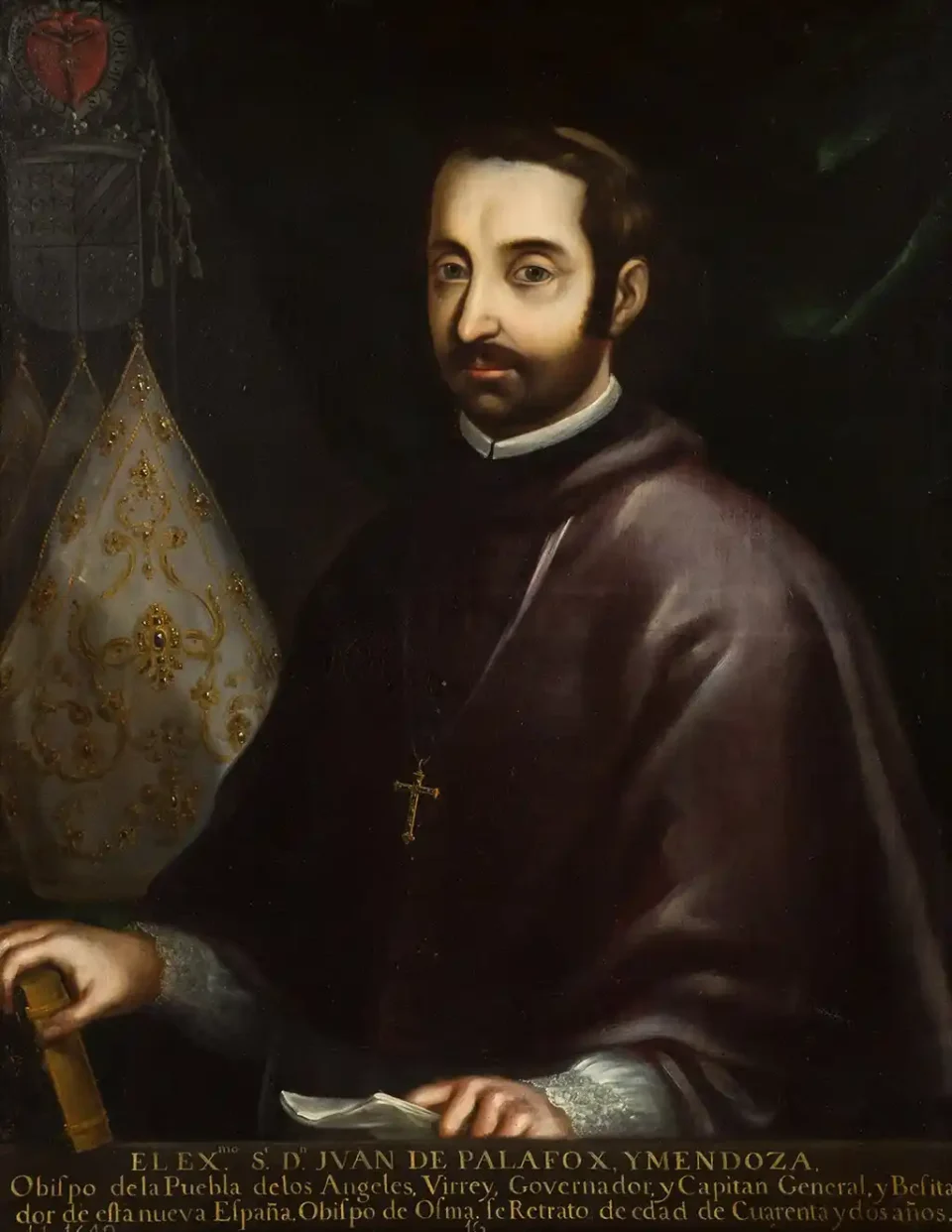
The most serious episode of these internal disputes occurred in 1647, when the bishop of Puebla, Juan de Palafox y Mendoza, confronted the Society of Jesus. Palafox, backed by the Crown and recognized as a just judge and builder of the Puebla cathedral, demanded that the Jesuits show their licenses to preach, which they refused to do. In response, he prohibited them from preaching and administering sacraments.
The conflict escalated: excommunications, threats of interdiction and demonstrations against the bishop multiplied. Even students held irreverent parades against Palafox, who ended up taking refuge in a nearby hacienda. Finally, the Council of the Indies and Philip IV agreed with him, although he was removed to a minor bishopric in the Iberian Peninsula. This lawsuit marked the culmination of the dispute between the episcopate and the regular clergy, and its decline thereafter.
Disputes were not limited to within the Church. There were also clashes between bishops and viceregal authorities. Zumárraga had conflicts with Nuño de Guzmán, president of the first Audiencia, who did not hesitate to remind him that, as representative of the king, he could execute him. Guzmán even violated the ecclesiastical asylum, dissolved processions and even lowered the elderly bishop of Tlaxcala, Fray Julián Garcés, from the pulpit.
Bartolomé de las Casas faced tensions in Chiapas for refusing to absolve those who owned indigenous slaves. Moya de Contreras had conflicts with the viceroys Martín Enríquez and the Marquis of Villamanrique, and other archbishops also had confrontations with the viceroys throughout the 17th century.
The most famous case occurred in 1624, with Archbishop Juan Pérez de la Serna and the Viceroy Marquis of Gelves. The dispute culminated in excommunications, suspension of worship in Mexico City and the banishment of the archbishop, who was forcibly removed while still wearing liturgical vestments and carrying the monstrance in his hands.
Conclusion
The conflicts within the Church in New Spain show that evangelization and spiritual power were always crossed by authority disputes. The struggle between secular clergy and religious orders reflected different interests, while the clashes with civil power showed the fragility of the balance between Church and State.
These “internal wars” were not mere personal rivalries: they marked the organization of religious life in New Spain and defined the relationship between the Church and the Crown of Castile. In the end, the episcopal authority, more closely linked to the Catholic monarchy, managed to impose itself, leaving the friars a more limited role in the viceroyalty.
Some clarifications on conflicts
What was the origin of the conflicts between secular clergy and religious orders in New Spain?
Conflicts arose from the early years of the viceroyalty, when the friars received privileges and great influence over the indigenous population, which generated tensions with the bishops who sought to assert episcopal authority.
What role did Archbishop Zumárraga play in these disputes?
Fray Juan de Zumárraga, due to his convent formation, accepted the leading role of the religious orders and defended their work, although he also faced clashes with the civil authority, as with Nuño de Guzmán.
What was the most famous conflict between secular clergy and religious orders?
The lawsuit between the bishop of Puebla, Juan de Palafox y Mendoza, and the Society of Jesus in 1647 is considered the most serious. It included excommunications, suspension of cults and confrontations that reached the Council of the Indies.
They were not only internal. The bishops also had confrontations with viceroys and audiences, generally over questions of jurisdiction, preeminence in ceremonies or violation of ecclesiastical asylum.
What consequences did these conflicts have for the Church in New Spain?
In the long term, episcopal authority was strengthened and the Crown of Castile limited the power of the religious orders, encouraging the replacement of the friars by secular clergy in the parishes.
–