
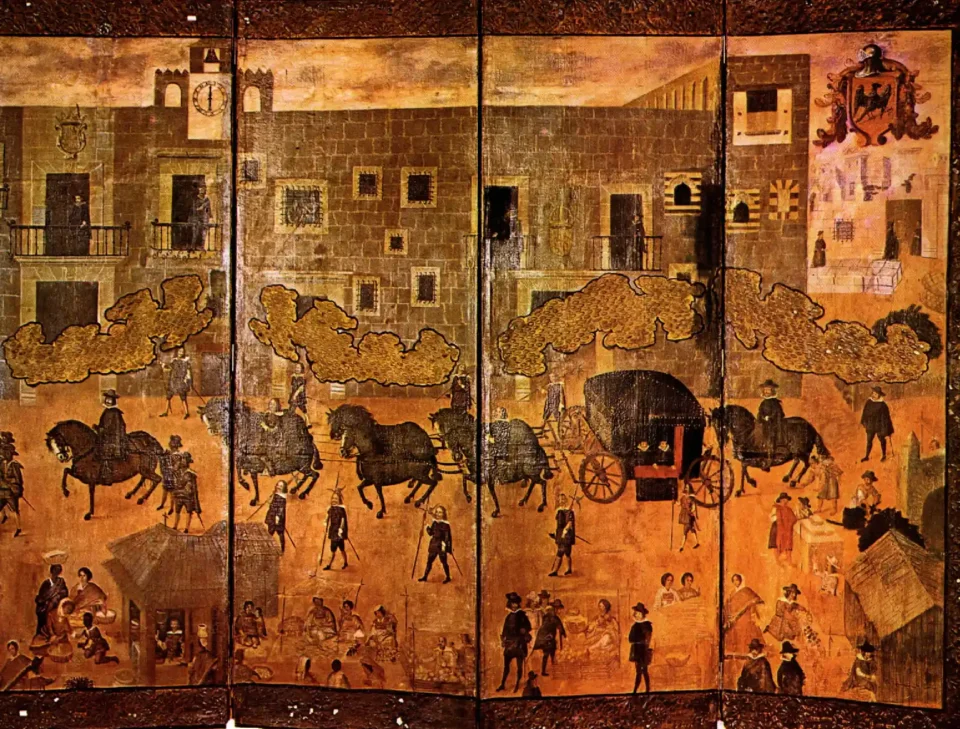
When we think of resistance during the viceregal era, we usually remember the indigenous uprisings. However, in New Spain there were also conspiracies and rebellions led by African slaves and their descendants, the Afro-descendants, which, although less frequent, aroused deep fear among the viceregal authorities.
These episodes show how the black populations sought to free themselves from exploitation and how the viceroyalty responded with violence and repression, leaving traces that have often been forgotten in official history.
What did the terms mulato, mestizo or castizo mean in New Spain?
In viceregal documents of the sixteenth and seventeenth centuries, terms such as negro, mulatto, mestizo or castizo appear frequently. For a long time there was talk of a rigid “caste system,” but modern historiography points out that there was no fixed legal order, but rather flexible classifications of the population.
A mulatto was, in general, a person born of a mixture between a European and someone of African descent. These categories were used in censuses, judicial processes and parish records, but could vary according to appearance, social position or context. Rather than a strict system, they were ways of labeling and controlling the population in a diverse society.

The conspiracy of 1537: a “black king” in Mexico City
The first great fear of the authorities arose in 1537, when a conspiracy of black slaves was discovered in Mexico City and in the mines of Acatepec. The conspirators had even elected a “king” and planned to kill the Spaniards, counting, it was suspected, with indigenous support.
Viceroy Antonio de Mendoza repressed harshly: he executed and dismembered the leaders, fortified the capital and issued ordinances prohibiting slaves from carrying weapons, gathering in groups of more than three or going out at night without permission. The fear of an Afro-descendant uprising was sown in the memory of the viceroyalty.
Yanga and the Veracruz Maroons (1609-1617)
At the beginning of the 17th century, the escape of slaves gave rise to the Maroons, communities of blacks who took refuge in the mountains. The most famous was Gaspar Yanga, who claimed African royal lineage. With his followers, he organized attacks against haciendas and travelers from the mountainous region of Veracruz.
In 1609, a viceregal expedition confronted them, but Yanga defended his right to live free, alleging the abuses he had suffered. After the capitulation, they were allowed to found San Lorenzo de los Negros, considered the first free town of African descent in America. Even so, conflicts with groups of rebellious Maroons continued for years.
The rumor of 1612: fear in the capital city
In 1612, a new rumor of black conspiracy spread through Mexico City. It was said that the slaves would rise up on Holy Thursday, which unleashed panic. The situation reached the point of absurdity: a herd of pigs was mistaken for a group of uprising blacks, causing chaos in the city.
After investigations, the Royal Court executed 29 blacks and 4 black women, displaying their bodies as a warning. Beyond the reality of the conspiracy, the fact showed the deep fear of the viceregal elites towards Afro-descendants.
The mulatto conspiracy of 1665: voices for freedom
The last great episode of the seventeenth century involved mulattos. In 1665, the Inquisition investigated rumors of a conspiracy led by a mulatto named José Valor. The statements spoke of toasts in taverns, of songs alluding to a coming freedom and even of the desire to see Spanish women serving mulattoes.
Although there was no massive repression as in 1612, it was clear that mulattos were seen as a restless and dangerous group. Their growing numbers in the capital and other regions fed the perception that they could “take over the kingdom”.
Conclusion: forgotten resistors
The conspiracies and uprisings of African and Afro-descendant slaves in New Spain were less frequent than the indigenous rebellions, but their psychological impact was enormous. They represented the possibility of an oppressed and marginalized group organizing to challenge the viceregal order.
Episodes such as Yanga or the conspiracy of 1612 show that resistance was not exclusive to the native peoples: Afro-descendants also defended their freedom and left a deep mark on the history of New Spain, although often relegated to oblivion.
–