
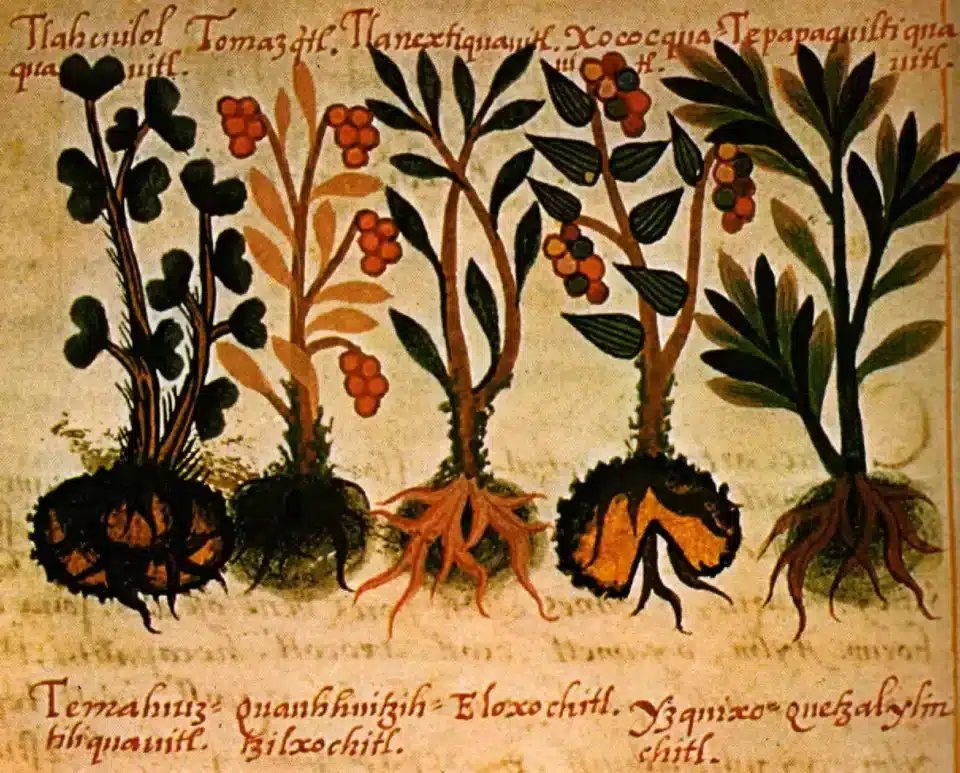
Agriculture was one of the fundamental pillars for the economic sustenance of the Mexica lordship, and its development depended not only on the fertility of the land, but also on the organization of labor. The work in the fields was carried out by different groups of people, whose functions, conditions and relationships with the land varied according to their ethnic origin, social status and links to political power.
The main types of agricultural workers identified in the Mexica production system are described below:
Calpuleque: farmers of the calpulli
The calpuleque were common people, or macehuales, who cultivated the communal lands known as calpullalli. These lands were worked both for their own sustenance and for the payment of tribute to the supreme lord (huey tlatoani). The tributary work was organized by means of rotating workdays among the members of the calpulli, which guaranteed a certain equity in the workload.
Teccaleque: manor land workers
The teccaleque were also macehuales, but their work was focused on lands assigned to nobles, known as tecpantlalli, within the same calpulli. Although their social position was similar to that of the calpuleque, the difference lay in the destination of the agricultural products: while the calpuleque paid tribute to the tlatoani, the teccaleque paid tribute to the noble who owned the land.
Renteros: independent farmers
This group was made up of people who, for various reasons, did not own land or did not want to cultivate it. Instead, they leased land from nobles or other communities, working on it in exchange for a rent. This form of tenure was temporary and allowed a certain flexibility, although the profits obtained were usually partially destined to the original owner of the land.
Mayeque: farmers linked by inheritance
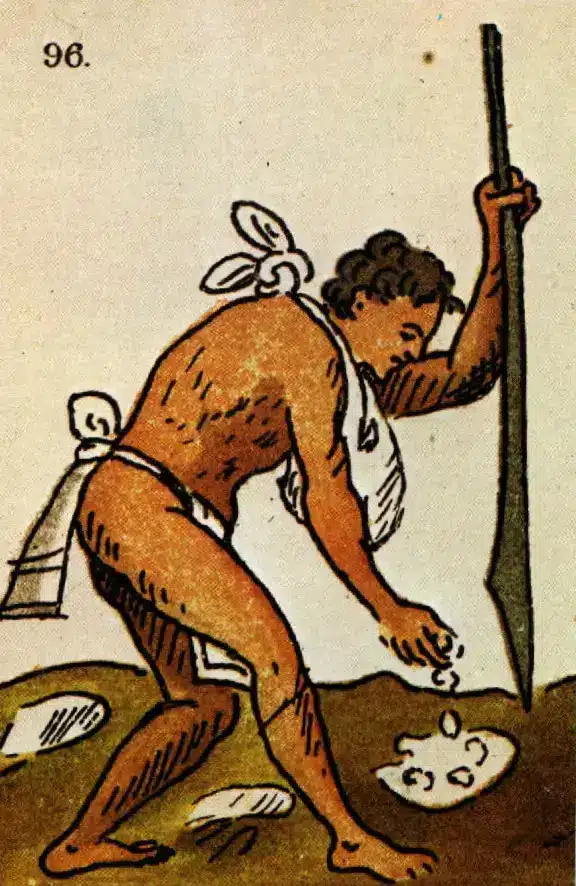
The mayeque represented a particular group of agricultural workers. They were of a different ethnic origin than the calpulli they served, and were dedicated to cultivating lands that, in the past, had belonged to their communities, but were now in the hands of nobles (pipiltin) due to processes such as military expansion. Their condition was more rigid than that of the renteros: they were tied for life to this work and, in addition, their services were inherited along with the land. Apart from delivering a portion of the harvest as rent, they also provided firewood and water to the local lord, and did not pay tribute directly to the tlatoani. Only in times of war were they incorporated into his service.
Conclusion
The agricultural system of the Mexica lordship reveals a complex organization of rural labor, where social and political relations directly influenced the possession and use of land. From free peasants to groups subordinated by origin and inheritance, the diversity of workers reflected the hierarchical structure of a society that knew how to maintain continuous food production to sustain its growth and power.
–