After the years of war and reconstruction that followed the Mexican Revolution, the country needed more than political stability: it needed a shared identity. The post-revolutionary government found in art and education the ideal instruments to build it.
It was then that the Day of the Dead went from being a domestic religious practice to become an artistic and pedagogical expression, a symbol of Mexicanness and cultural miscegenation.
Vasconcelos and the ideal of a nationalist education
In the 1920s, José Vasconcelos, as Secretary of Public Education, promoted a cultural project that would unite the country through art, history and popular traditions.
For him, education should also be a spiritual vehicle: mural art, music, literature and the customs of the people were the means to form a national conscience.
During his tenure, the Ministry of Public Education (SEP) organized campaigns to document festivals, dances, crafts and rituals. Rural schools -created to make peasant Mexico literate- became spaces where local traditions were studied and represented. The Day of the Dead, with its mix of religion, art and community, was perfectly suited to this project.
In the school textbooks of the time, death ceased to be seen as a religious taboo and was presented as an artistic and cultural manifestation of the Mexican people, an example of their ingenuity and faith in life.
Muralism and the new national iconography
Mural art was the visual face of post-revolutionary nationalism. Artists such as Diego Rivera, José Clemente Orozco, David Alfaro Siqueiros and Jean Charlot represented in their works the life, death and struggle of the people.
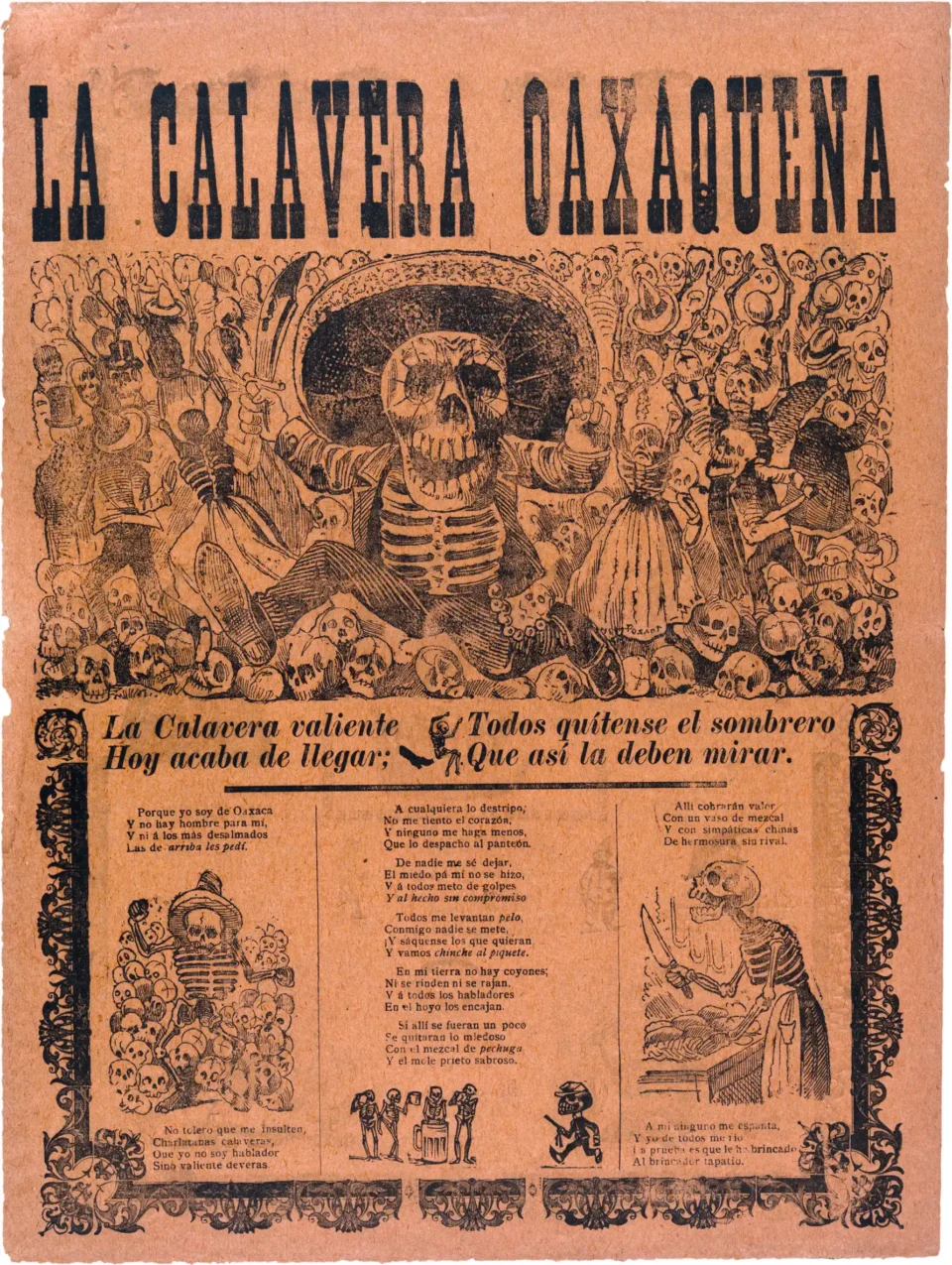
Skulls and catrinas -heirs of José Guadalupe Posada’s lithographs- became symbols of national identity.
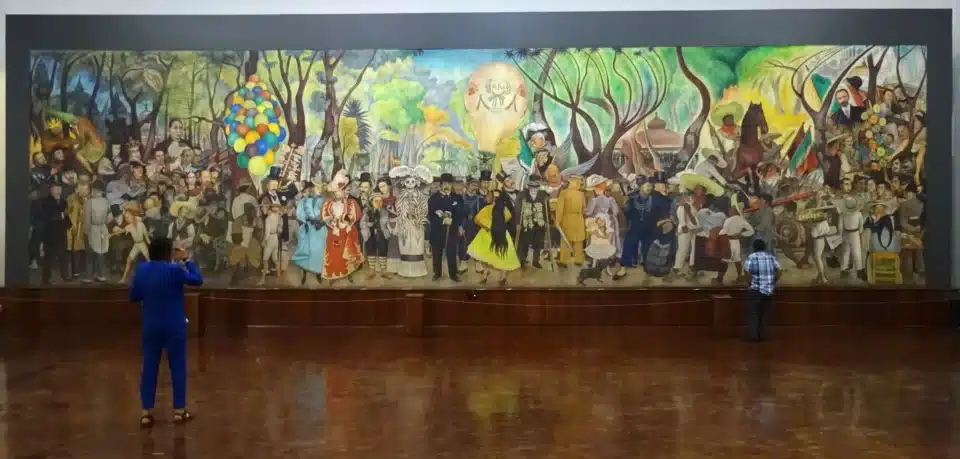
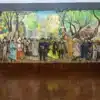
In the mural “Sueño de una tarde dominical en la Alameda Central” (1947), Diego Rivera placed La Catrina, taken from Posada, flanked by himself and Frida Kahlo, at the center. This image condensed the new vision of the country: a Mexico that could laugh at death while affirming its history and popular character.
Muralism turned the Day of the Dead into a plastic expression of the nation. Marigold flowers, skulls, bread and family portraits appeared as visual motifs that exalted daily life and indigenous heritage.
Frida Kahlo and the dialogue between life and death
While Rivera shaped the public myth, Frida Kahlo explored the intimate and spiritual aspect of the Day of the Dead. In works such as The Suicide of Dorothy Hale (1938) or Naturaleza muerta: viva la vida (1954), death appears not as a tragedy but as a natural part of the life cycle.
His use of flowers, fruits and skulls reflects the syncretism of the Mexican ofrenda, where the beautiful and the macabre coexist.
Kahlo integrated elements of the altar into her painting: candles, papel picado, skeletons and tropical fruits. Thus, she transformed death into a theme of introspection and rebirth, moving away from religious iconography and turning it into popular and universal art.
Lázaro Cárdenas and the cultural education of the people
During the government of Lázaro Cárdenas (1934-1940), the State reinforced this cultural policy. Rural schools were community learning centers where offerings and altars were made for educational purposes.
Teachers taught students the history of tradition and its symbolism, fostering pride in indigenous and popular culture.
In this context, the Day of the Dead was institutionalized as a national celebration. The SEP and the Department of Fine Arts promoted altar contests, exhibitions and school festivals. Artists, in turn, found inspiration in these activities to create a modern Mexican aesthetic that fused art, education and tradition.
The Day of the Dead as visual pedagogy
In the post-revolution, art taught as much as books. Murals, primers and engravings spread the idea that death should not be feared, but understood as continuity.
The altar became a visual learning space where people recognized their history. In schools, the offerings became pedagogical tools to teach community values and local traditions.
Thus, the Day of the Dead ceased to be just a religious practice and became a living lesson of Mexicanness: a dialogue between memory and identity, between art and education.
Conclusion
Post-revolutionary art and education transformed the Day of the Dead into a celebration of the national spirit.
Thanks to the impulse of Vasconcelos, Rivera, Kahlo and Cárdenas, the festivity transcended temples and homes to take root in schools, museums and murals.
Today, every altar erected in a school or museum repeats the legacy of that era: art as an instrument of union and the Day of the Dead as a mirror of the Mexican soul.
We invite you to explore these articles about the Day of the Dead and discover its history in detail.
-

The Mesoamerican origin of the cult of the dead: predecessor of the Day of the Dead
Long before the Day of the Dead was celebrated, Mesoamerican cultures paid tribute to their dead on different dates of the ritual calendar. This cult of…
-
From evangelization to syncretism: the Days of the Souls in New Spain (predecessor of the modern Day of the Dead)
The Days of the Dead in New Spain were the result of the encounter between indigenous beliefs about death and the Catholic festivities instituted by Popes…
-
Day of the Dead altars and ofrendas: symbols of the reunion between the living and the dead
The Day of the Dead altars were born during the viceregal era as an adaptation of the indigenous offerings to the Catholic calendar. In them, the…
-
Lázaro Cárdenas and the transformation of the Day of the Dead: from the Days of the Dead to the Mexican national symbol.
The Days of the Souls, inherited from the Viceroyalty, survived wars and prohibitions until it was transformed into the modern Day of the Dead. Under the…
-
The Meaning of the Day of the Dead: Identity, Memory and Continuity
The Day of the Dead not only honors those who have passed away; it also affirms who we are. Among flowers, altars and memories, this tradition…
-
The Day of the Dead in post-revolutionary art and education
Post-revolutionary Mexico used art and education to build its identity. From Rivera's murals to the school offerings promoted by Cárdenas, the Day of the Dead became…
-
Top 20 curiosities and historical details of the Day of the Dead that you may not have known.
From Mictecacíhuatl to La Catrina, learn 20 historical curiosities about the Day of the Dead and discover how this celebration became a symbol of Mexican identity.
-
Regional Day of the Dead Celebrations: from Patzcuaro to Mixquic, the diversity of the tradition
From Patzcuaro to Yucatan, Day of the Dead celebrations reveal Mexico's cultural diversity. Each region preserves unique rituals - the Mixquic alumbrada, the Mayan Hanal Pixán…


Frequently Asked Questions about the Day of the Dead in Post-Revolutionary Art and Education
Why was art so important in post-revolutionary education?
Because the government saw art as a means to educate the people and strengthen national identity. Murals, engravings and popular festivals transmitted shared values and traditions.
What role did José Vasconcelos play in the diffusion of the Day of the Dead?
As Secretary of Education, he promoted a cultural project that valued the customs of the people. Under his leadership, SEP promoted regional traditions as part of public education.
How did muralism influence the representation of the Day of the Dead?
Muralism turned death into a symbol of the Mexican people. Diego Rivera, Siqueiros and Orozco portrayed it with irony, hope and dignity, reflecting the fusion between the indigenous past and modernity.
What did Frida Kahlo contribute to the artistic vision of the Day of the Dead?
Frida approached death from an intimate and symbolic point of view, incorporating elements of the ofrenda in her paintings and redefining death as part of life.
How did Lázaro Cárdenas participate in the consolidation of this tradition?
Cárdenas promoted rural education and cultural integration. Schools promoted altars and festivals as teaching tools, uniting tradition, art and civics.
Why is the Day of the Dead considered a visual pedagogy?
Because through art, murals and school altars taught history, identity and collective values. It was a form of living education based on memory and popular culture.
–