The altars and offerings of the Day of the Dead are perhaps the most visible expression of the syncretism that shaped Mexican culture. They bring together indigenous traditions, Catholic beliefs and popular customs that have been interwoven since the 16th century. If in pre-Hispanic times the offerings were a way of spiritually accompanying the dead in their passage to the afterlife, during the viceroyalty they became an act of Christian devotion and, with the passing of the centuries, a symbol of national identity.
Origin of the offerings in the viceregal era
In New Spain, offerings to the dead took on a new meaning. Missionaries taught the indigenous people that the souls of the dead passed through purgatory and that prayers and masses could help them reach heaven. However, the communities reinterpreted these teachings from their own beliefs. Thus, the food that was once offered to nourish the spirits of the Mictlán was now placed as a gesture of charity and Christian remembrance.
The first records of Novo-Hispanic offerings come from 16th century Franciscan chronicles, where it is mentioned that the indigenous people placed fruits, flowers, bread and water on domestic altars along with images of saints and candles. This type of offering reflected a combination of European and indigenous elements: the Catholic altar as a formal structure and native agricultural products as a symbolic expression of the cycle of life and death.
In many towns, temples organized masses for the souls and families placed small tables adorned with flowers and food in front of the images of purgatory. These practices, tolerated by the friars, allowed the ancient custom of offering food to the deceased to survive under a new religious context.
Evolution of domestic altars
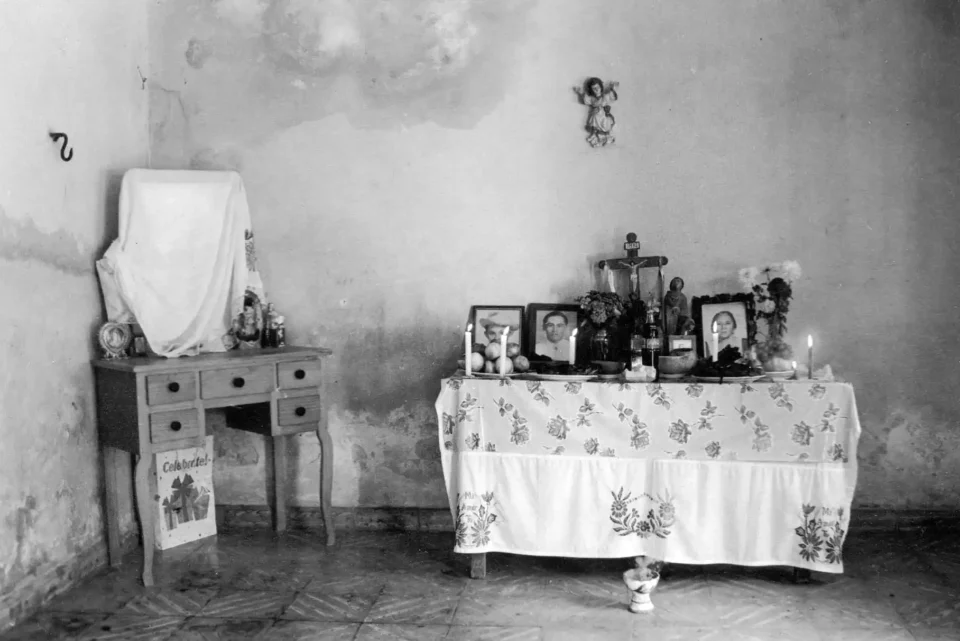
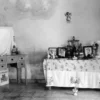
During the seventeenth and eighteenth centuries, the domestic altar was consolidated as an essential part of Novohispanic family life. In homes, a permanent space was set aside for devotion, where holy cards, reliquaries, crucifixes and candles were gathered. On the days of souls, this altar was temporarily transformed to remember deceased relatives: fresh flowers, food, water and bread were added.
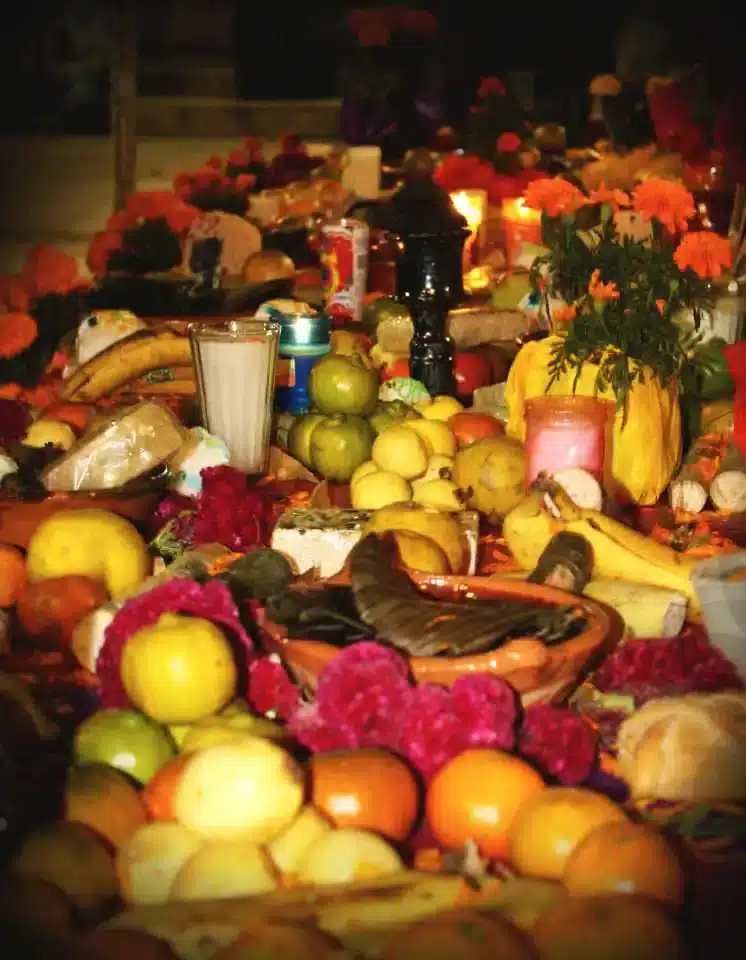
Pan de muerto has its origins in this period. According to INAH records and studies by researcher Elsa Malvido, its round shape and crossed decorations represent the cycle of life and the bones of the deceased. The bread was a Catholic adaptation of the ancient ritual breads that Mesoamerican peoples offered to their gods, and over time became the emblematic food of the offering.
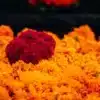
The cempasúchil, on the other hand, maintained its presence since pre-Hispanic rituals. Its golden color and aroma were associated with sunlight and spiritual guidance. In the viceroyalty, communities adopted it as a flower for the dead, using it to decorate altars and cemeteries during the Days of the Dead. Chroniclers such as Fray Bernardino de Sahagún already mentioned it as part of the Mesoamerican offerings, and its continuity demonstrates the strength of the indigenous memory within popular Christianity.
As time went by, altars became more complex. In the cities, white tablecloths, mirrors, candelabras and religious figures were used, while in rural towns natural elements predominated: corn, pumpkin, copal, tamales and atole. This regional diversity gave the altar its mestizo and profoundly local character.
From family altars to monumental altars
Throughout the 19th century, the tradition was kept alive in homes and cemeteries, but it was during the 20th century when the altar of the dead acquired its public dimension. With the rise of post-revolutionary nationalism, the Mexican state promoted popular traditions as symbols of national identity. Rural schools, houses of culture and art institutions began to organize contests and exhibitions of altars, reinforcing their value as a cultural expression.
The altar was then transformed into a symbolic structure composed of levels, usually two or seven, representing the division between heaven and earth, or the steps of the soul towards salvation. The elements of the altar – water, salt, copal, candles, bread, fruit and portraits – retained their original meanings: water as the source of life, bread as spiritual food, flowers as guidance and candles as light for the souls.
In some regions, such as Mixquic, Pátzcuaro and Oaxaca, family offerings continued to have an intimate character, while in the cities they became artistic manifestations. Thus, the novo-Hispanic altar, born of evangelization and indigenous memory, evolved into a symbol that unites memory, identity and cultural continuity.
Conclusion
The altars and offerings of the Day of the Dead represent the clearest synthesis of the dialogue between indigenous beliefs and Christianity. From the modest domestic altars of the viceroyalty to the monumental contemporary ofrendas, each element preserves a history. Bread, flowers, candles and copal are not mere decorations, but traces of a shared past that lives on every November. In them, the living and the dead meet again, renewing year after year the memory of a tradition that transcends time.
We invite you to explore these articles about the Day of the Dead and discover its history in detail.
-

The Mesoamerican origin of the cult of the dead: predecessor of the Day of the Dead
Long before the Day of the Dead was celebrated, Mesoamerican cultures paid tribute to their dead on different dates of the ritual calendar. This cult of…
-
From evangelization to syncretism: the Days of the Souls in New Spain (predecessor of the modern Day of the Dead)
The Days of the Dead in New Spain were the result of the encounter between indigenous beliefs about death and the Catholic festivities instituted by Popes…
-
Day of the Dead altars and ofrendas: symbols of the reunion between the living and the dead
The Day of the Dead altars were born during the viceregal era as an adaptation of the indigenous offerings to the Catholic calendar. In them, the…
-
Lázaro Cárdenas and the transformation of the Day of the Dead: from the Days of the Dead to the Mexican national symbol.
The Days of the Souls, inherited from the Viceroyalty, survived wars and prohibitions until it was transformed into the modern Day of the Dead. Under the…
-
The Meaning of the Day of the Dead: Identity, Memory and Continuity
The Day of the Dead not only honors those who have passed away; it also affirms who we are. Among flowers, altars and memories, this tradition…
-
The Day of the Dead in post-revolutionary art and education
Post-revolutionary Mexico used art and education to build its identity. From Rivera's murals to the school offerings promoted by Cárdenas, the Day of the Dead became…
-
Top 20 curiosities and historical details of the Day of the Dead that you may not have known.
From Mictecacíhuatl to La Catrina, learn 20 historical curiosities about the Day of the Dead and discover how this celebration became a symbol of Mexican identity.
-
Regional Day of the Dead Celebrations: from Patzcuaro to Mixquic, the diversity of the tradition
From Patzcuaro to Yucatan, Day of the Dead celebrations reveal Mexico's cultural diversity. Each region preserves unique rituals - the Mixquic alumbrada, the Mayan Hanal Pixán…

Frequently Asked Questions about Day of the Dead Altars and Offerings
When did the altars of the dead appear in Mexico?
The first altars date back to the 16th century, during the viceroyalty, when the indigenous peoples adapted the Spanish domestic Catholic altar to pay homage to their deceased.
Why are food and personal items placed in the offering?
Because it comes from ancient Mesoamerican beliefs that the souls of the deceased returned temporarily and needed spiritual and earthly sustenance.
What is the origin of pan de muerto?
Its form and symbolism emerged in New Spain as a Christian reinterpretation of pre-Hispanic ritual breads. The bread represents life, the offering and the bones of the deceased.
Why is marigold used?
The cempasúchil comes from the Nahuatl cempōhualxōchitl, “flower of twenty petals”. Its golden color symbolizes sunlight and has been used since pre-Hispanic times in funeral rituals.
Why do altars have several levels?
Traditionally, two or seven levels are placed. The two represent the division between heaven and earth; the seven, the steps of the soul towards purification.
What elements are essential in a traditional offering?
Water, bread, flowers, copal, candles, photographs and favorite foods of the deceased. Each element has a spiritual meaning inherited from the mixture of indigenous and Christian beliefs.
How did altars evolve into modern offerings?
During the 20th century, the Mexican State and cultural institutions promoted their artistic and national value, turning them into a representative tradition of Mexico before the world.
–