In the sixteenth and seventeenth centuries, life in New Spain was marked by religion. Beyond the quarrels between hierarchs, the virtues or defects of ecclesiastical rectors and internal frictions, religiosity functioned as a firm rock: it impregnated art, poetry, work, business, administration and even transgressions. In a territory of people recently converted to Catholicism -particularly among indigenous and black populations-, alien to heterodoxy and, thanks to the Inquisition and the vigilance of the authorities, it remained a collective pride of cities, towns, guilds and individuals.
A world immersed in religion
Novo-Hispanic religiosity, deeply Catholic and ceremonial, favored external and lavish expressions without losing sincerity. Rituals, processions and celebrations marked the rhythm of daily life. In this context, two dimensions derived from fervor – beatitude and the universe of the miraculous – were always present.
Piousness and the miraculous world in everyday life
Novo-Hispanics believed they had a real contact with the supernatural, visible in multiple practices:
- Official novenarios when the fleet departed or approached.
- Te Deum at the arrival of ships, for the entrance of main characters or to celebrate victories against enemies of the Spanish Catholic monarchy.
- Doctrinal vows and defenses, such as the obligation of university graduates and teachers to uphold the Immaculate Conception.
- Transfer of miraculous images to the cities in the face of the presentiment of catastrophes.
In that sensibility, almost everything could be read as a miracle: a healing, the end of a misfortune, the first rain after a drought, the cessation of hail, minor damage in an earthquake, even the variations of the lagoon of Mexico. Carlos de Sigüenza affirmed that plagues such as the chiahuiztle responded to human wrongdoing and the duty to make amends. There was also talk of devils and angels appearing, of ecstasy and frequent raptures, especially in the calm of cloistered cells.
Syncretisms and popular practices
In the countryside and in the cities, religious syncretism between Christianity and ancient magical beliefs was a daily occurrence, especially among the Indian, mestizo and mulatto populations.
- Among the simple people, religiosity was expressed in attendance at churches and offices, in pilgrimages, in the passionate worship of images and in listening to sermons.
- Among the wealthy, devotion was manifested through pious works and the patronage of temples, considered a way to get closer to God.
Relics, images and the baroque: the centrality of the visible
In Mexico, the cult of relics and images occupied a central place. Useful since the first evangelization, the famous images took on new life in the novo-Hispanic baroque: their legends of apparition were reinvented, their miraculous benefits were narrated and the fortune of their devotees was emphasized.
Failed attempts at canonization: who were they and what was sought?
Los novohispanos anhelaron santos propios y dedicaron esfuerzos a promover causas, pero los intentos no prosperaron. Hubo campañas para elevar a los altares a:
- Fray Domingo de Betanzos.
- Friar Martín de Valencia.
- Sebastián de Aparicio (Franciscan layman).
- Juan de Palafox y Mendoza (bishop).
- Archbishop Cuevas y Dávalos.
- Several nuns and blessed, especially Catalina de San Juan (la china poblana), about whom extensive apologies were written, including the largest book printed in New Spain.
Despite the devotional impulse, no canonization was obtained. The only exception was Felipe de Jesús, a Discalced Franciscan martyred in Nagasaki and later canonized; however, his saintly deeds did not occur or take root in New Spain.
Guadeloupianism: from local cult to symbol of identity
In the absence of saints of their own, devotion turned to images. The Virgin of Guadalupe stood out for her singularity: she appeared bodily and left her image miraculously imprinted.
- From a local cult in the 16th century, it became a symbol of divine election.
- In the 17th century, his story was reorganized in a baroque key, with theological and poetic elaborations.
- The proximity of Tepeyac to the capital facilitated its identification with the head of the viceroyalty, in front of the Virgen de los Remedios.
December 12 was consolidated as a fundamental date for the novo-Hispanic people, accompanied by pilgrimages, festivals and fairs.
Other devotions and miraculous images
Without reaching the Guadalupana dimension, other images were seen as signs of divine preference. Among them:
- Virgen de los Remedios.
- Santo Señor de Chalma.
- Cristo de Santa Teresa.
- Virgen de la Soledad de Oaxaca.
- Virgen de San Juan de los Lagos.
- Virgen de Zapopan.
- Our Lady of Ocotlán (Tlaxcala).
- Christ of Tlacolula.
- Virgin of the Health of Patzcuaro.
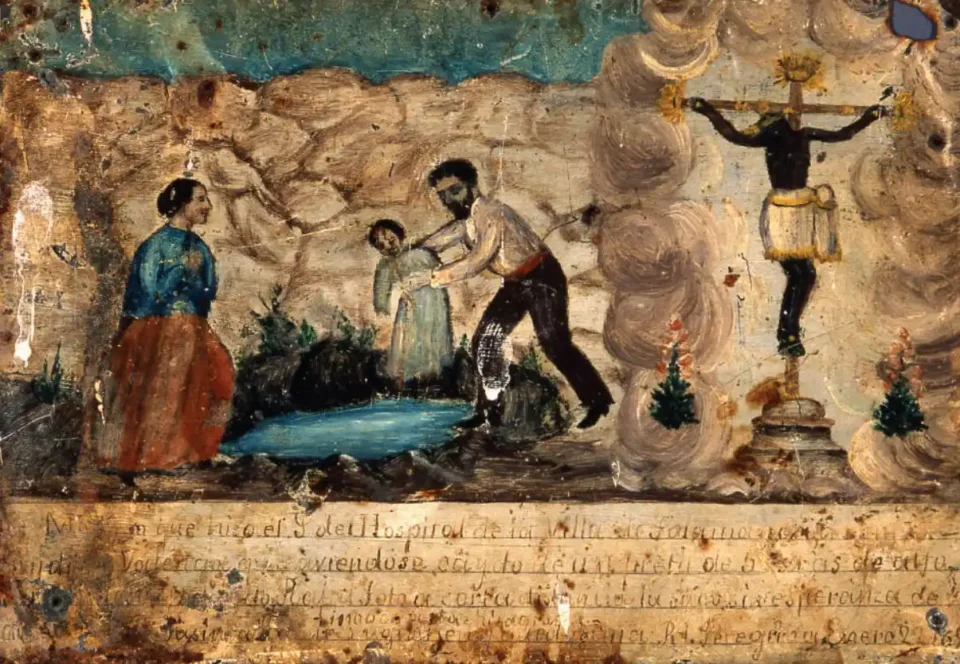
Since the 17th century, the tradition of painted votive offerings, which recounted in image and word the favors received, was consolidated.
The rhythm of the time: bells, festivals and mayordomies
In tranquility or uneasiness, poverty or opulence, life in New Spain was marked by faith.
- The ringing of bells regulated the day and announced blessings or catastrophes.
- Religious festivals were part of the calendar and the memory of generations.
- The stewards fought for the honor of the titular feast, even at the cost of ruin.
- The rich left fortunes in pious works; the blessed lived in temples; sinners sought to challenge the sacred.
The miracle was constantly around: in villages, convents or houses, always ready to transform the hardened sinner into an exemplary devotee.
Shrines and donations: from Guadalajara to Ocotlán
An outstanding example is the sanctuary of Our Lady of Ocotlán, in Tlaxcala, whose image was placed in a silver niche in a central altarpiece. Since the 18th century, it had strong popular roots and was enriched thanks to donations from the faithful and the powerful, a symbol of the link between devotion and patronage.
Conclusion
Novo-Hispanic popular religiosity was a tissue of visible practices, intimate convictions and miraculous stories. Although attempts at canonization failed -with the exception of Felipe de Jesús-, the Virgin of Guadalupe and a vast array of images offered powerful references. Bells, feasts and votive offerings accompanied a society that knew how to read the divine in its daily life, under the vigilance of the Church and the Catholic monarchy.
Some clarifications and frequent doubts about popular religiosity in New Spain: from the Virgin of Guadalupe to the frustrated saints.
How was popular religiosity expressed in New Spain?
It was manifested in the attendance to churches, pilgrimages, cults to miraculous images, pious works of the rich, mayordomías and religious festivities that marked the calendar of towns and cities.
Why do we speak of “frustrated saints” in New Spain?
Because, despite efforts to canonize figures such as Fray Domingo de Betanzos, Fray Martín de Valencia, Sebastián de Aparicio, Juan de Palafox y Mendoza, Catalina de San Juan and others, none achieved official recognition by the Church, except Felipe de Jesús, whose martyrdom occurred outside the viceroyalty.
What was the role of the Virgin of Guadalupe in the novo-Hispanic religiosity?
The Virgin of Guadalupe went from being a local cult in the sixteenth century to become a symbol of identity and pride in the seventeenth century, thanks to the baroque reorganization of her story and the providential meaning attributed to her apparition.
What other miraculous images had devotion in New Spain?
In addition to the Guadalupana, other highlights included the Virgen de los Remedios, the Señor de Chalma, the Virgen de Zapopan, the Virgen de San Juan de los Lagos, the Virgen de la Soledad de Oaxaca, the Virgen de la Salud de Pátzcuaro and Nuestra Señora de Ocotlán, among others.
What was the importance of votive offerings in the novo-Hispanic religiosity?
Since the 17th century, painted votive offerings became popular as a way of expressing gratitude for miraculous favors. They mixed images and words to narrate divine intervention in daily life.
–