Mexicans’ relationship with death is not only spiritual: it is also deeply humorous. Since the 19th century, the people began to laugh at death, to portray it in verses and engravings, and to turn it into a mirror of their own society. This mocking vision did not come out of nowhere; it was the result of centuries of transformations, of the fusion between popular art, political satire and the memory of ancient religious rites.
From the baroque sermons of the Viceroyalty to the engravings of José Guadalupe Posada, and from literary skulls to the cultural impulse of President Lázaro Cárdenas, death went from being a feared subject to becoming a symbol of national identity. In Mexico, laughing at death was -and still is- a way to survive it.
Viceroyalty and European antecedents
During the viceroyalty, the theme of death was a constant part of daily life. Churches exhibited skulls and ossuaries as a reminder of spiritual transit, while in Europe, representations known as “dances of death” or “danzas macabros” circulated, where skeletons led nobles, bishops and peasants to the same final destination.
These images, inherited by the Novo-Hispanic Baroque culture, inspired a moral and humorous vision of death. In sermons, altars and theatrical representations, the figure of the skeleton was used to teach humility and remind us of the equality of all before the inevitable end. This familiarity with death was the basis on which, centuries later, Mexican popular humor flourished.
From altar to satire: the literary skulls of the 19th century
With the arrival of the 19th century and independence, the old viceregal order collapsed, but customs related to death remained. During the second half of the century, in the midst of the country’s modernization, the “calaveras literarias” appeared, burlesque verses published in newspapers that satirized politicians, bishops or public figures.
These compositions took up the egalitarian spirit of the medieval death dances, but with a local and rebellious tone. They were published in loose sheets or gazettes accompanied by drawings of skeletons, anticipating the style that would later be immortalized by José Guadalupe Posada.
One of the earliest recorded ones appeared in The Socialist (1849) and read:
“Ya murió don Juan el rico,
que guardaba su tesoro;
dicen que llevó consigo
su avaricia y su decoro.”
This brief poem reflects the initial moralizing tone, closer to enlightened thought than to popular irony. However, towards the end of the 19th century the skulls acquired an openly satirical tone. In El Hijo del Ahuizote, a publication critical of the Porfirian regime, one of the most famous ones was circulated:
“Aquí yace don Porfirio,
que mandó con mano dura;
mas la flaca no votó,
y le dio su sepultura.”
With this type of verse, the people found an ingenious way to express political discontent and to ridicule power. Laughter in the face of death became a form of cultural resistance, a way of affirming that neither the rich nor the rulers could escape their common fate.
José Guadalupe Posada and the creation of the Catrina
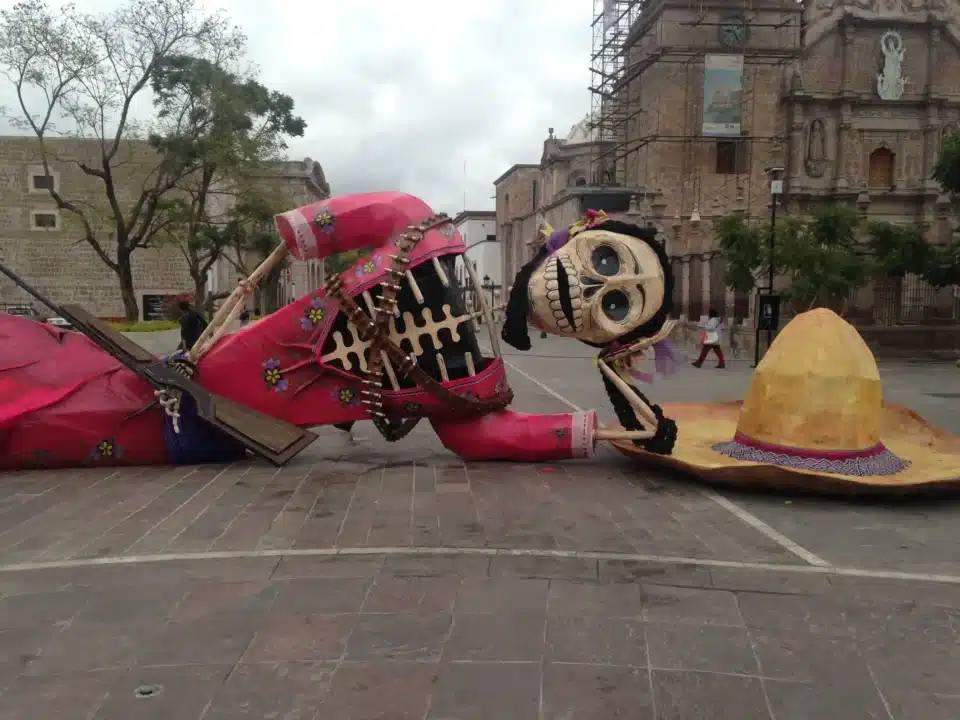
Between the late nineteenth and early twentieth centuries, the engraver José Guadalupe Posada transformed the imaginary of death into a true popular gallery. His engravings featured skeletons dancing, eating, riding horses or playing guitar. The most famous of his figures, “La Calavera Garbancera”, represented the woman who denied her indigenous origin and aspired to appear European; decades later, the painter Diego Rivera would baptize her as “La Catrina”.
Posada, from his printing press in the Tepito neighborhood, portrayed death as an inseparable companion of the people. His images circulated in flyers and were sold in markets and fairs, reaching all social sectors. With him, death ceased to be a religious or moral theme and became a symbol of popular identity and political satire.
The Restoration of the Day of the Dead in the 20th Century
After the Mexican Revolution (1910-1920) and the Cristero War (1926-1929), many religious celebrations had been weakened or prohibited. It was during the government of Lázaro Cárdenas del Río (1934-1940) when the recovery of popular traditions was promoted as part of the country’s cultural unification project.
The State, through the Ministry of Public Education and cultural institutions, promoted the Day of the Dead commemorations in schools, plazas and museums, presenting them as a symbol of the Mexican soul. The purpose was to strengthen a mestizo national identity that would integrate indigenous roots and popular values.
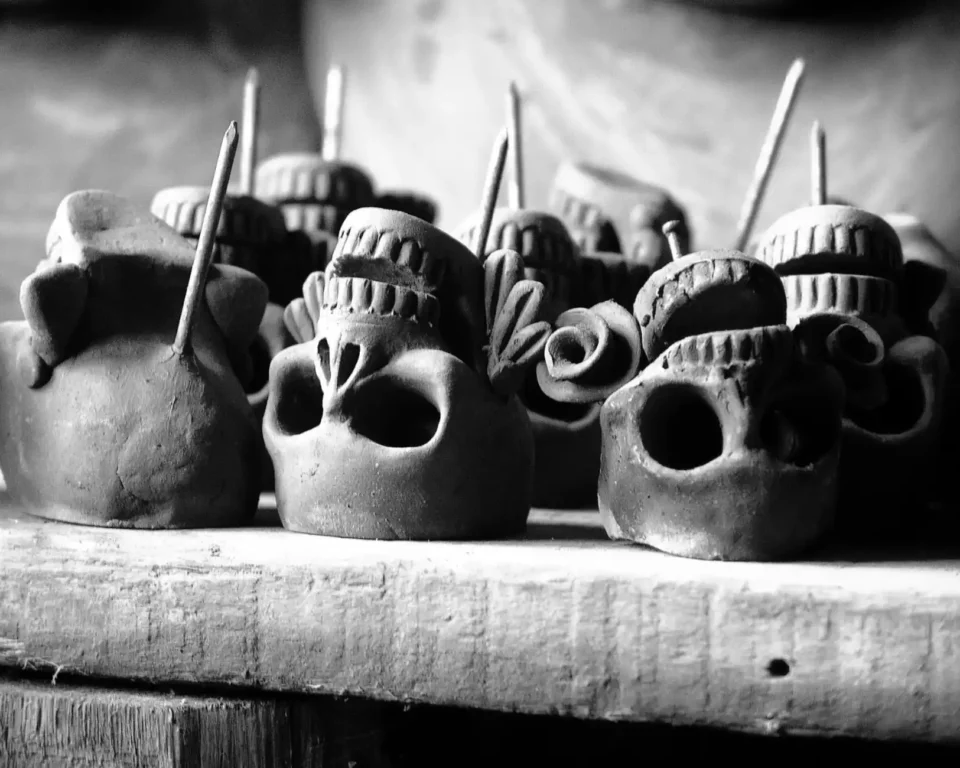
At this time, the Day of the Dead acquired its modern form: altars became public, sugar skulls and catrinas became emblems of national humor, and the festivity moved from homes to urban spaces, consolidating itself as a collective and artistic celebration.
From engraving to national identity
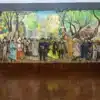
During the first half of the 20th century, artists such as Diego Rivera, Frida Kahlo, Jean Charlot and Dr. Atl reinterpreted skulls and catrinas in painting and muralism. Posada’s representations became icons of Mexican art, while schools and rural communities kept the tradition of the family altar alive.
In the 1960s and 1970s, the Day of the Dead was officially recognized as part of Mexico’s cultural heritage, and in 2003, UNESCO inscribed it on the list of Intangible Cultural Heritage of Humanity. Since then, its festive, ironic and affective character has crossed borders, becoming one of the most recognized celebrations in the world.
Conclusion
The humorous vision of death in Mexico is the result of a long evolution: from pre-Hispanic offerings to Novo-Hispanic altars, from literary skulls to popular art, and from private devotion to national expression. In it, the Mexican people transformed fear into laughter and loss into memory.
Every November, among flowers, bread and verses, death becomes part of life again, reminding us that, in Mexico, laughing at death is also a way of affirming it.
Frequently asked questions about Mexico’s humorous view of death
We invite you to explore these articles about the Day of the Dead and discover its history in detail.
-

The Mesoamerican origin of the cult of the dead: predecessor of the Day of the Dead
Long before the Day of the Dead was celebrated, Mesoamerican cultures paid tribute to their dead on different dates of the ritual calendar. This cult of…
-
From evangelization to syncretism: the Days of the Souls in New Spain (predecessor of the modern Day of the Dead)
The Days of the Dead in New Spain were the result of the encounter between indigenous beliefs about death and the Catholic festivities instituted by Popes…
-
Day of the Dead altars and ofrendas: symbols of the reunion between the living and the dead
The Day of the Dead altars were born during the viceregal era as an adaptation of the indigenous offerings to the Catholic calendar. In them, the…
-
Lázaro Cárdenas and the transformation of the Day of the Dead: from the Days of the Dead to the Mexican national symbol.
The Days of the Souls, inherited from the Viceroyalty, survived wars and prohibitions until it was transformed into the modern Day of the Dead. Under the…
-
The Meaning of the Day of the Dead: Identity, Memory and Continuity
The Day of the Dead not only honors those who have passed away; it also affirms who we are. Among flowers, altars and memories, this tradition…
-
The Day of the Dead in post-revolutionary art and education
Post-revolutionary Mexico used art and education to build its identity. From Rivera's murals to the school offerings promoted by Cárdenas, the Day of the Dead became…
-
Top 20 curiosities and historical details of the Day of the Dead that you may not have known.
From Mictecacíhuatl to La Catrina, learn 20 historical curiosities about the Day of the Dead and discover how this celebration became a symbol of Mexican identity.
-
Regional Day of the Dead Celebrations: from Patzcuaro to Mixquic, the diversity of the tradition
From Patzcuaro to Yucatan, Day of the Dead celebrations reveal Mexico's cultural diversity. Each region preserves unique rituals - the Mixquic alumbrada, the Mayan Hanal Pixán…


When did the first literary skulls appear in Mexico?
The first literary calaveras were published in the mid-19th century, in newspapers such as El Socialista (1849), where moralizing verses about death appeared. Over time, they evolved into a form of popular political satire in publications such as El Hijo del Ahuizote and La Patria Ilustrada.
What is the most famous literary calaverita of the 19th century?
One of the best known was published in El Hijo del Ahuizote towards the end of the 19th century and read:
“Aquí yace don Porfirio,
que mandó con mano dura;
mas la flaca no votó,
y le dio su sepultura”.
This type of verse expressed, with humor and criticism, the people’s rejection of authority and their egalitarian idea in the face of death.
Who was José Guadalupe Posada and why is he so important?
Posada was a Mexican engraver (1852-1913) who popularized the figure of skulls in his art. From his print shop in Tepito, he created scenes of skeletons dancing, eating or riding horses, reflecting daily life and political criticism. His most famous work, La Calavera Garbancera, was renamed decades later by Diego Rivera as La Catrina.
What does the Catrina symbolize in Mexican culture?
La Catrina represents death with elegance and humor, but it is also a social criticism of those who pretended to look like Europeans during the Porfiriato. Over time, she went from being a satirical figure to become an icon of the Day of the Dead and of Mexican popular art.
Why did President Lázaro Cárdenas promote the rescue or institutionalization of the Day of the Dead?
After the Revolution and the Cristero War, many religious celebrations had disappeared or lost strength. During his government (1934-1940), Lázaro Cárdenas promoted the recovery of popular traditions -including the Day of the Dead- as part of a cultural project that sought to strengthen the mestizo national identity.
When was the Day of the Dead officially recognized as cultural heritage?
In 2003, UNESCO declared the Day of the Dead as Intangible Cultural Heritage of Humanity, recognizing it as a living tradition that unites history, art and collective memory.
Why do Mexicans laugh at death?
Because in Mexico laughter has become a form of resistance. From literary skulls to catrinas, humor serves to face the inevitable without fear. It is a heritage that mixes the baroque irony of the viceroyalty, the popular satire of the 19th century and the creativity of the modern people.
–